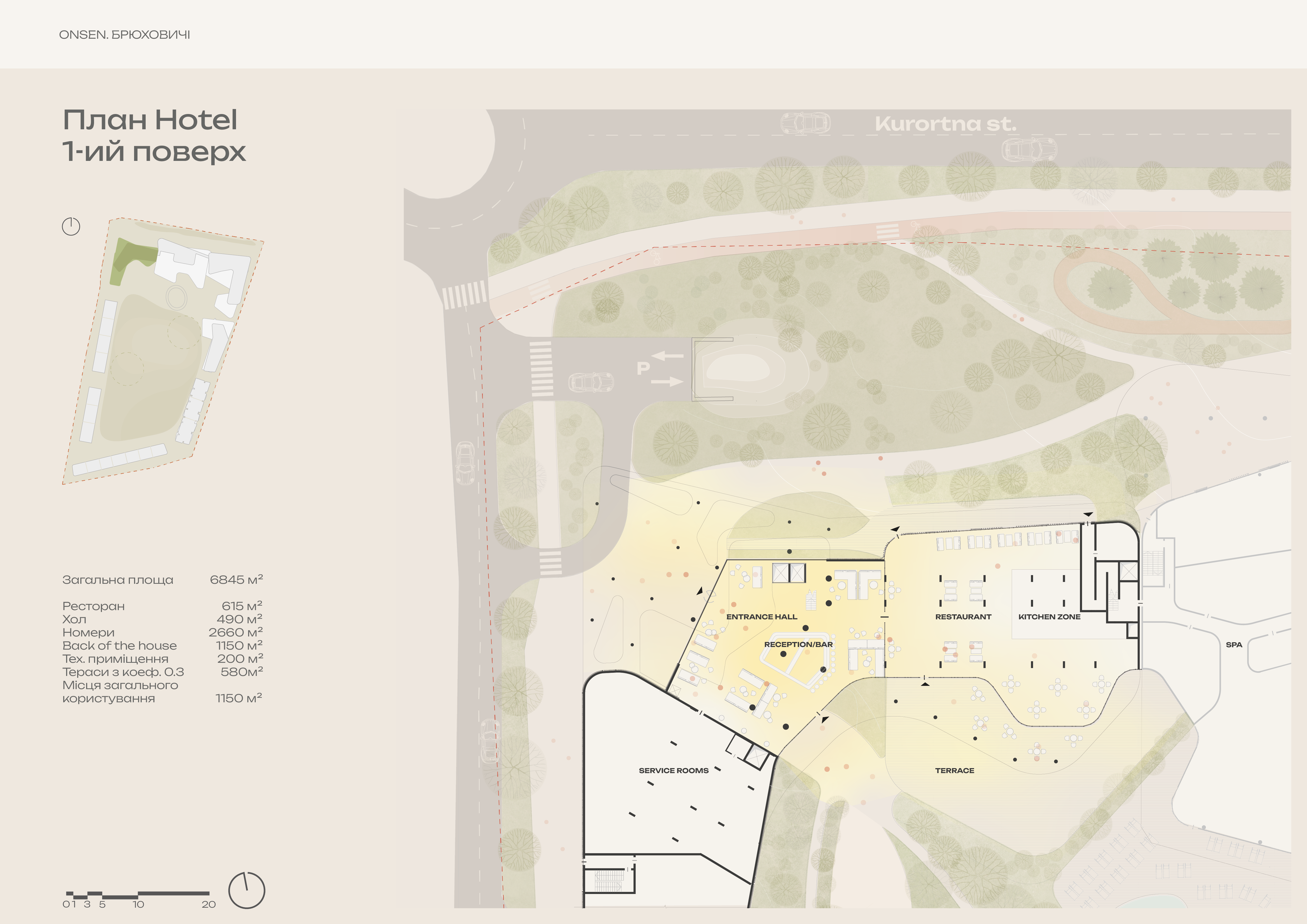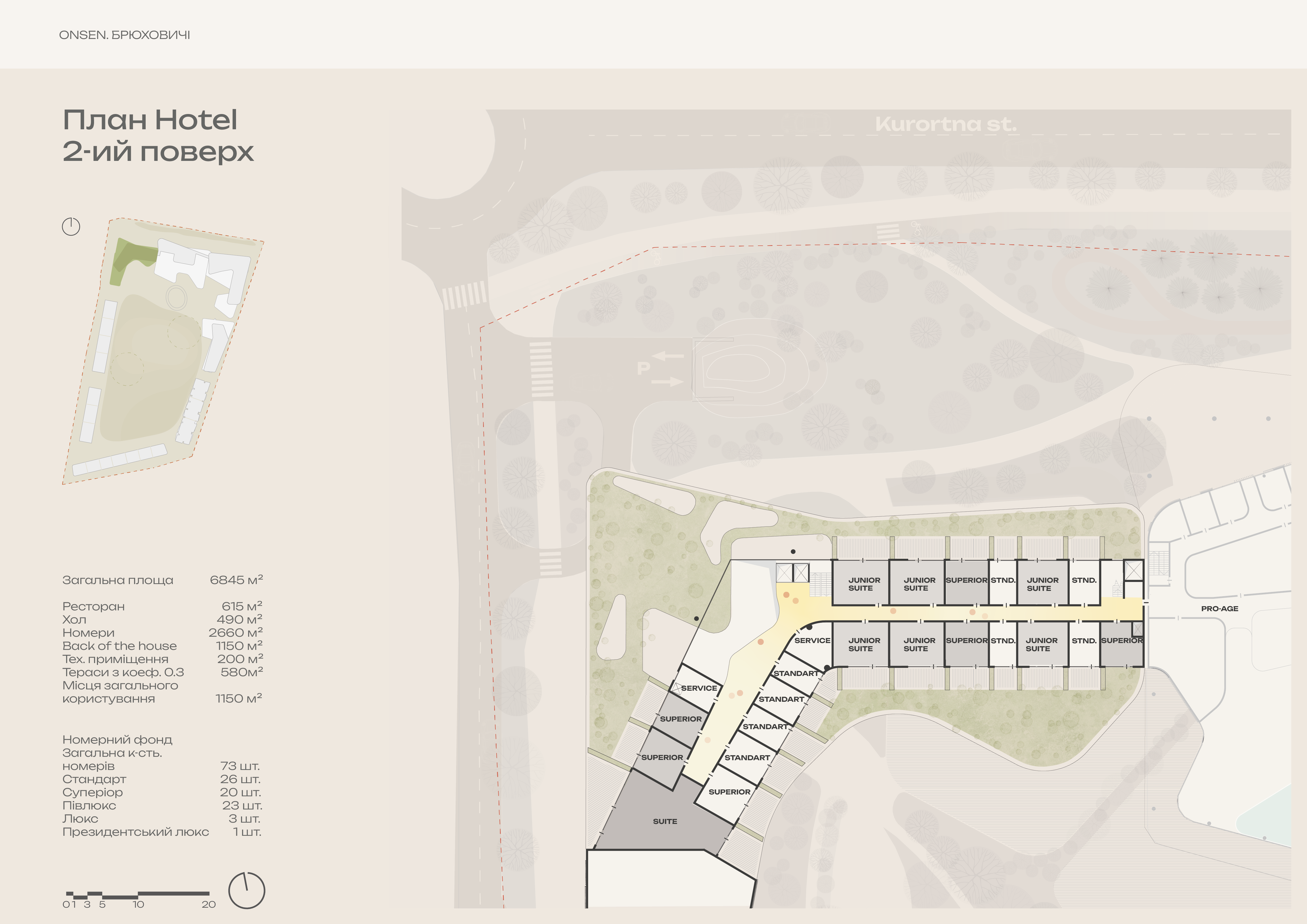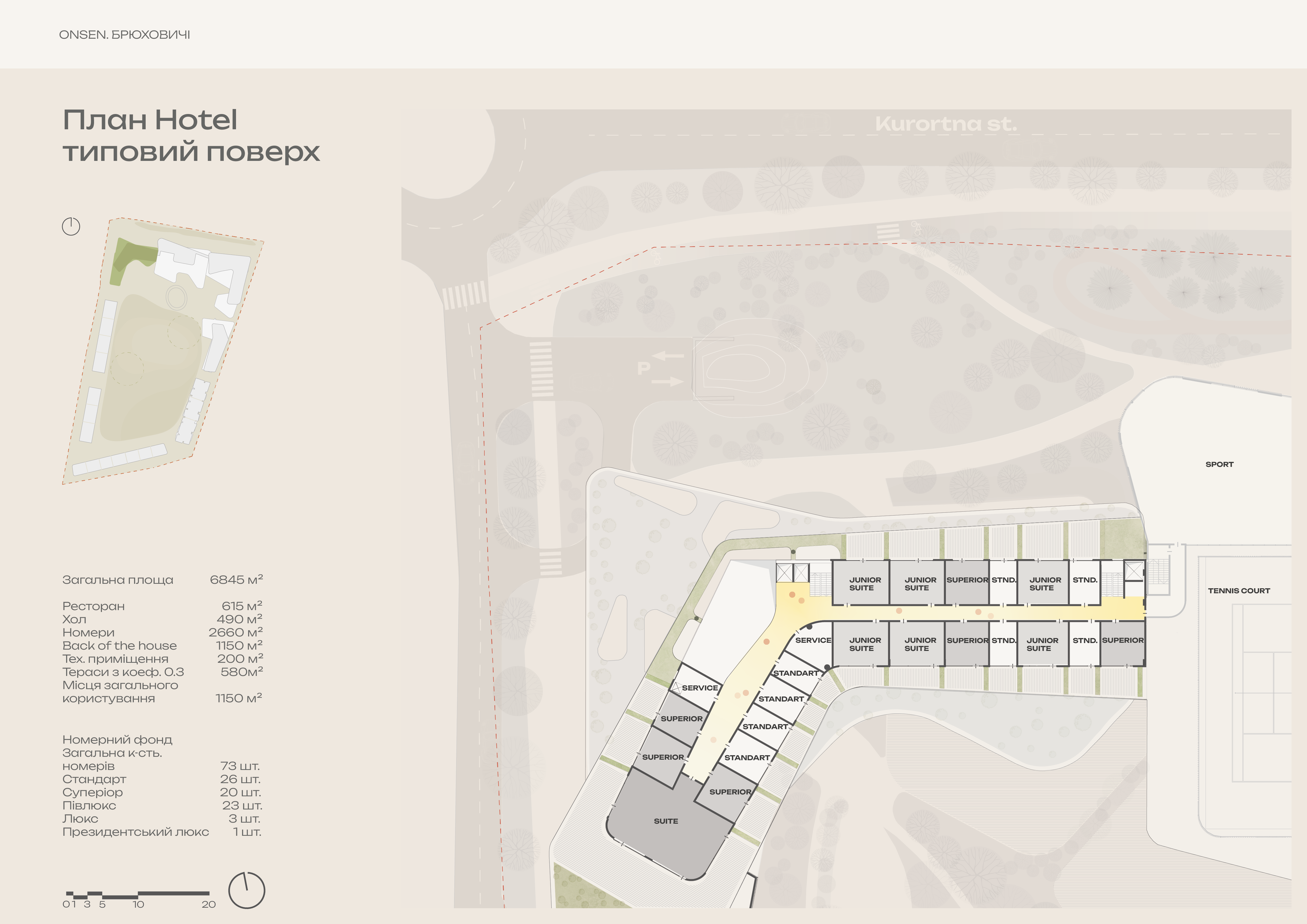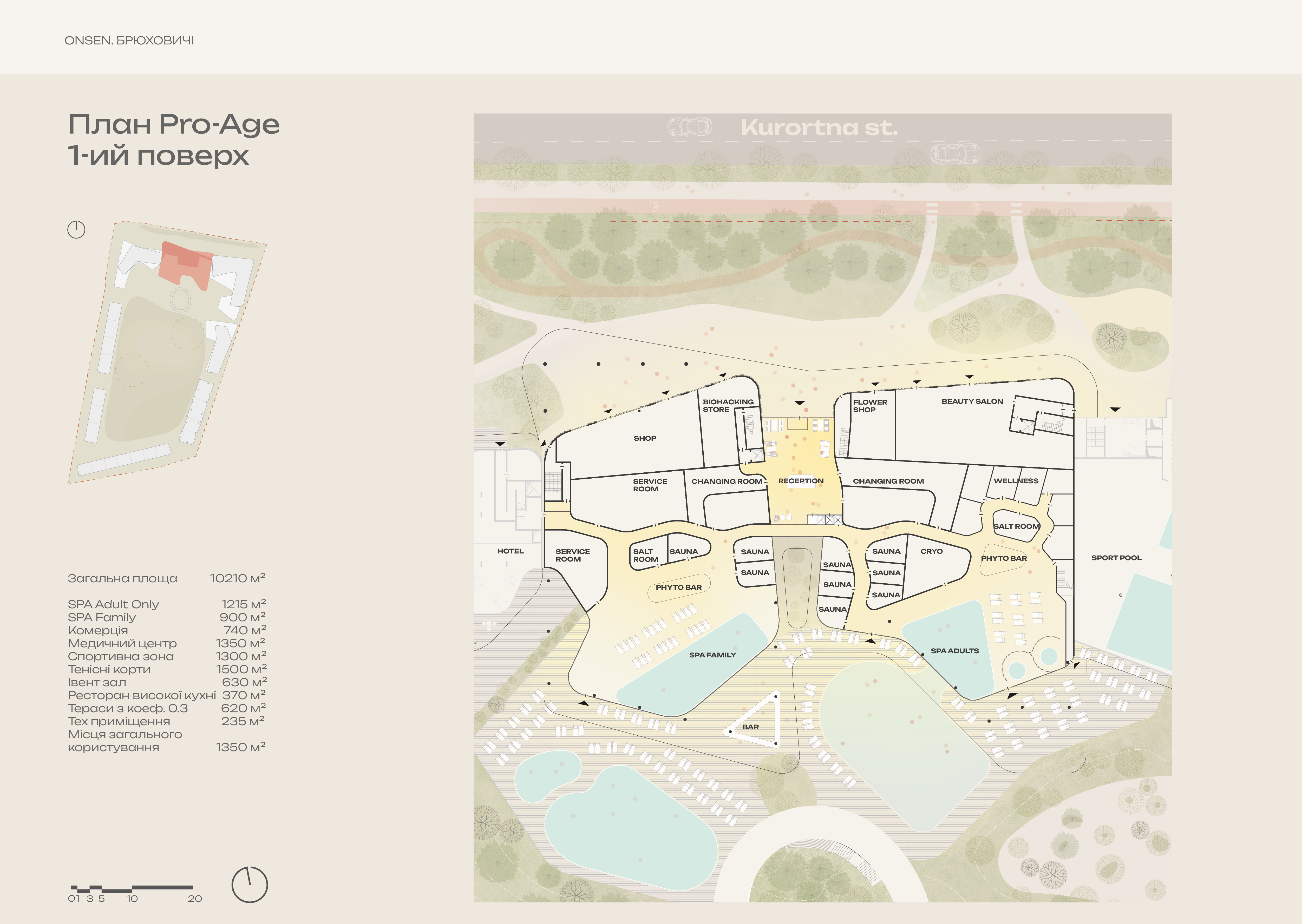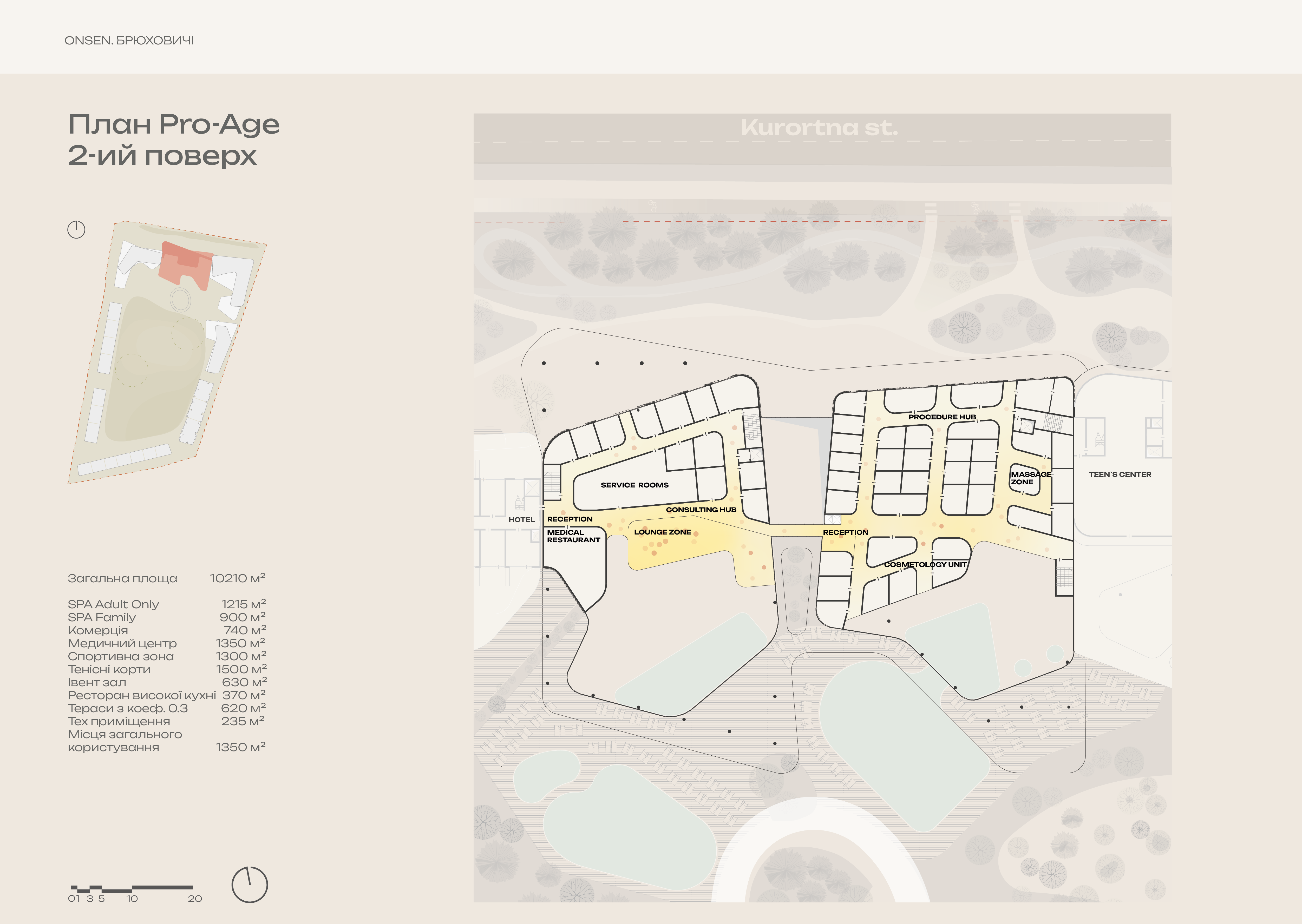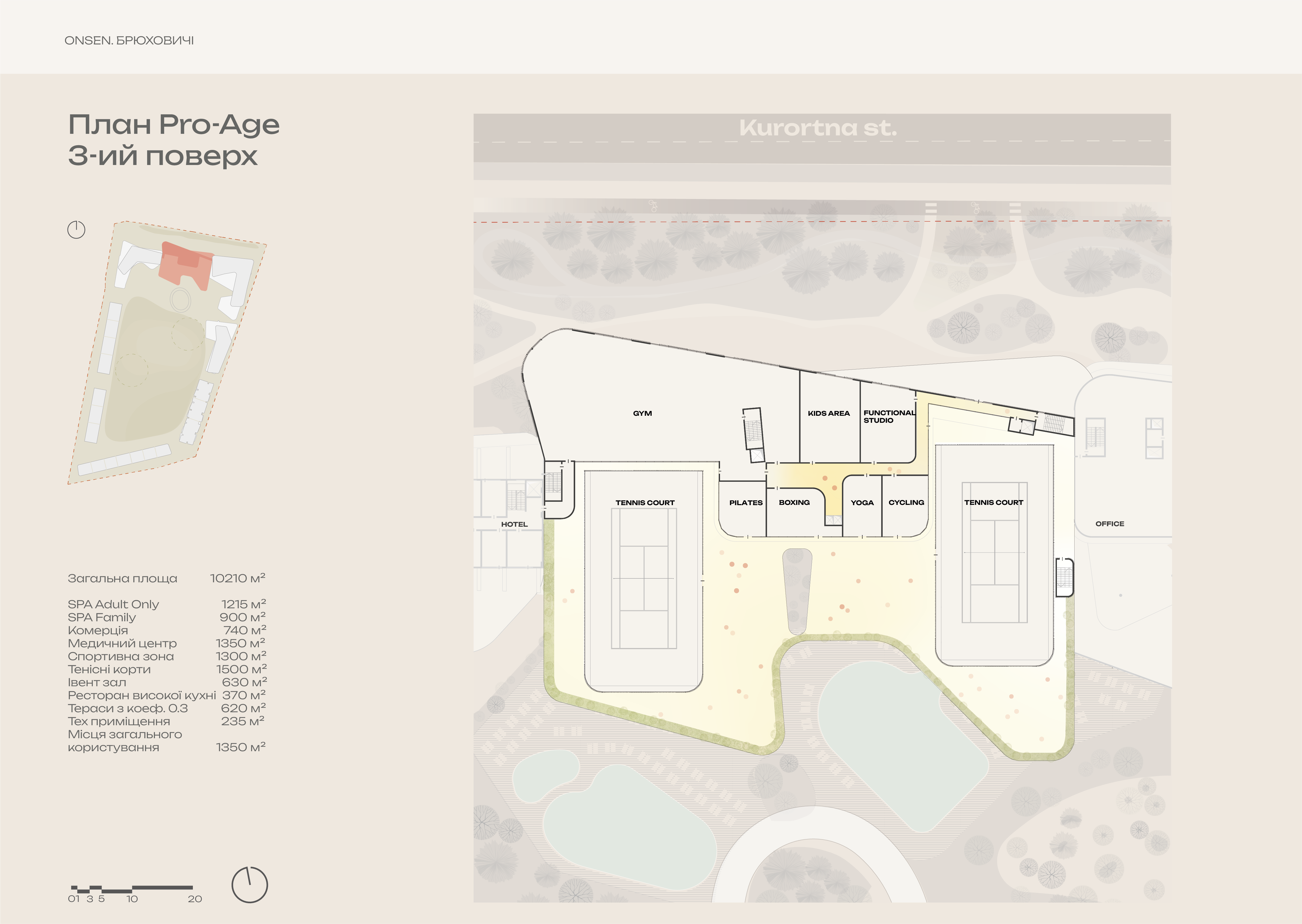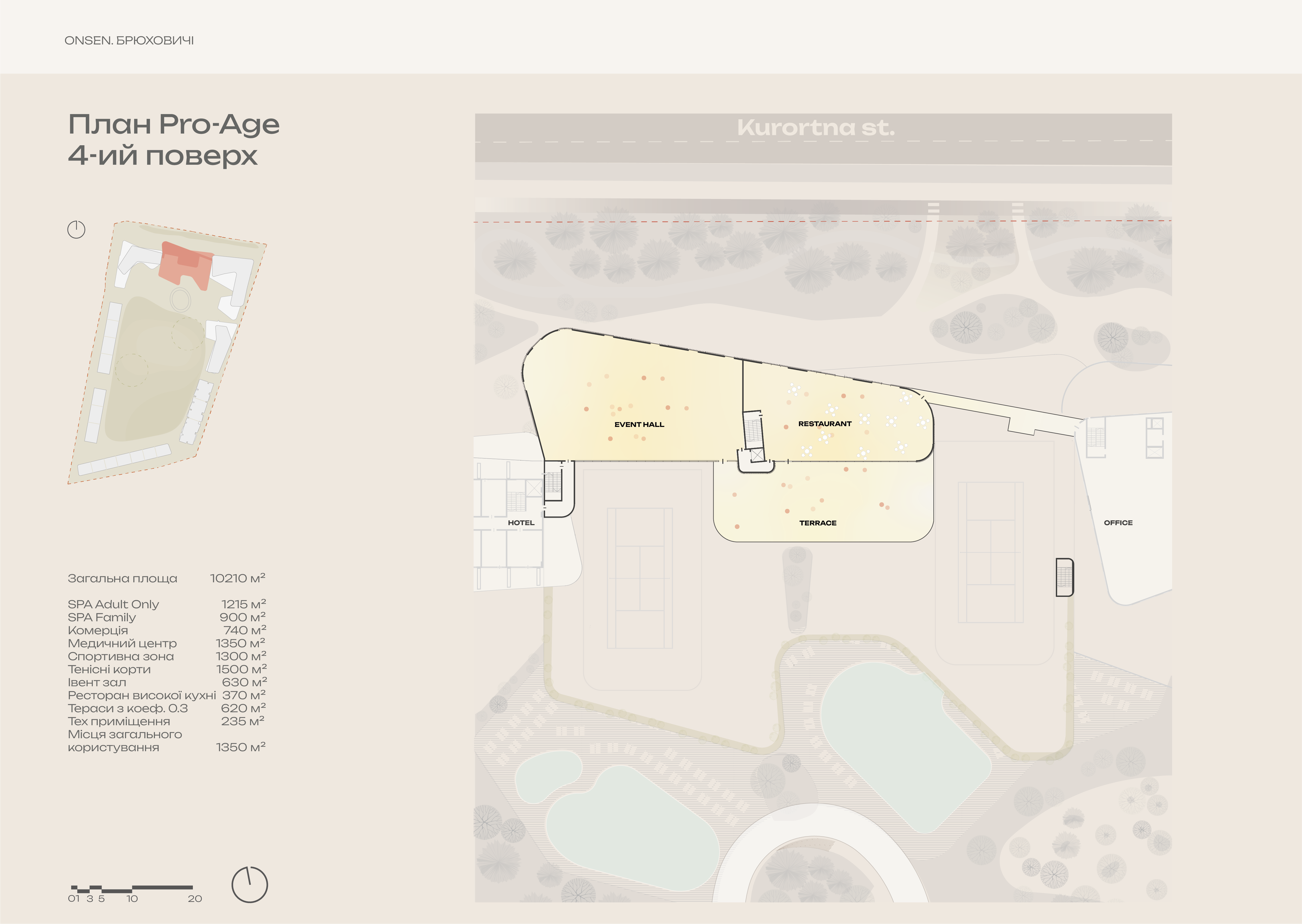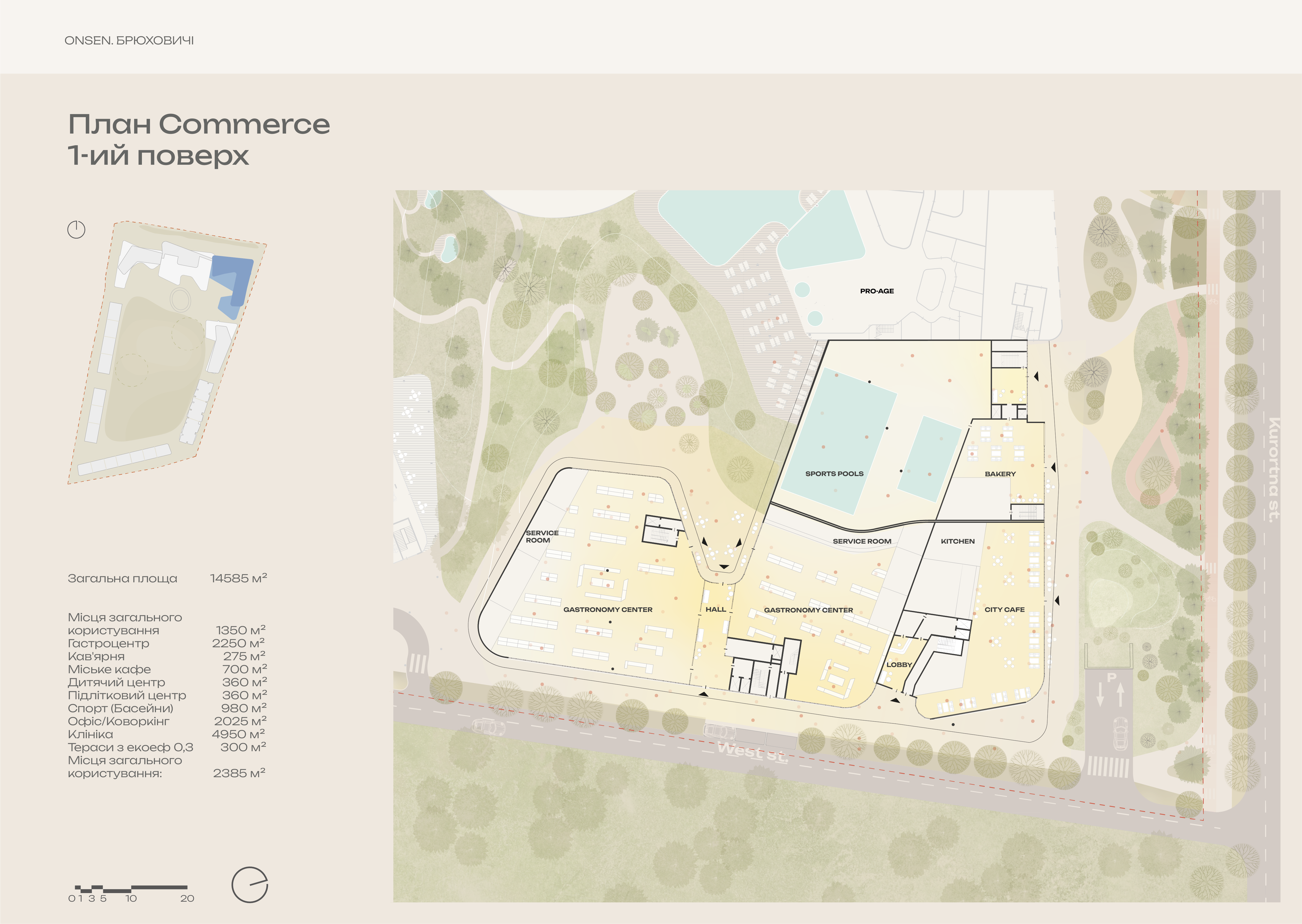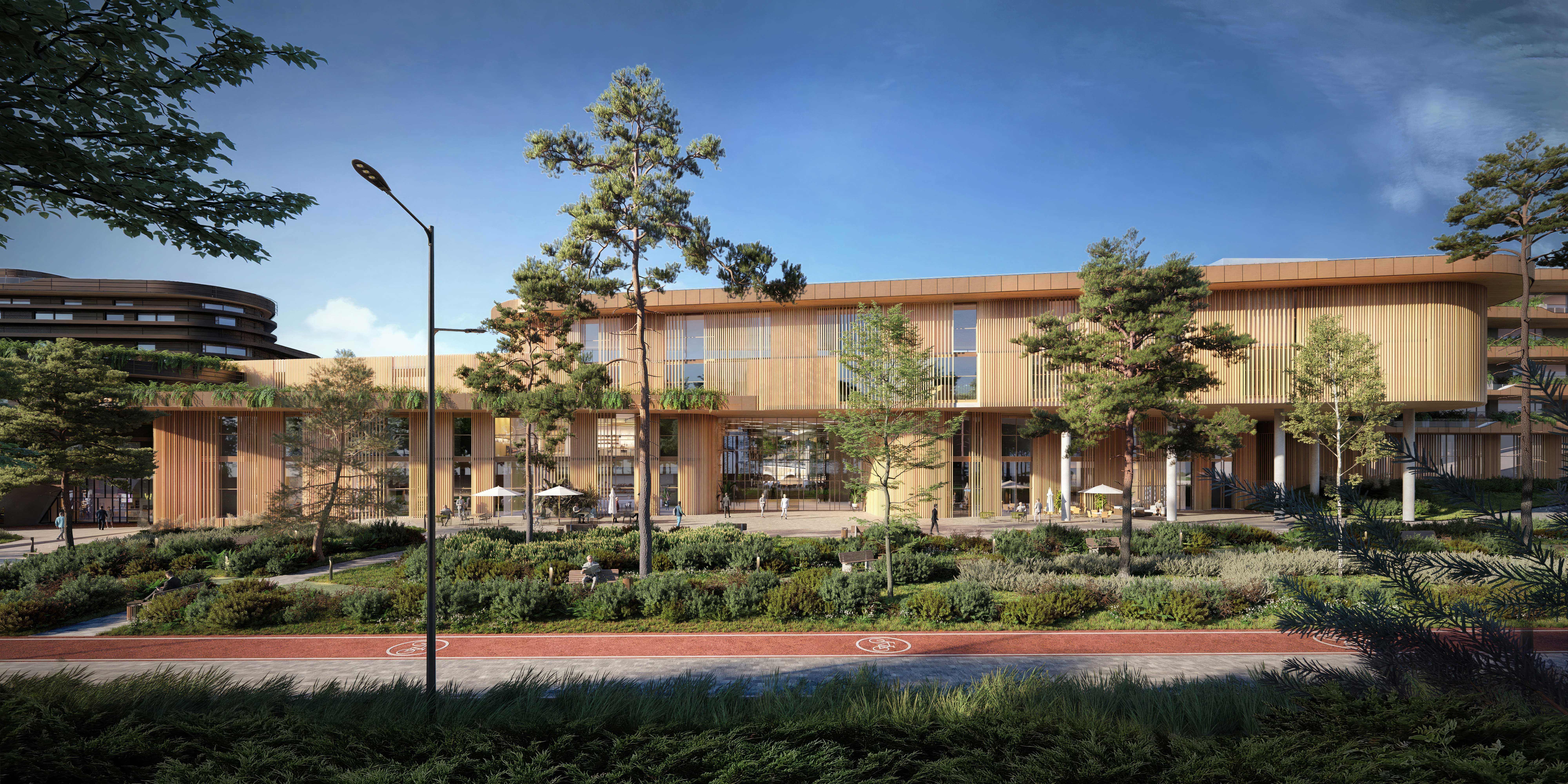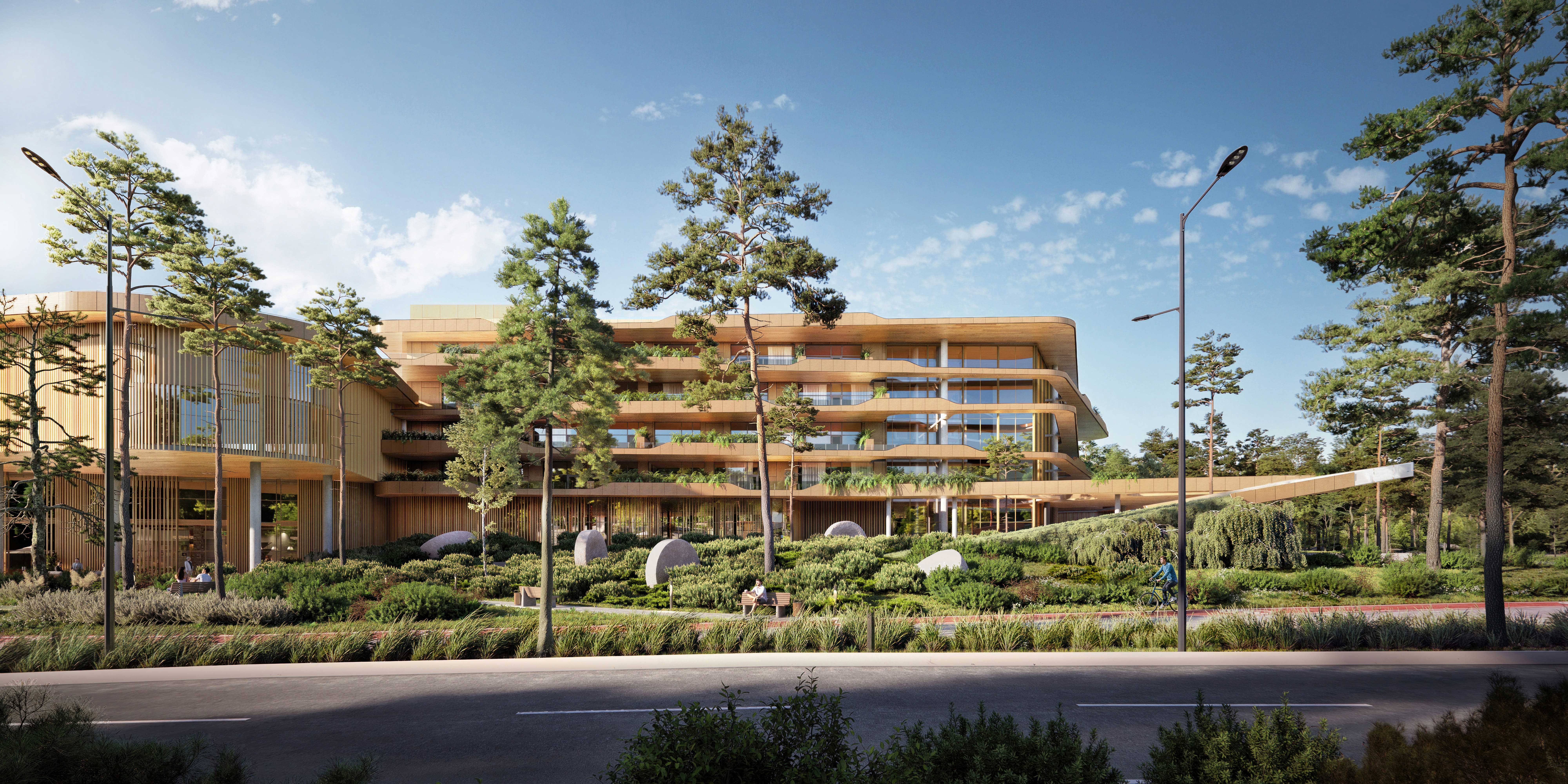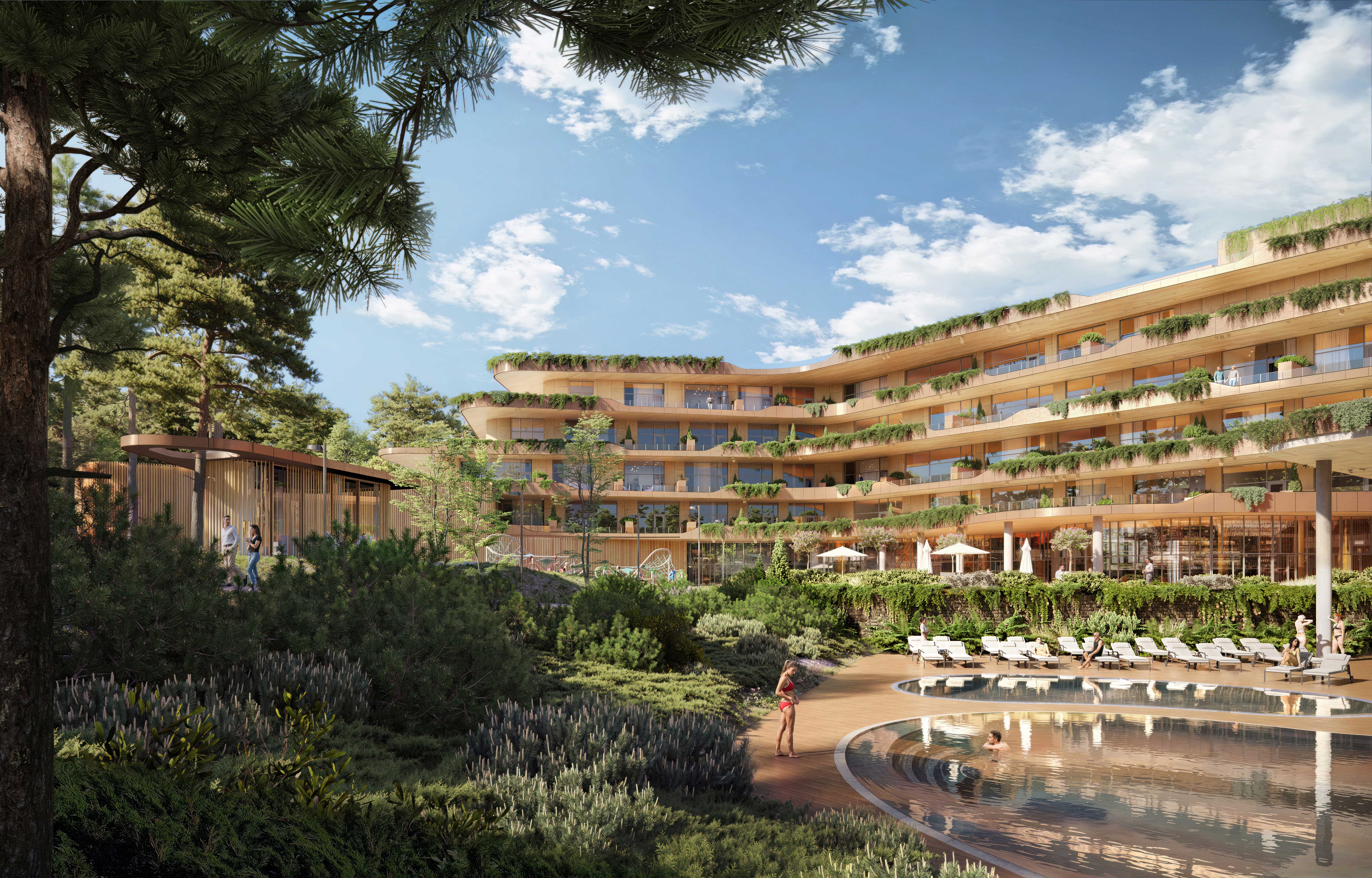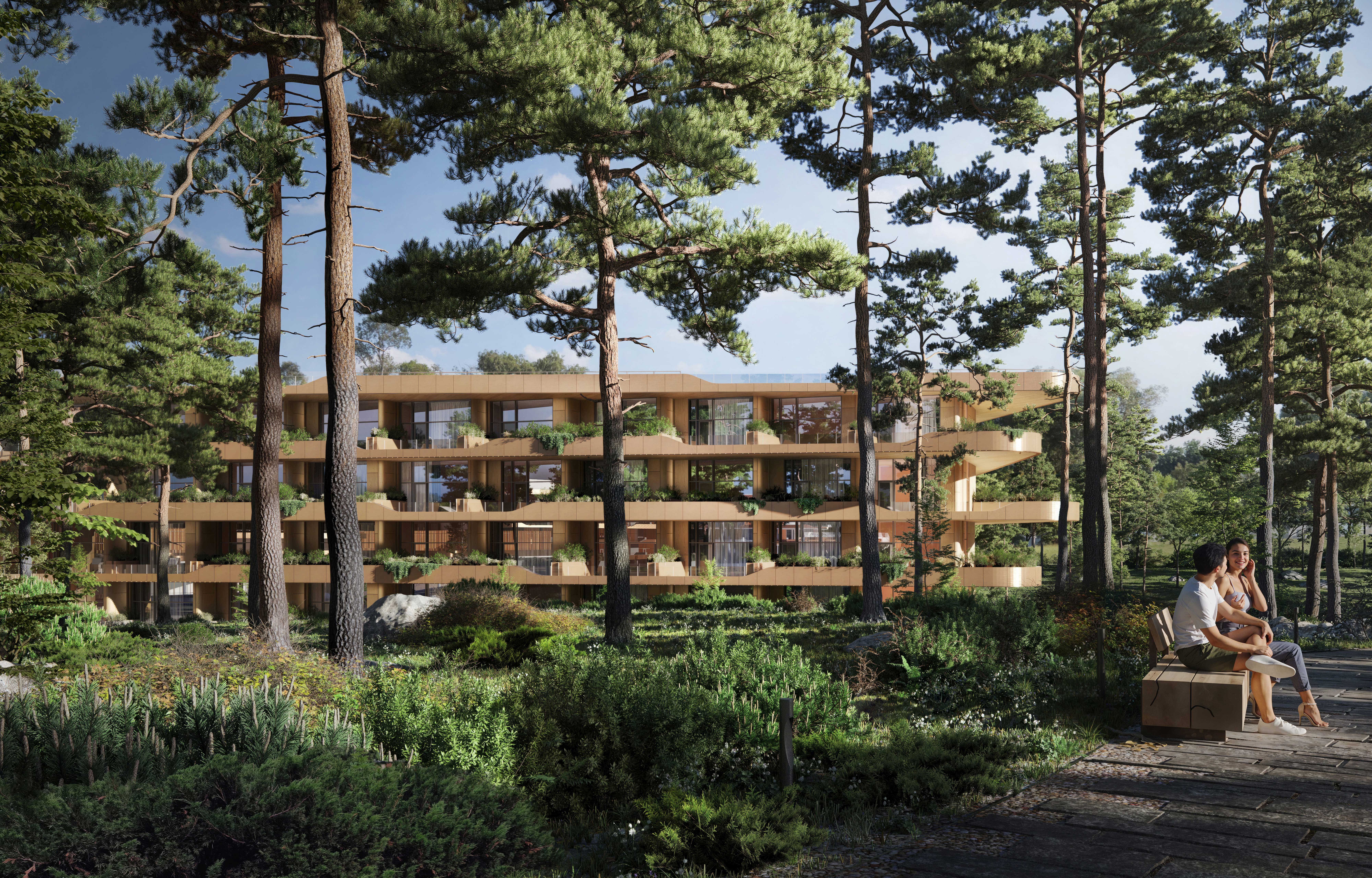
The concept is shaped around a preserved pine forest and natural thermal waters, where the idea of daily restoration is embedded into the very way of life. It is designed for people who value a balance between activity and quiet, who work in dynamic environments yet need regular physical and mental recovery without leaving the city.
The key feature is the fusion of an urban квартал typology, suburban living, and a resort: perimeter block development forms a protected inner forest core, while the architecture operates below the tree canopy, avoiding competition with nature. The concept is reinforced by the Japanese philosophy of onsen — as a ritual of silence, water, and balance — expressed through spa infrastructure, thermal baths, and the integration of water into everyday life.
The space is conceived as a “city within a city,” offering a full range of services without compromising privacy: public functions are placed along the periphery, while the inner forest remains a quiet oasis for residents. Architecturally, this is articulated through terraced forms, deep open spaces, portal-like openings, and materials drawn from a natural palette, creating the feeling of living “within the forest,” where the core value is the quality of time, calmness, and restoration.
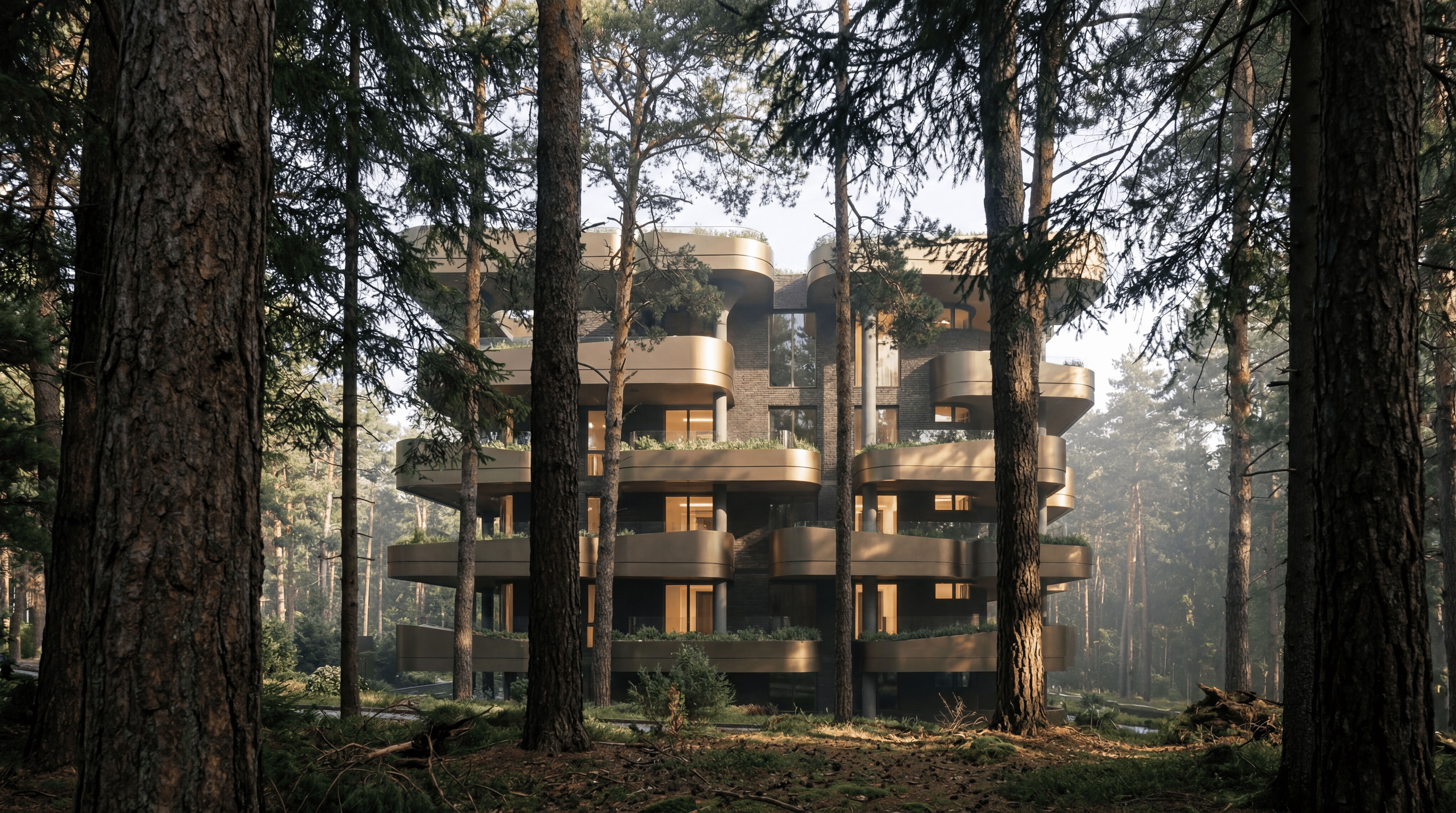
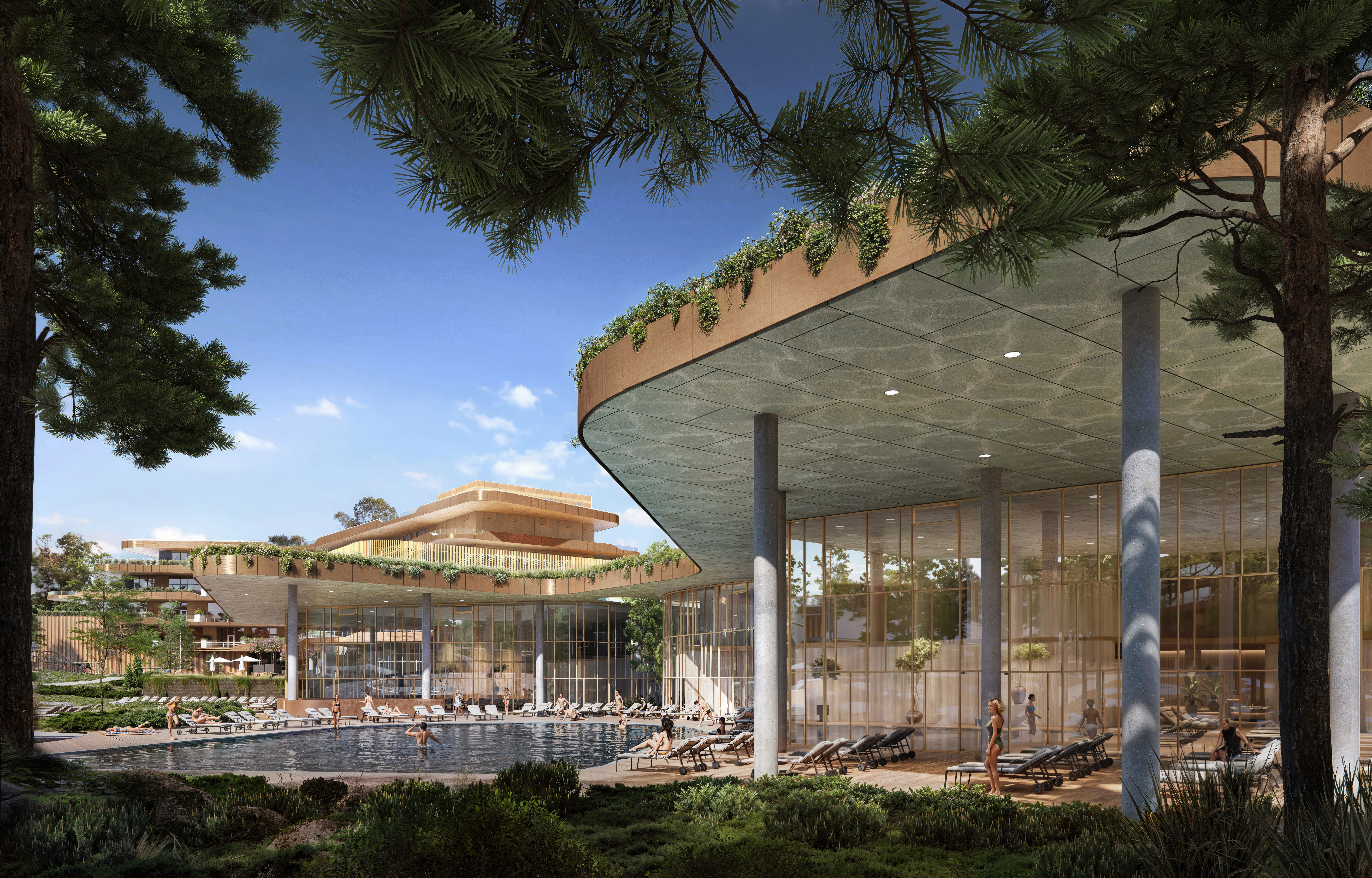
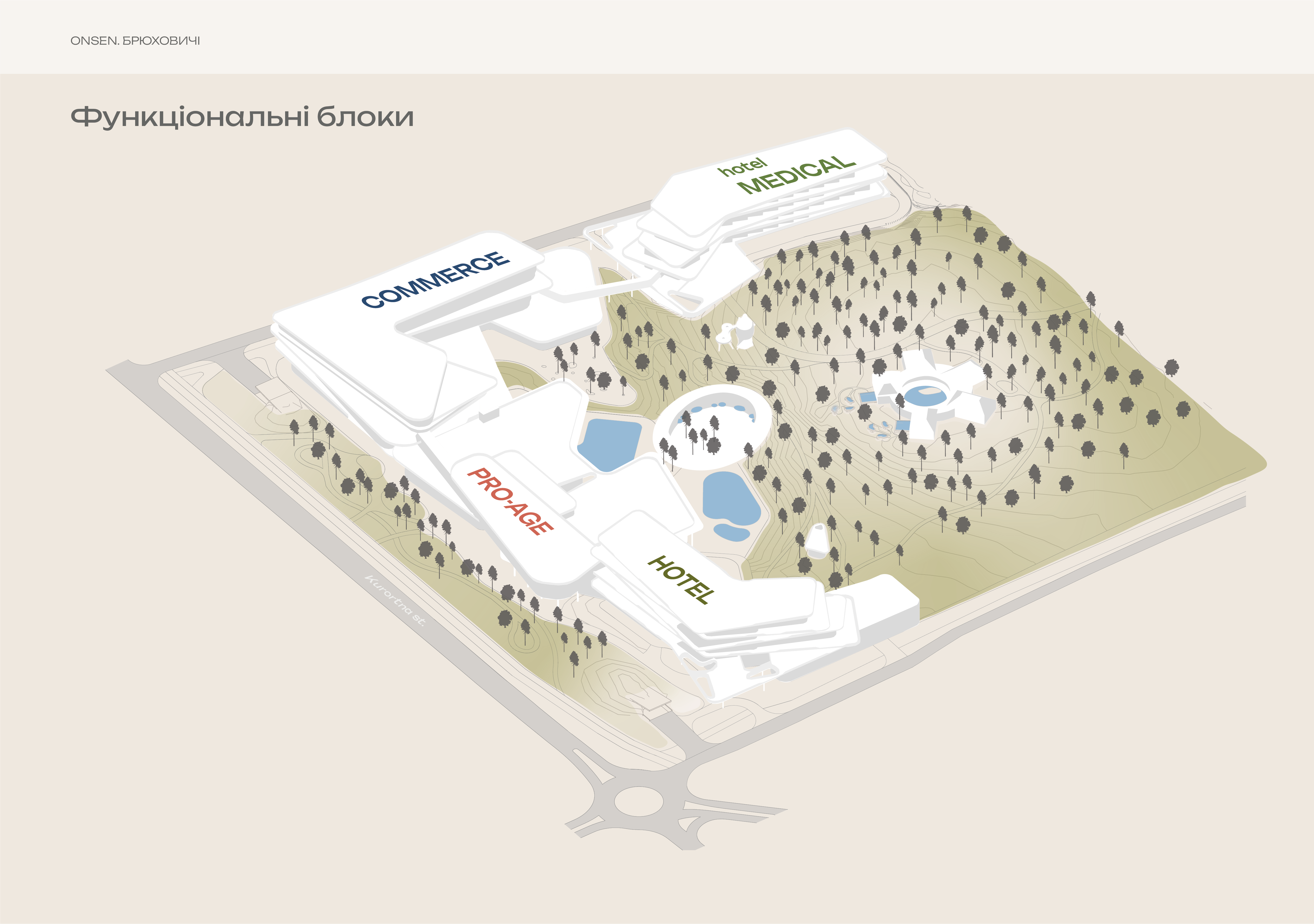
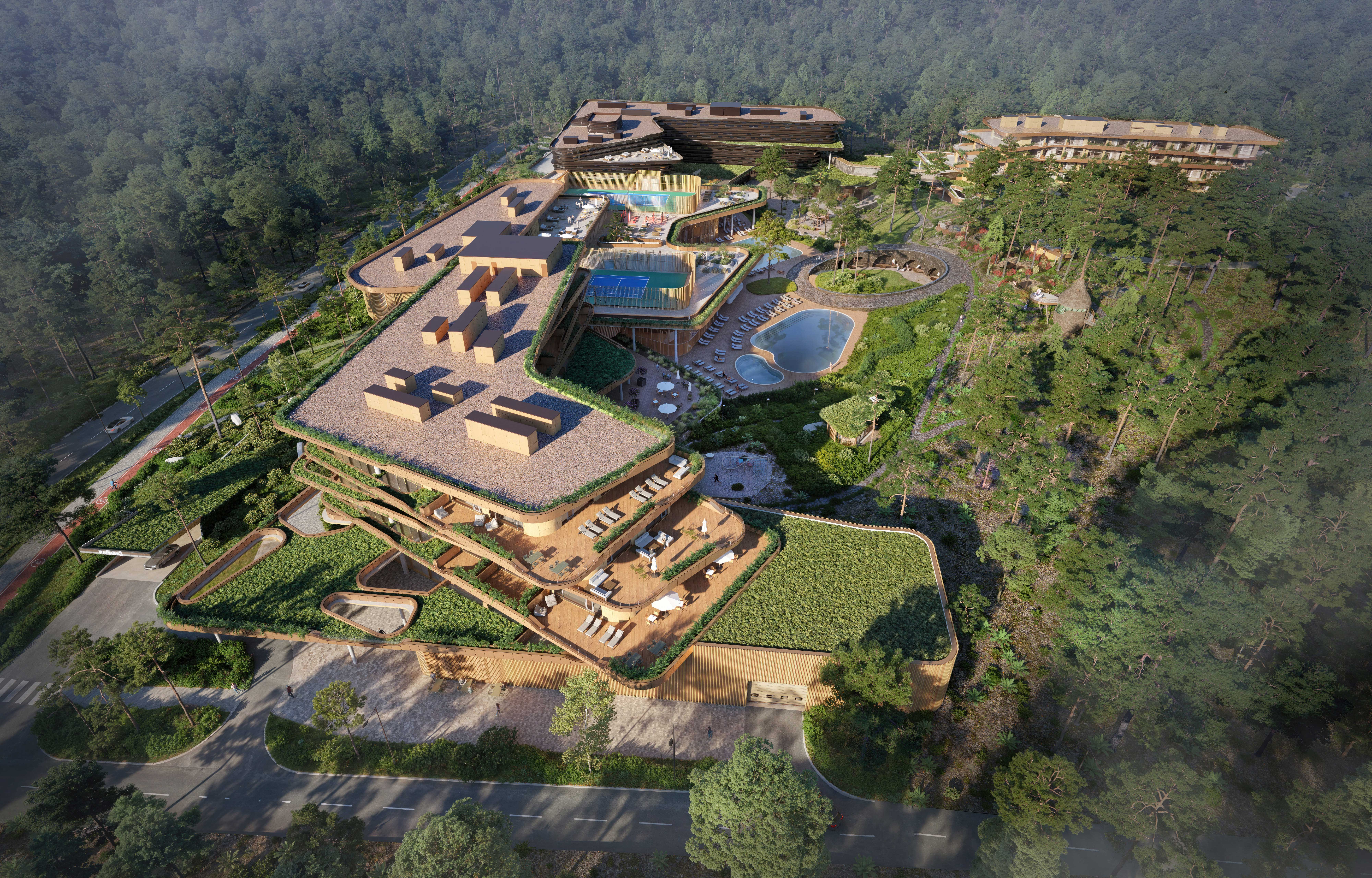
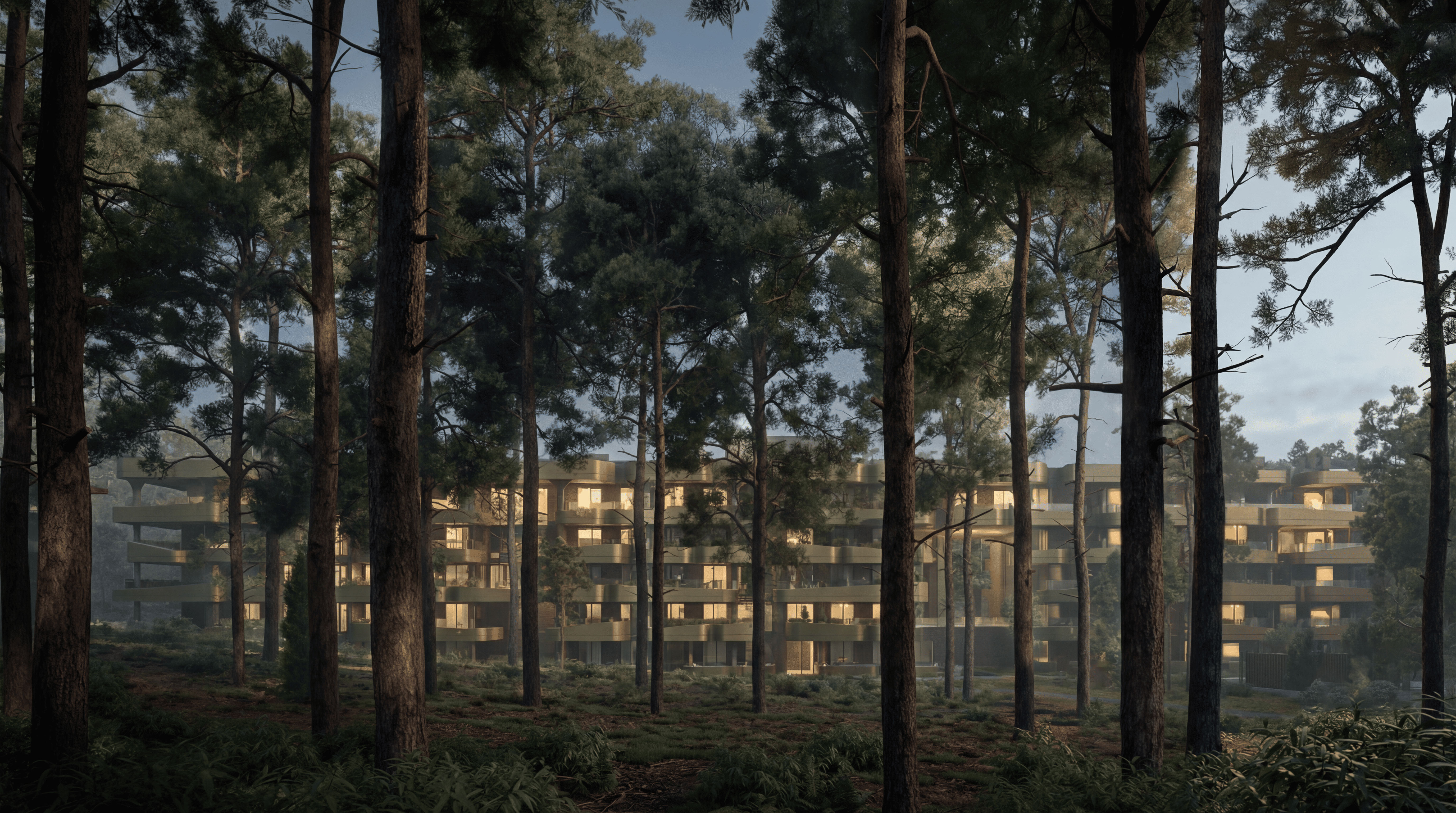
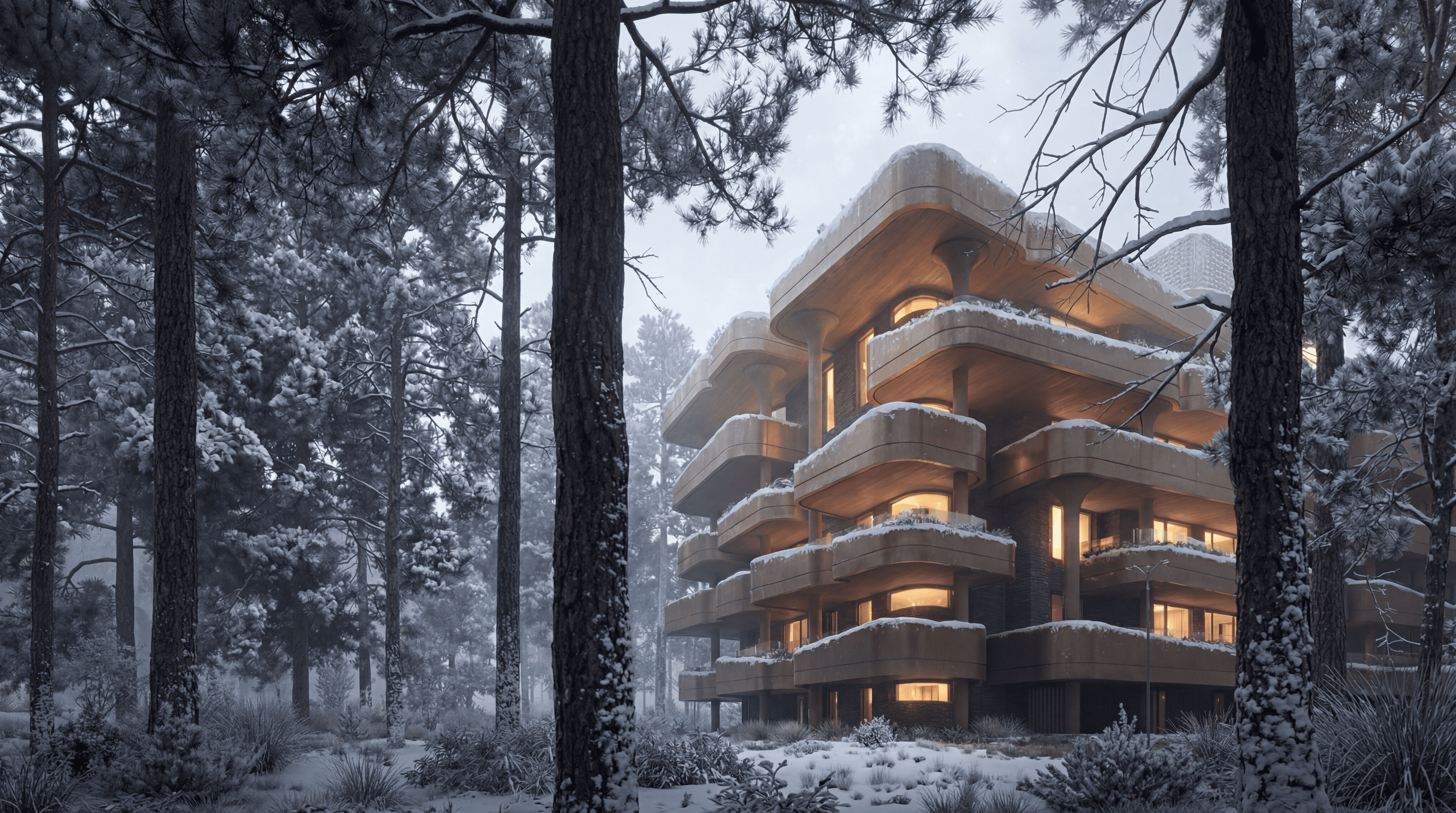
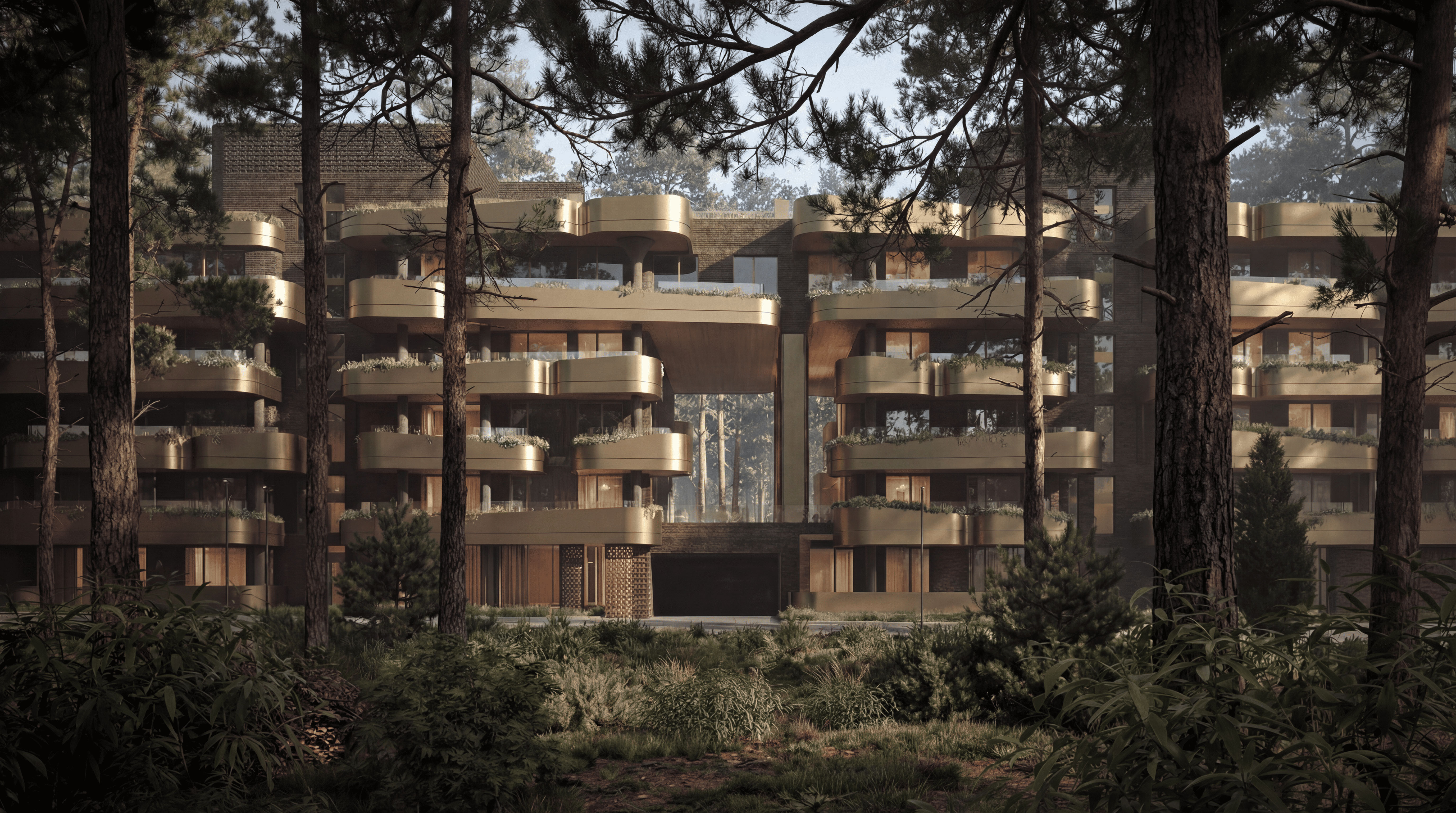
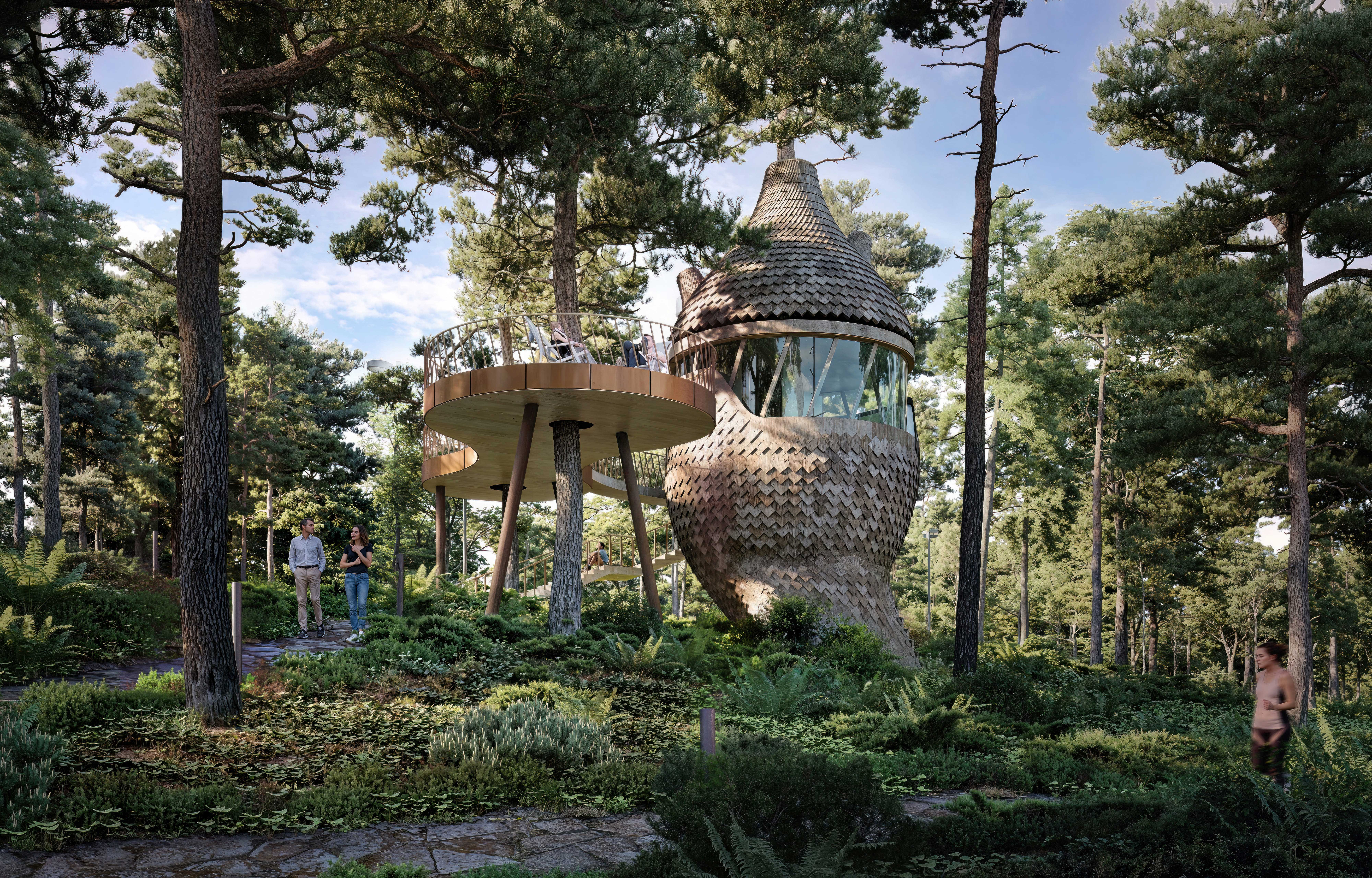
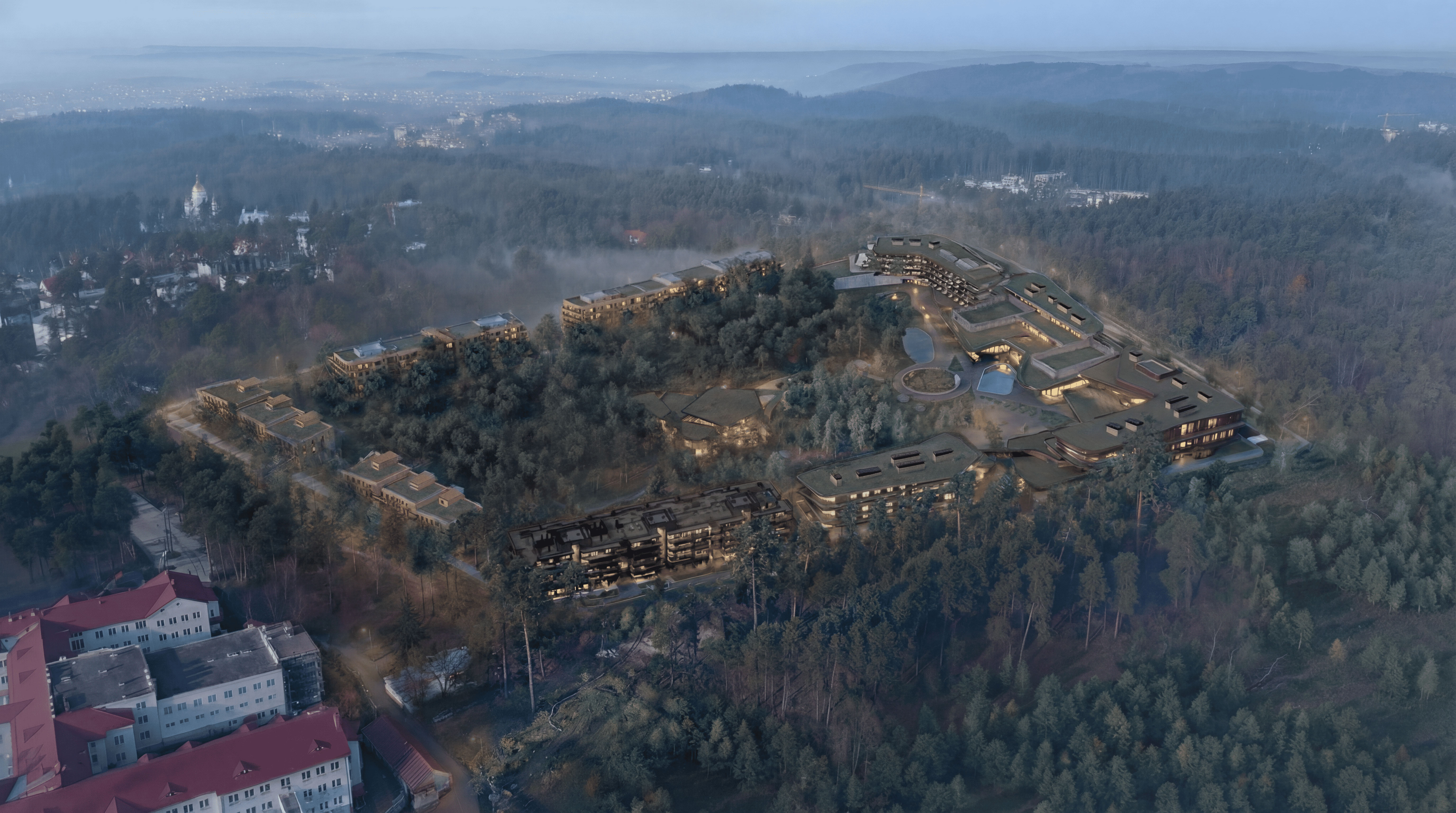
The complex is designed to preserve the pine forest as the central core of the site. The buildings are arranged along the perimeter around the forest, forming a 2-hectare inner natural oasis with mature pine trees. This approach ensures a unique environmental quality: clean air, silence, a natural microclimate, and a constant sense of the forest in everyday life.
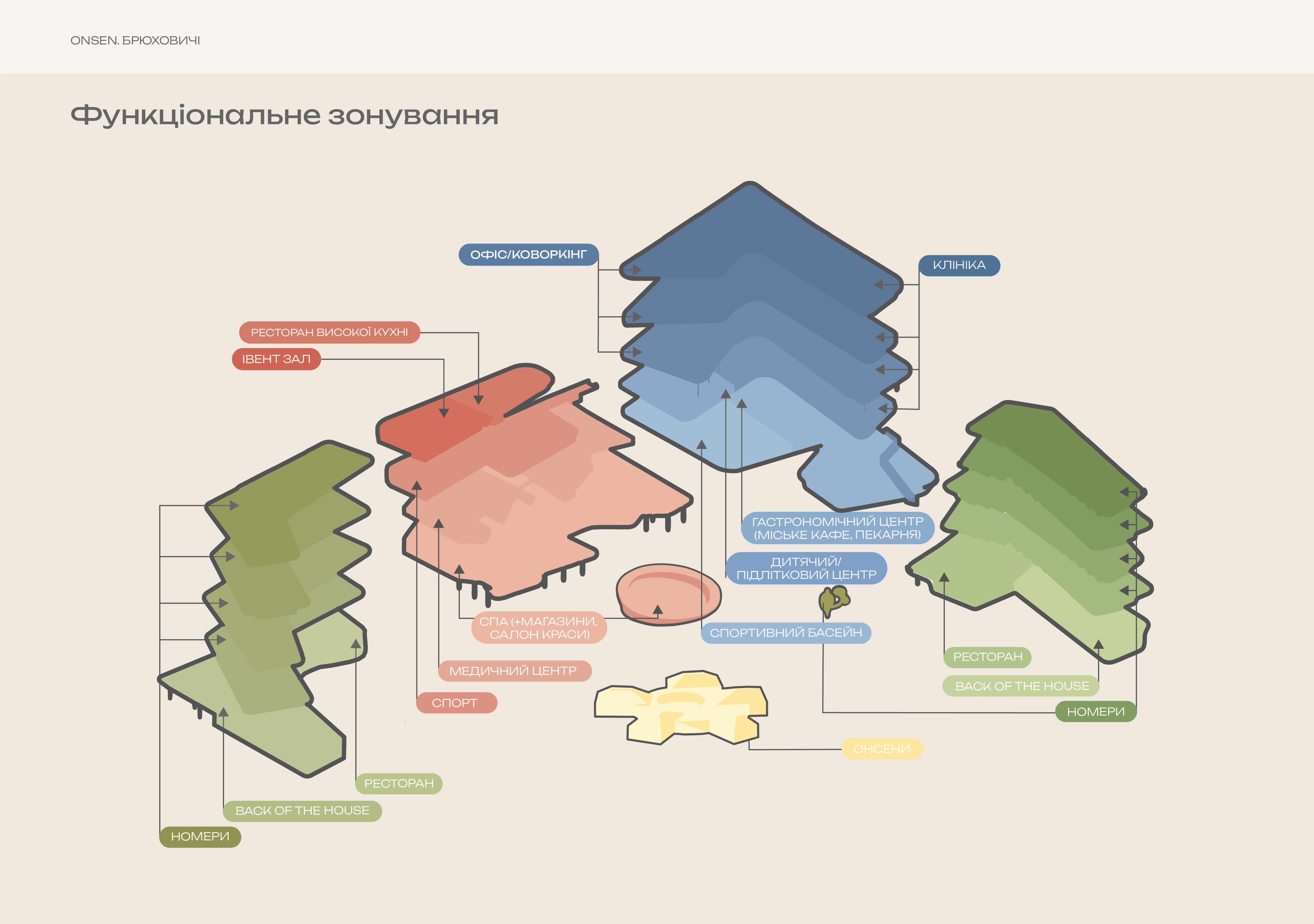
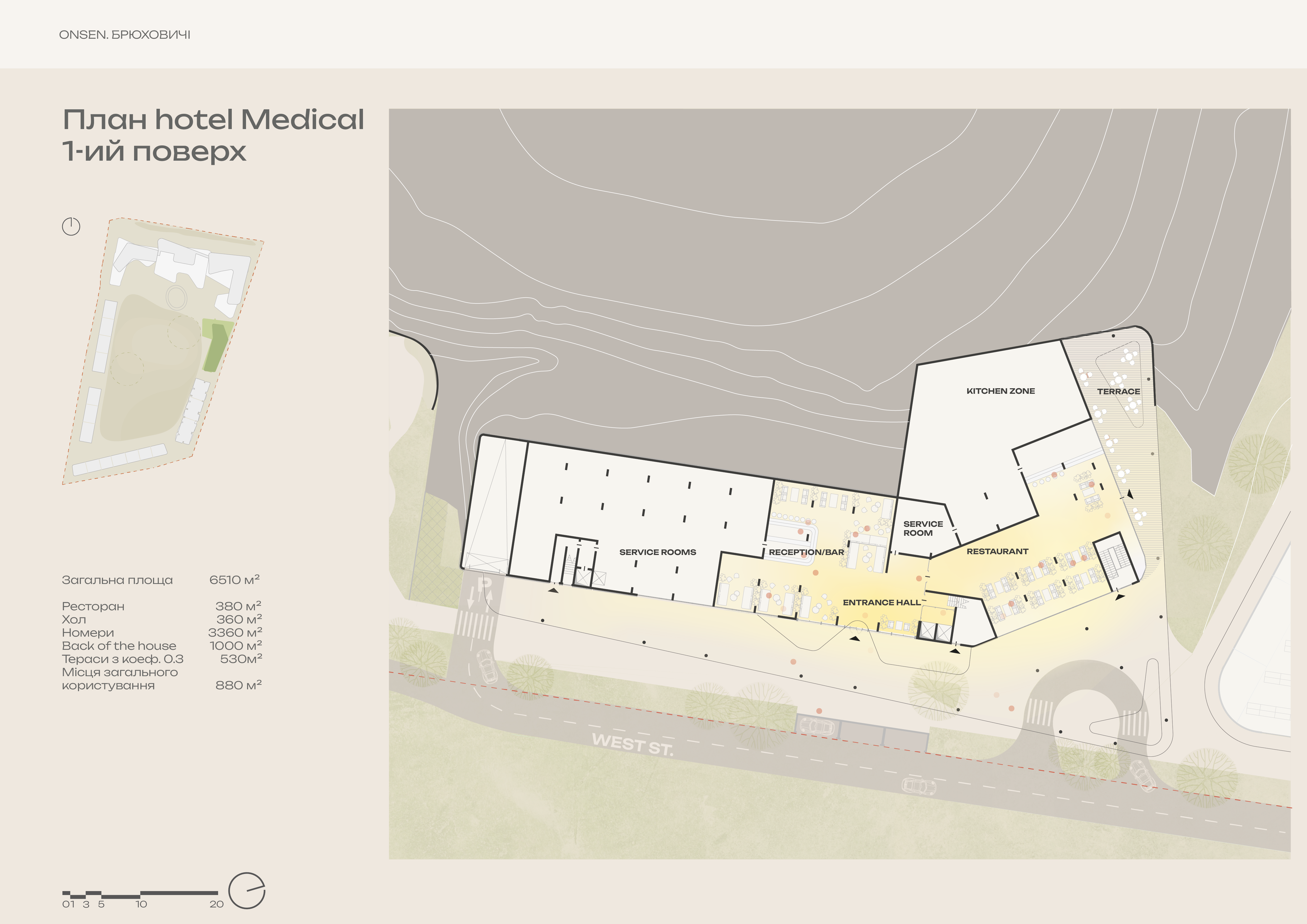
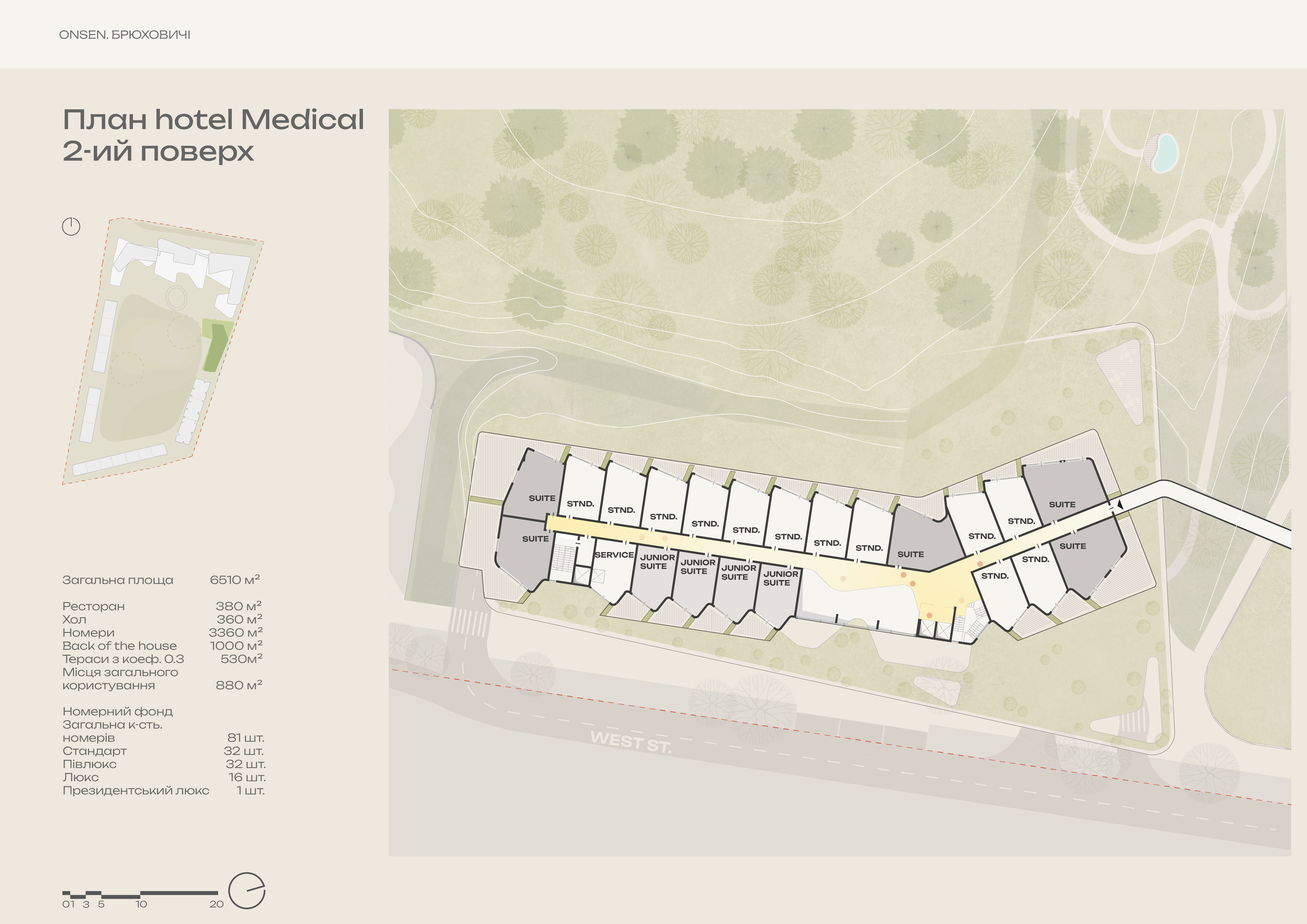
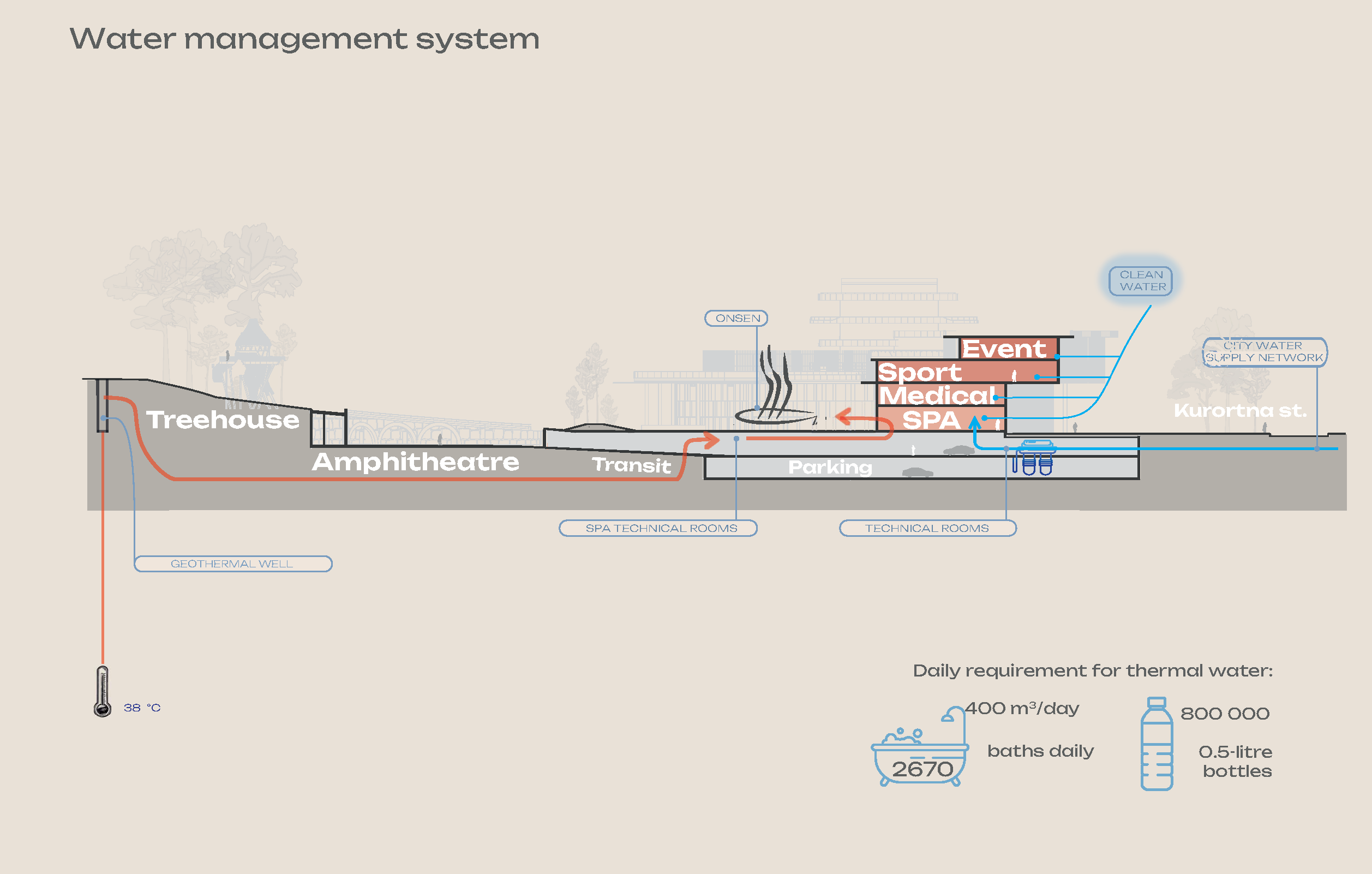
Another key asset of the site is its thermal waters. This forms the basis of the project’s wellness infrastructure, which includes hotels, a spa, a Japanese onsen, a pro-age clinic, and related services. A school is located nearby, and a preschool facility is planned — making the area a “city within a city,” where essential needs are met without unnecessary travel.
The forest is not only preserved but thoughtfully enhanced as a space for walking and relaxation: with paths, quiet spots, and areas for children and social interaction — without turning it into a noisy “park attraction,” and with full respect for the natural environment.
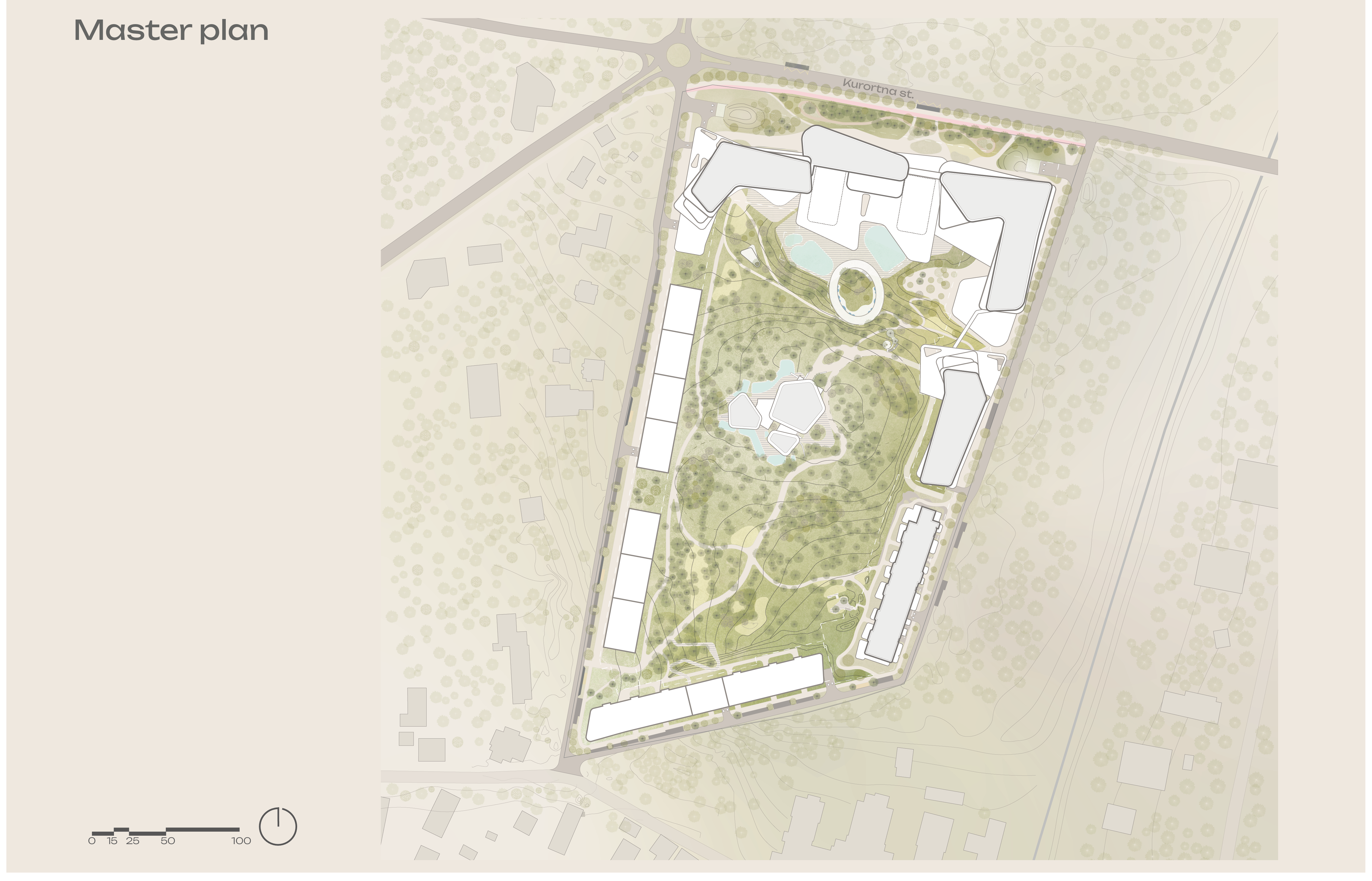
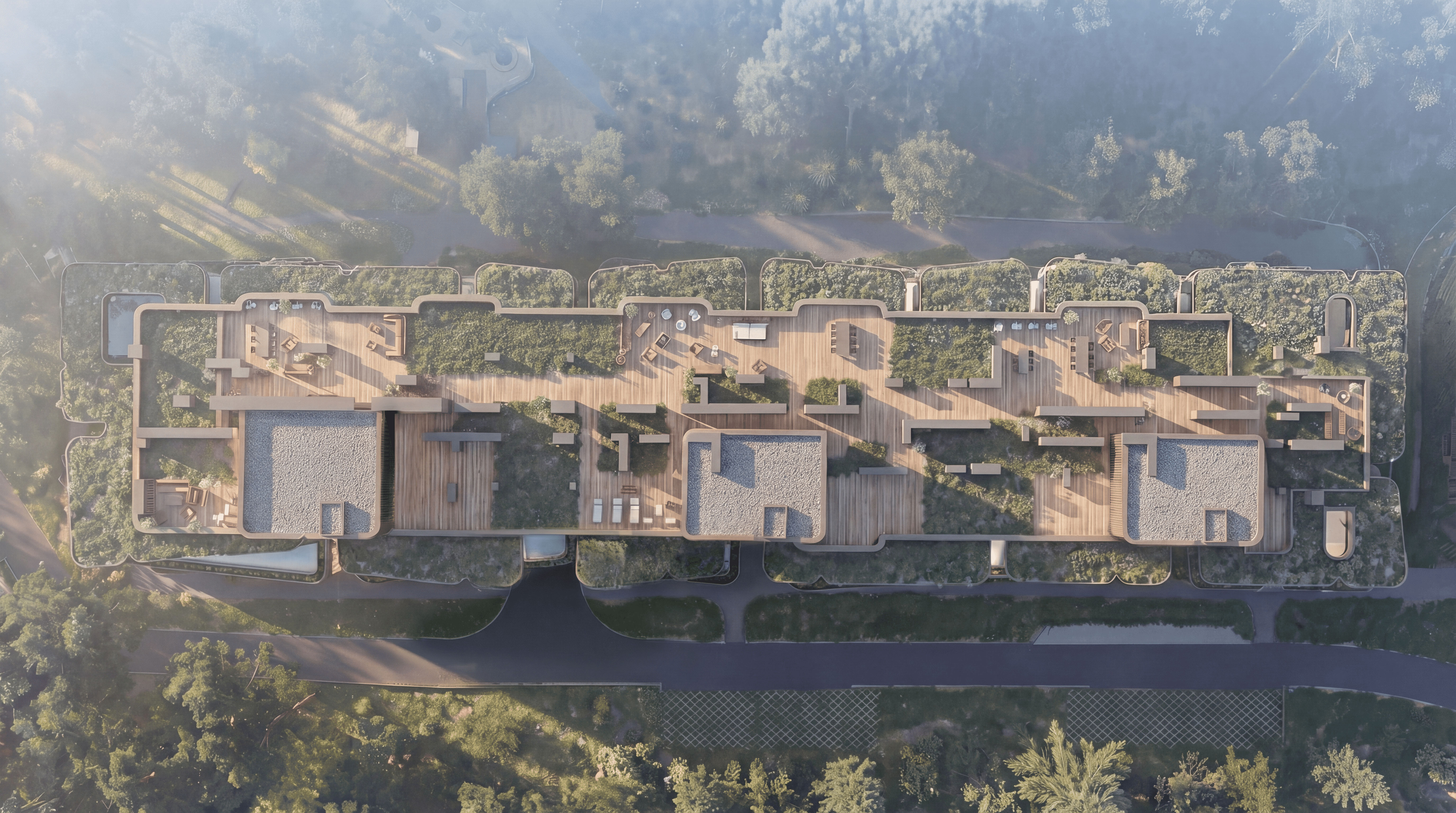
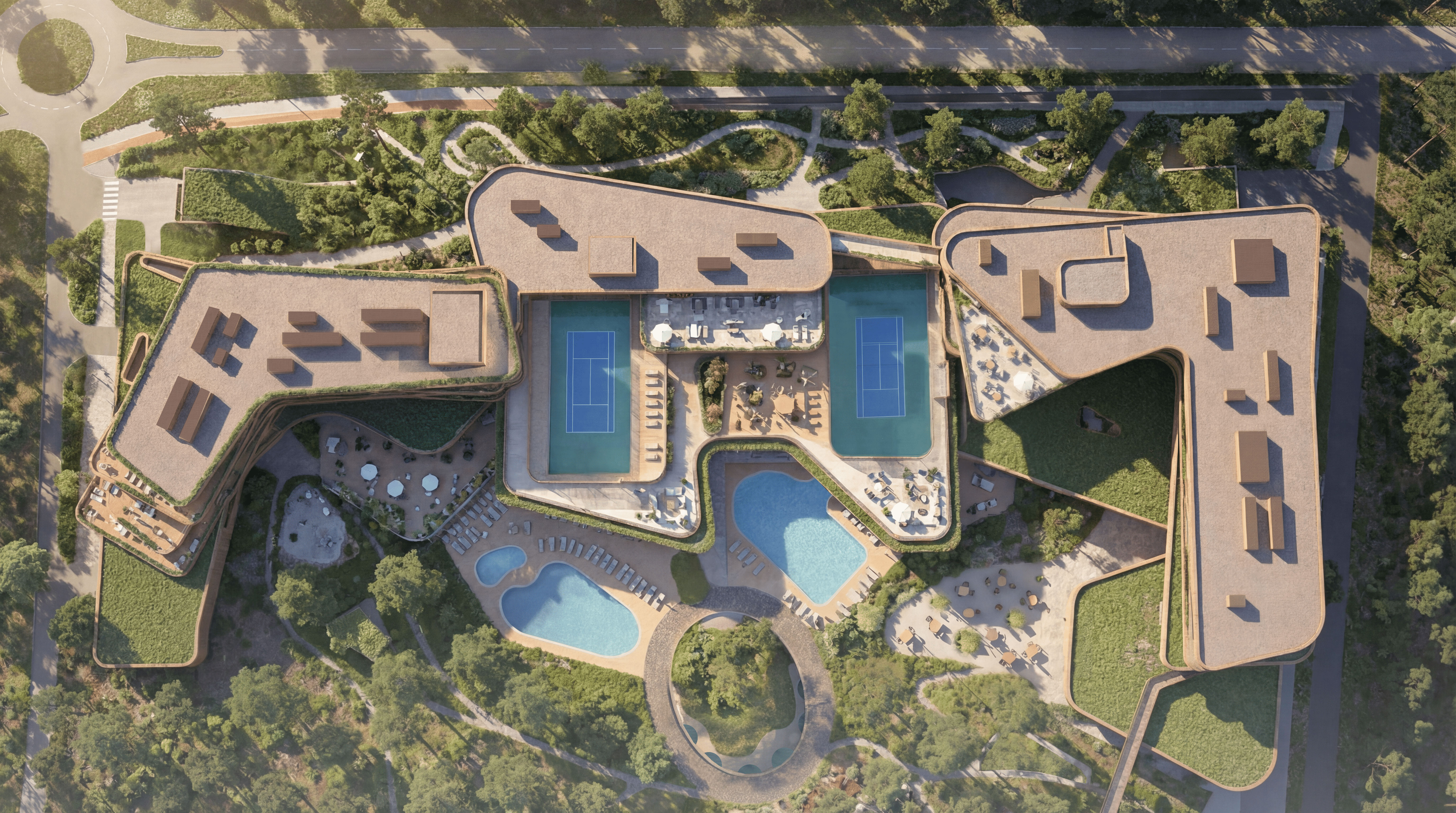
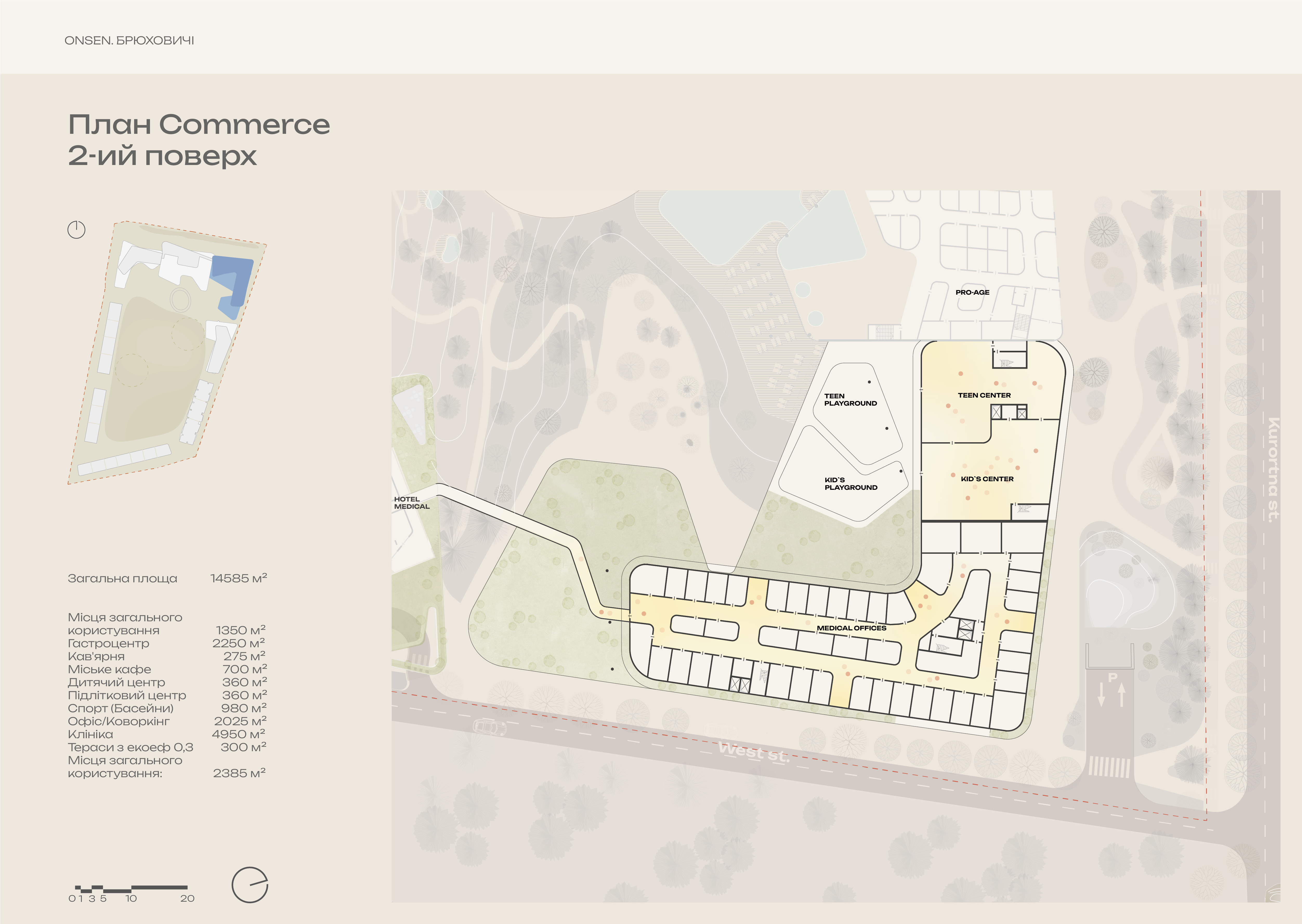
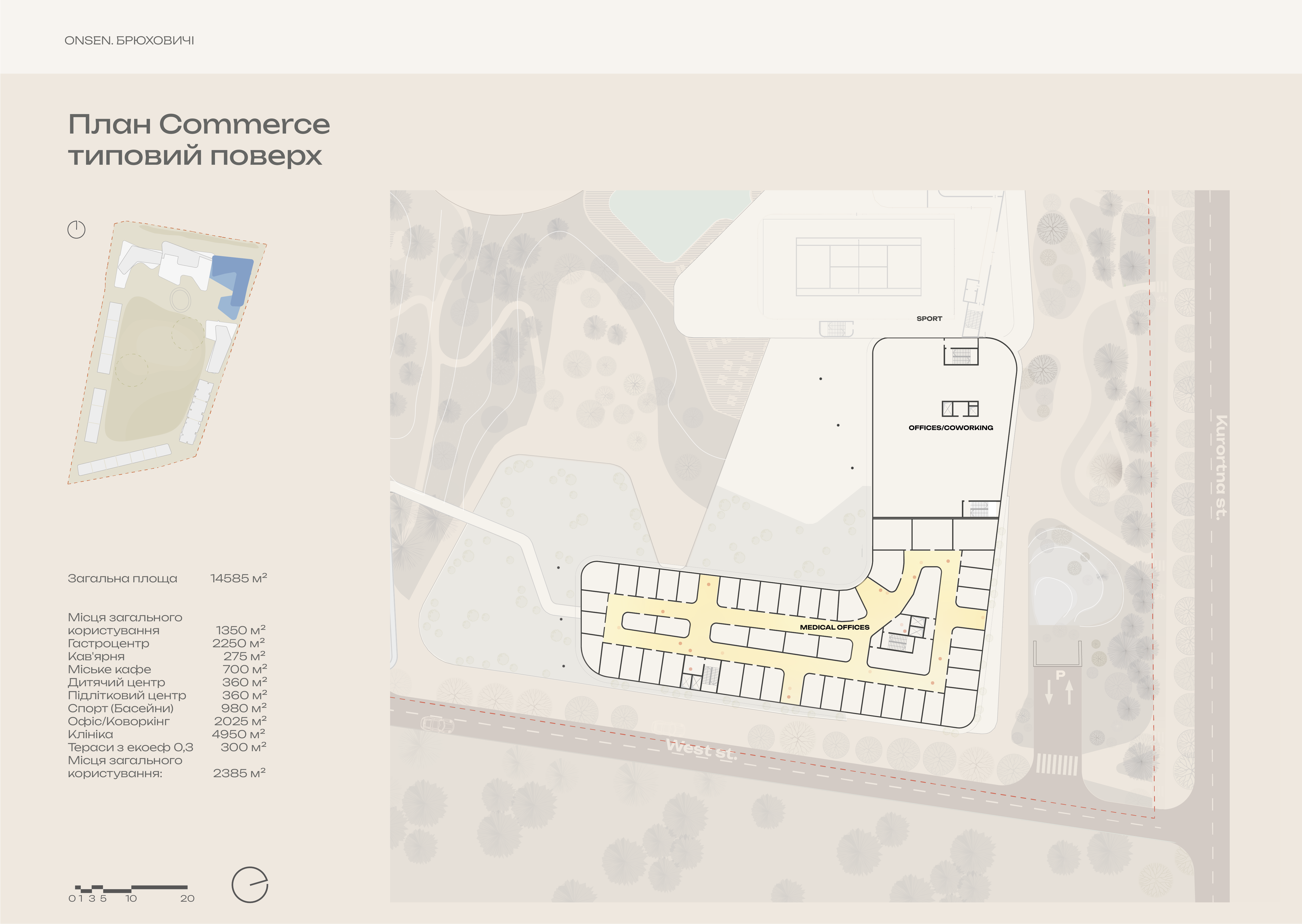
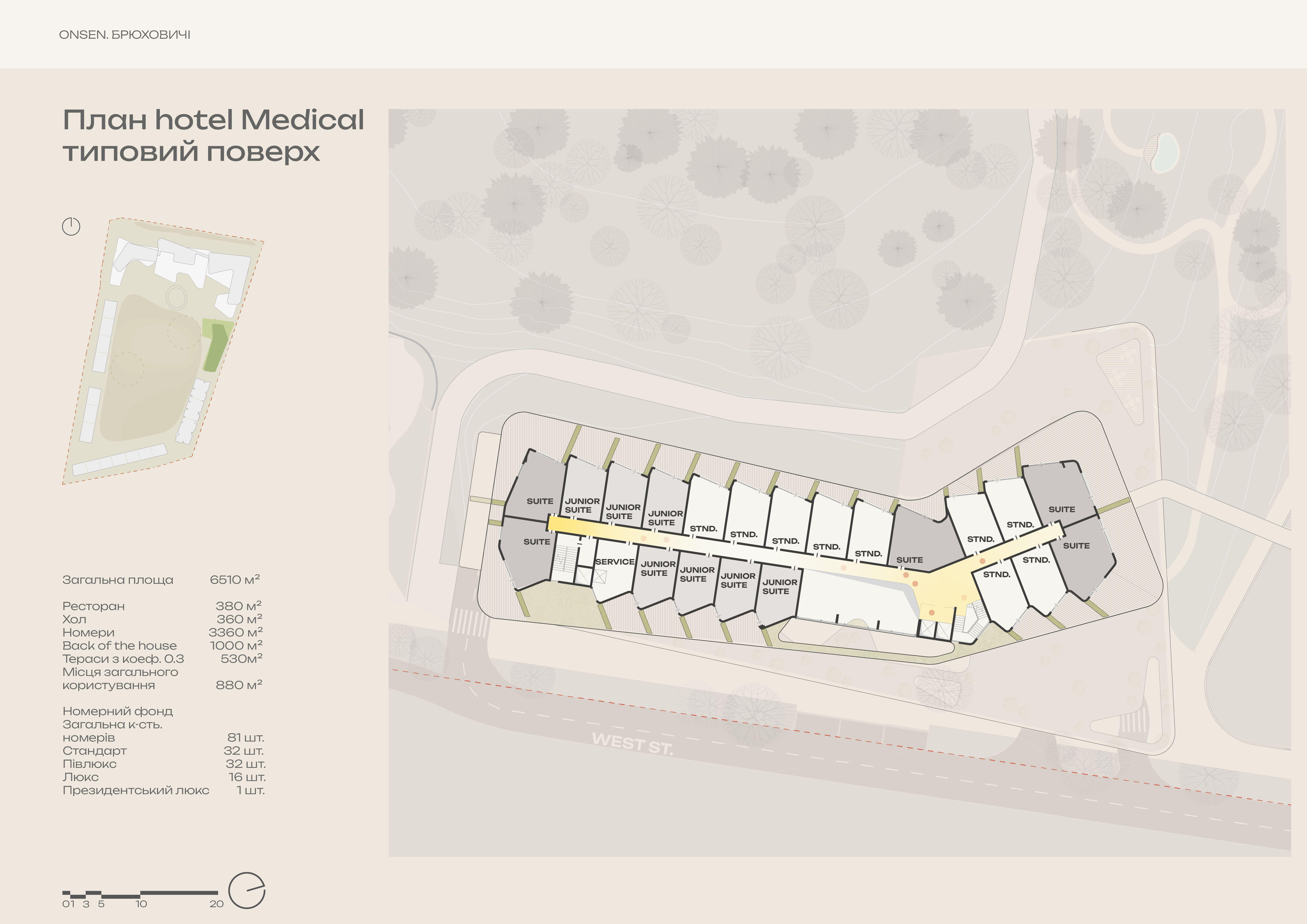
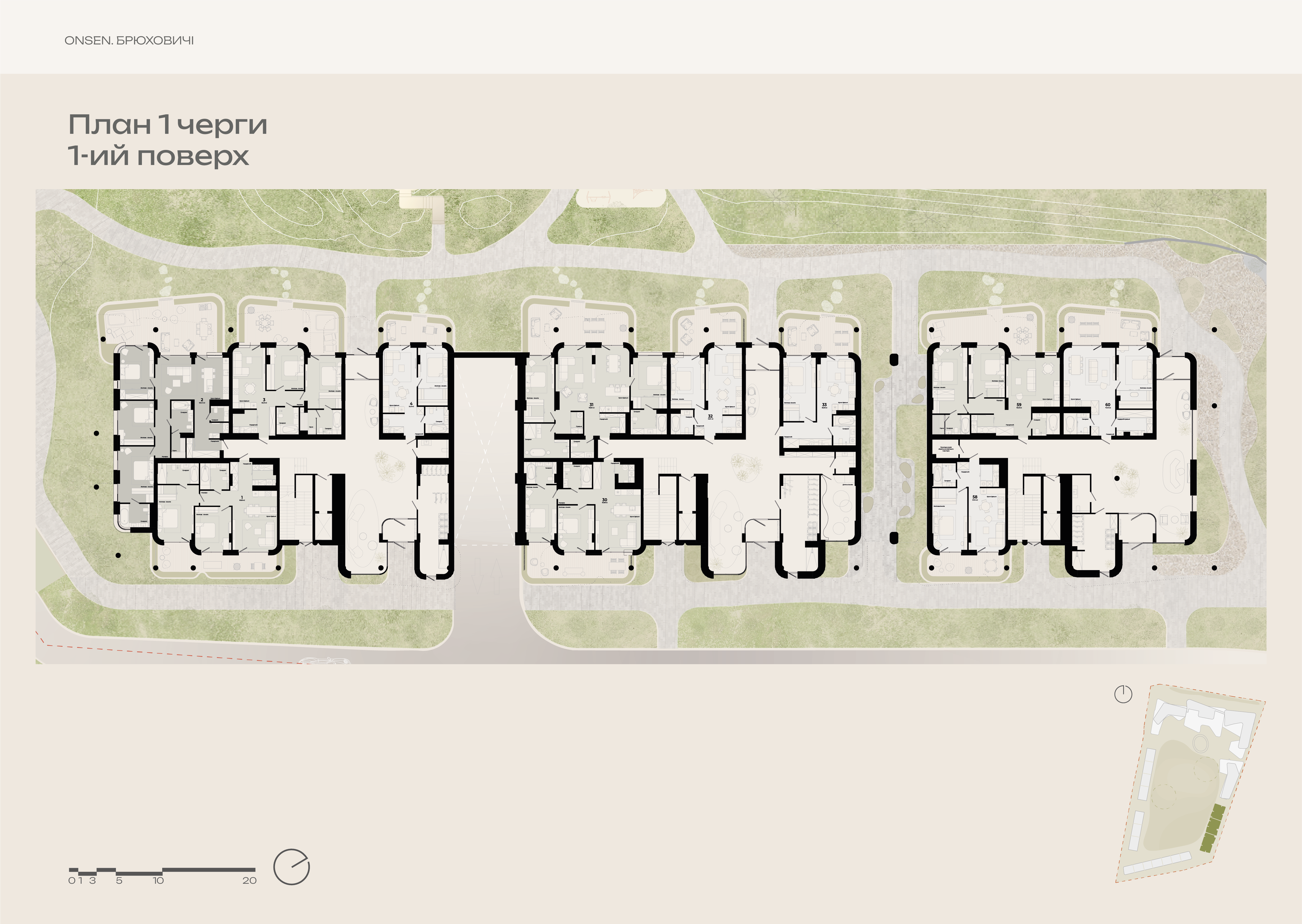
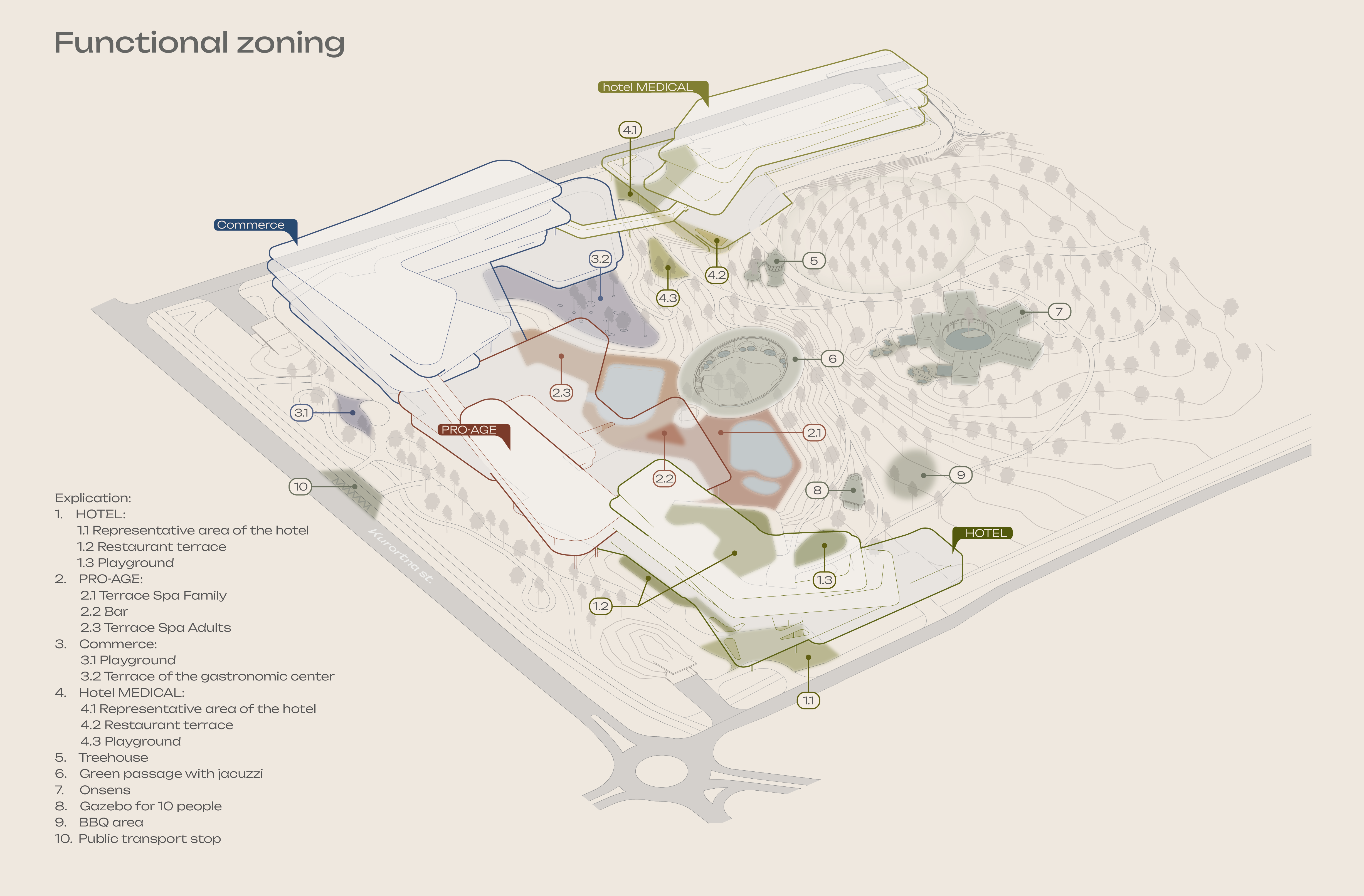
The project is organized around a large inner forest core, with a clear distinction between public and private zones. The public program (spa, onsen, retail) acts as a buffer between the city and the residential areas, forming an “active” frontage, while the housing is oriented toward quietness and nature.
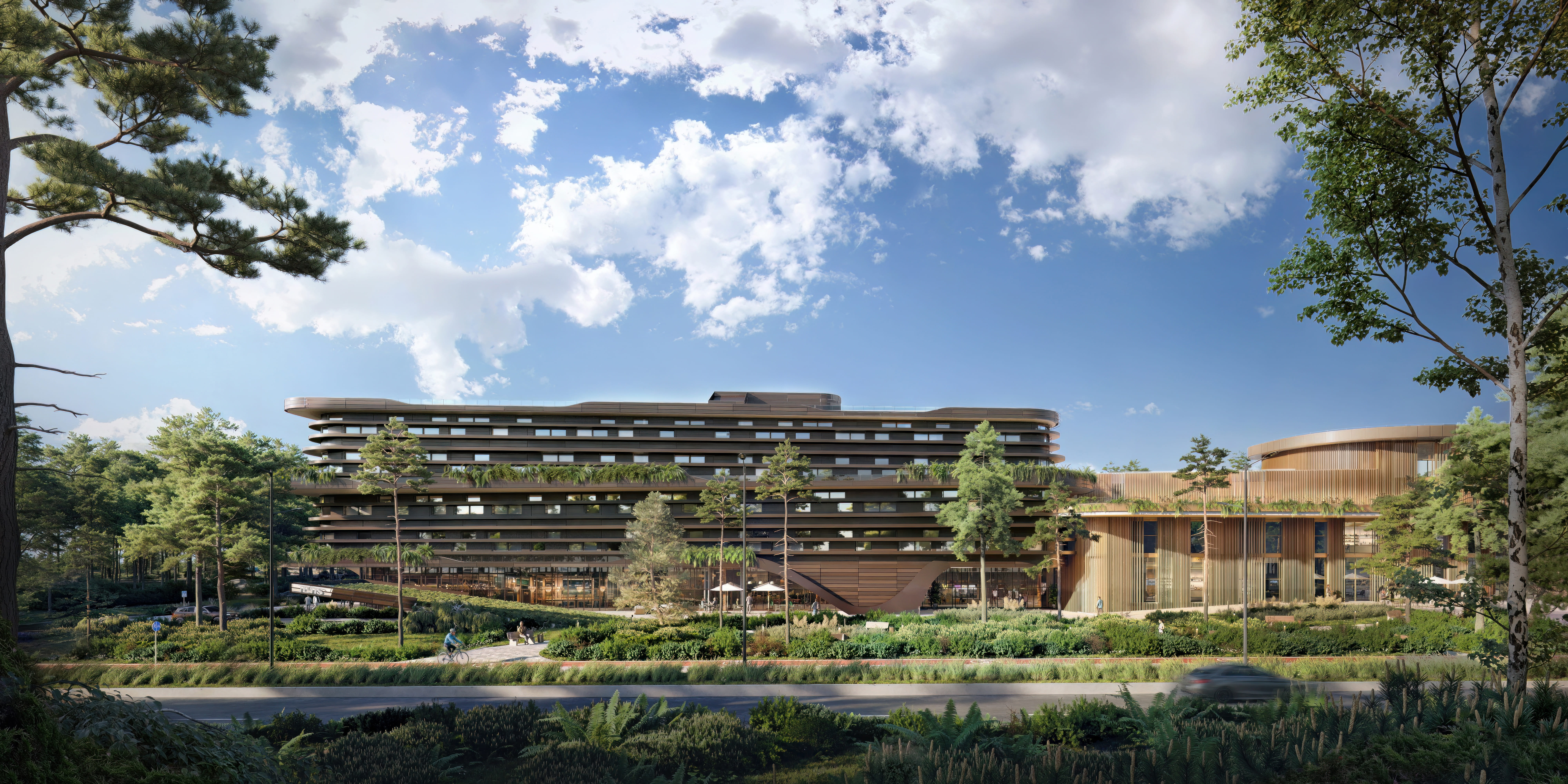
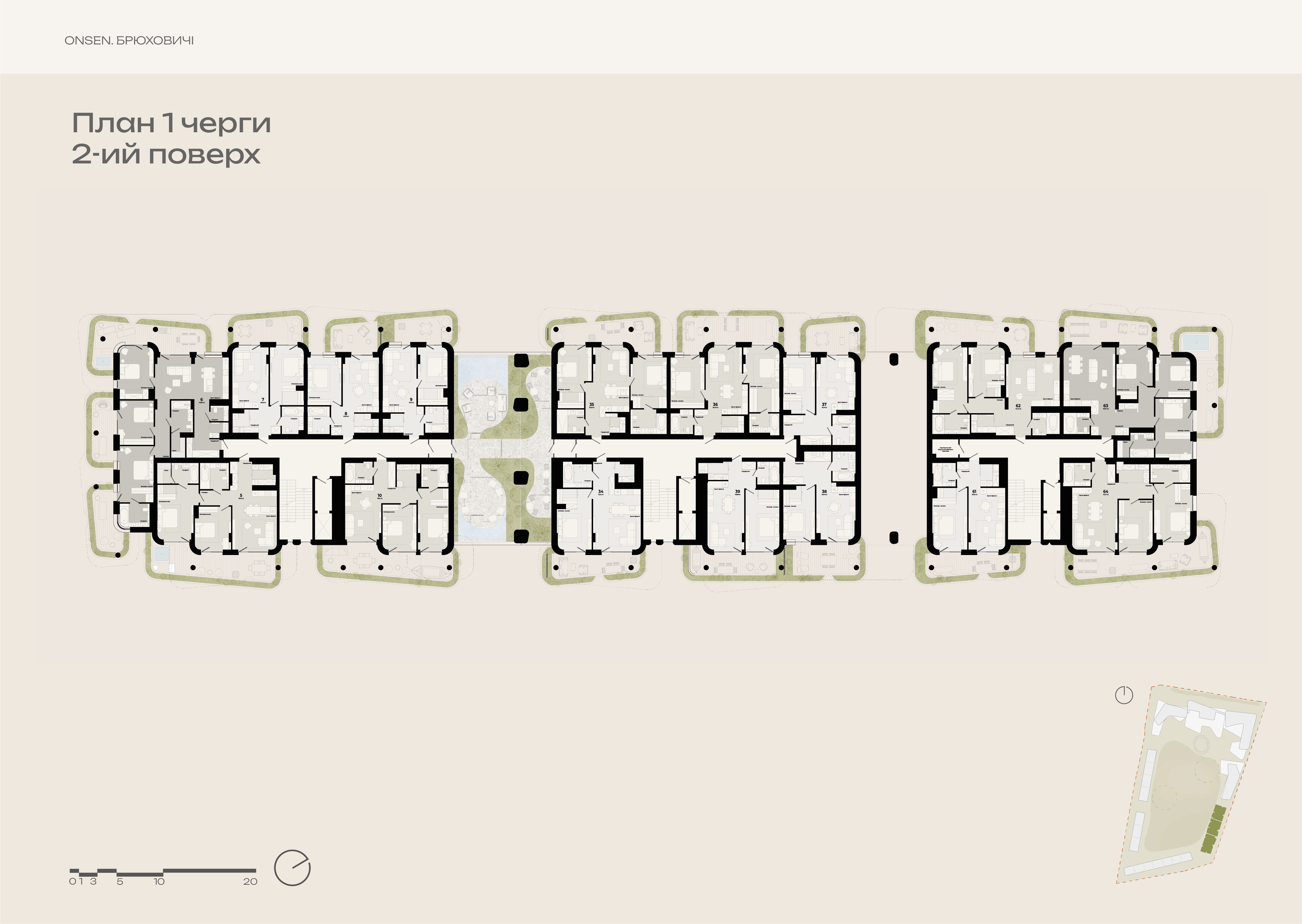
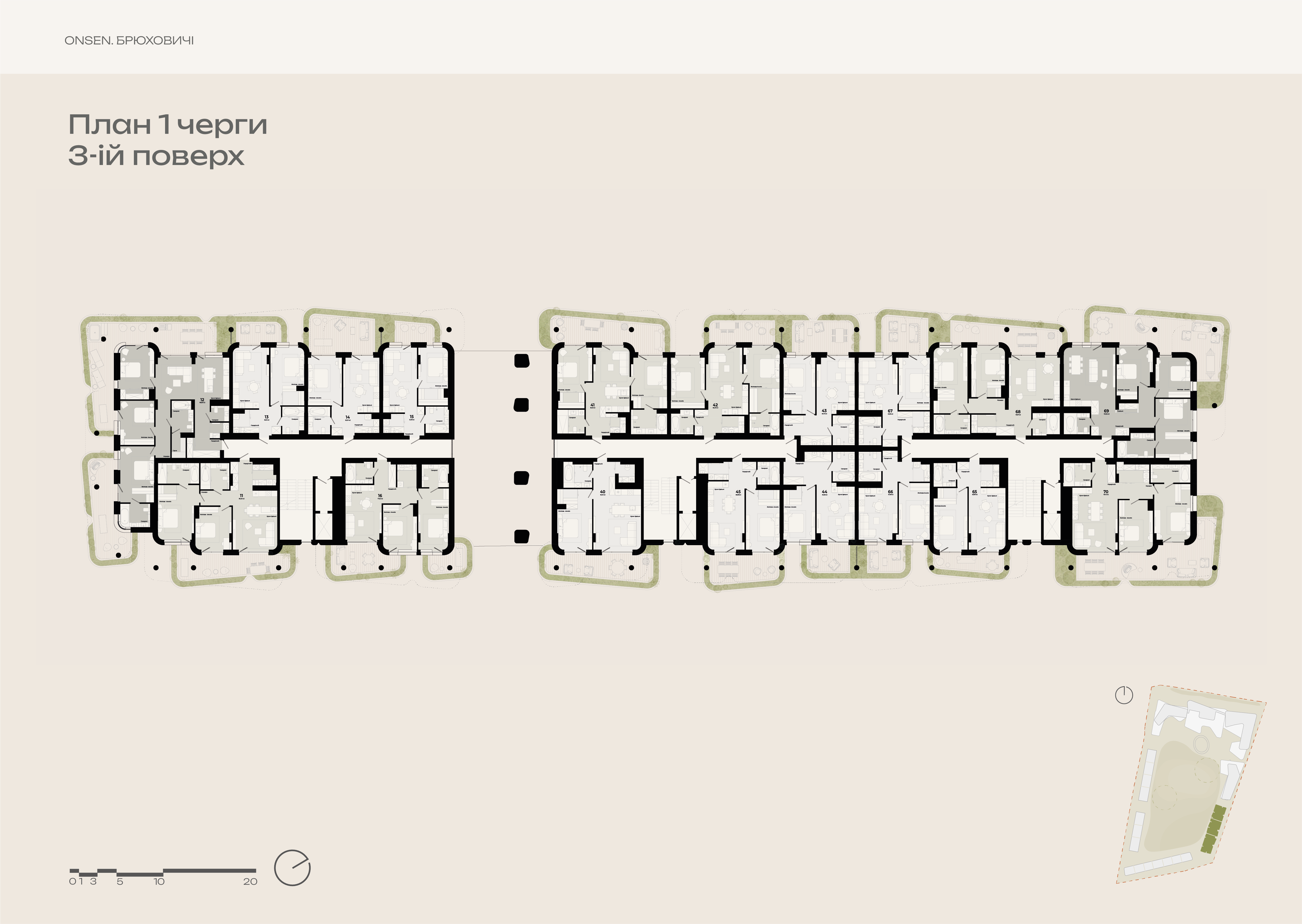
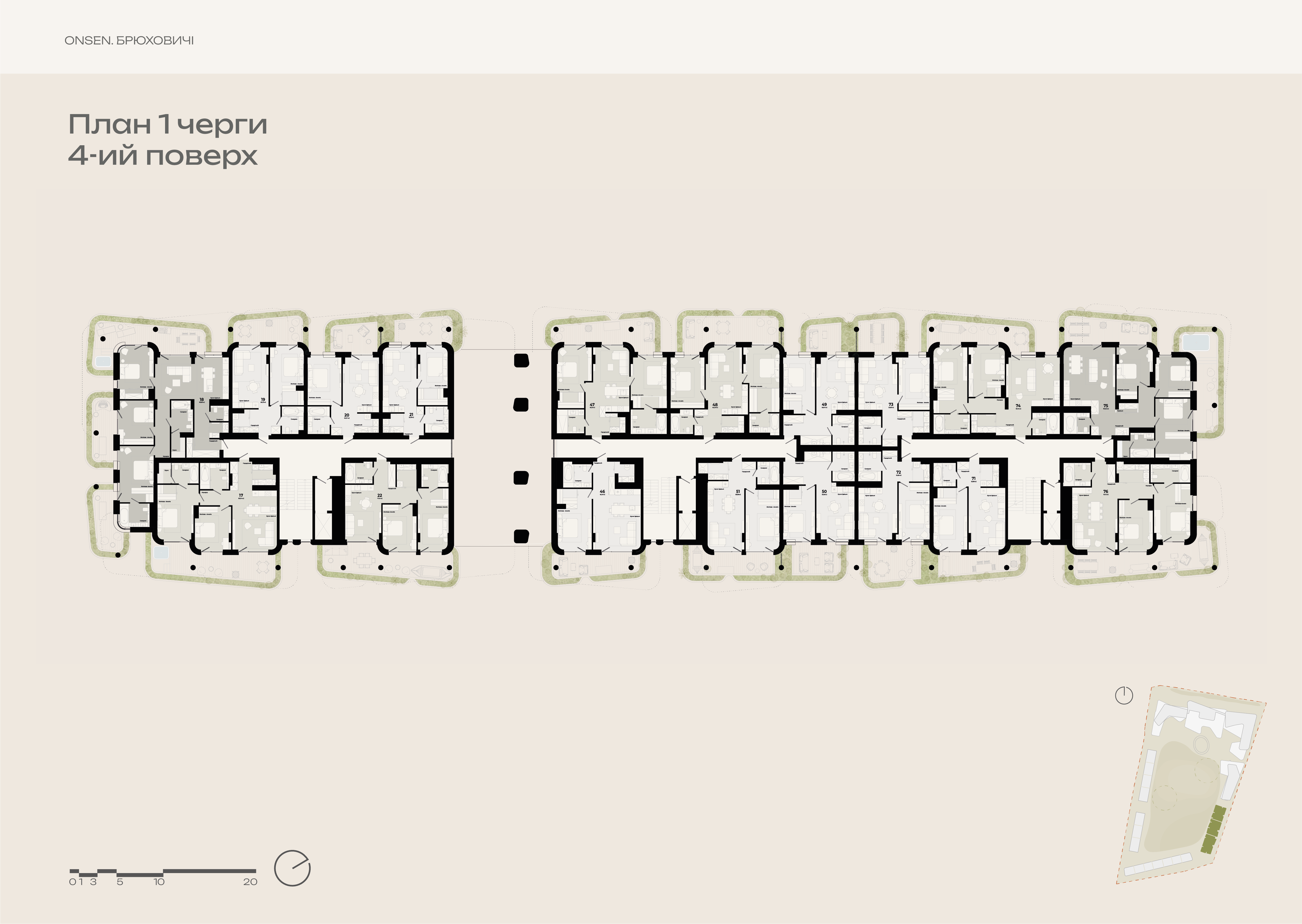
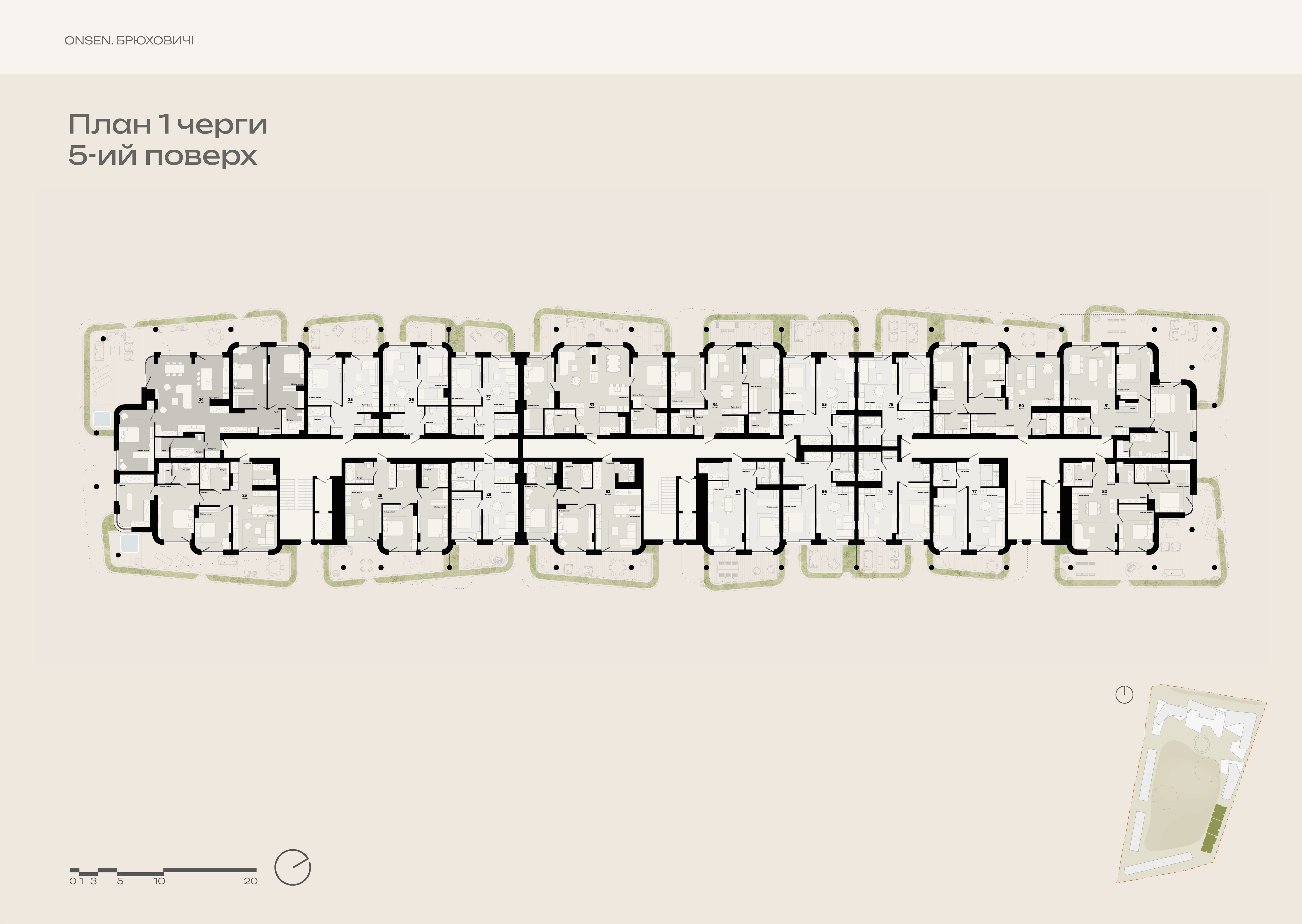
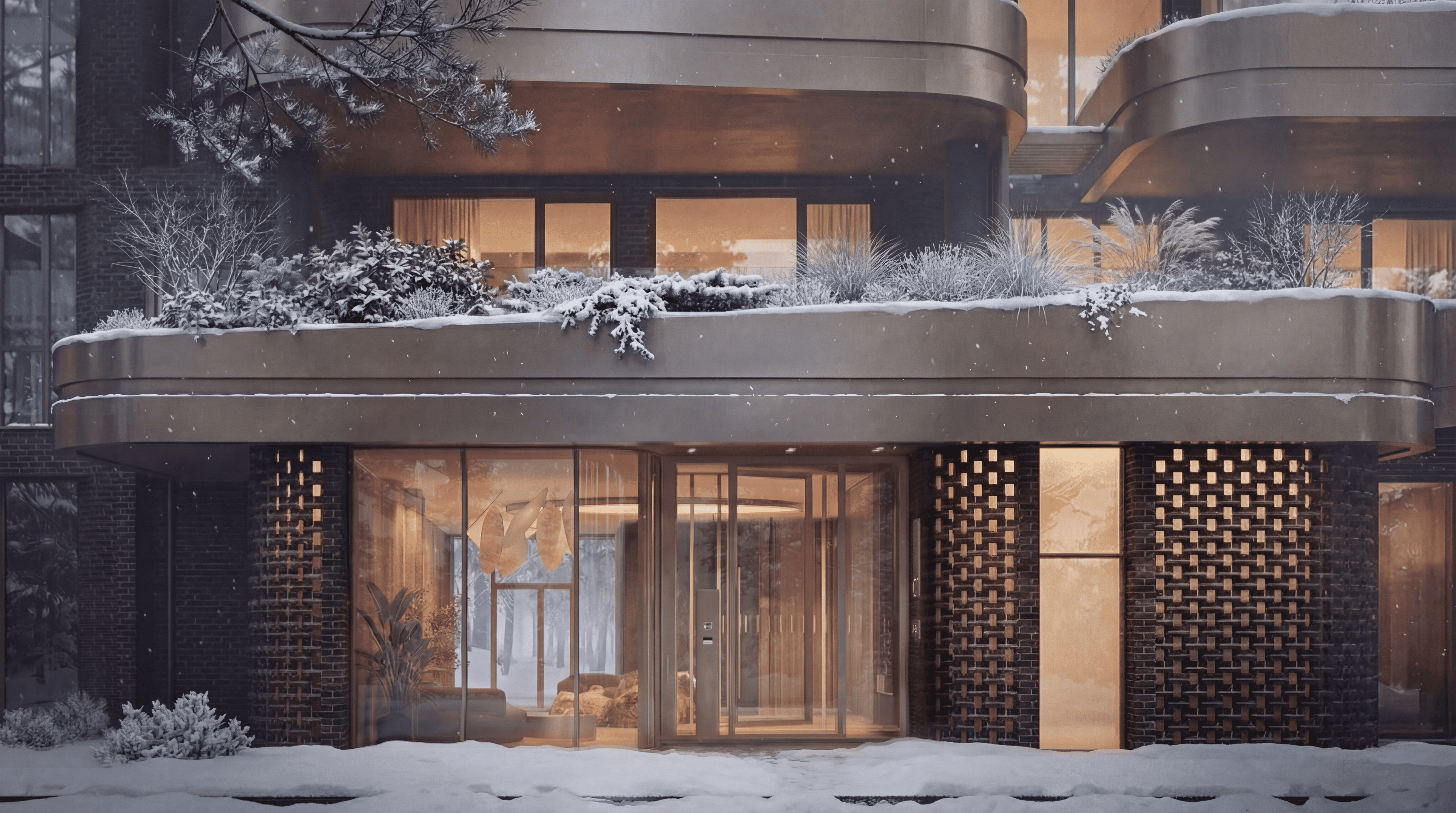
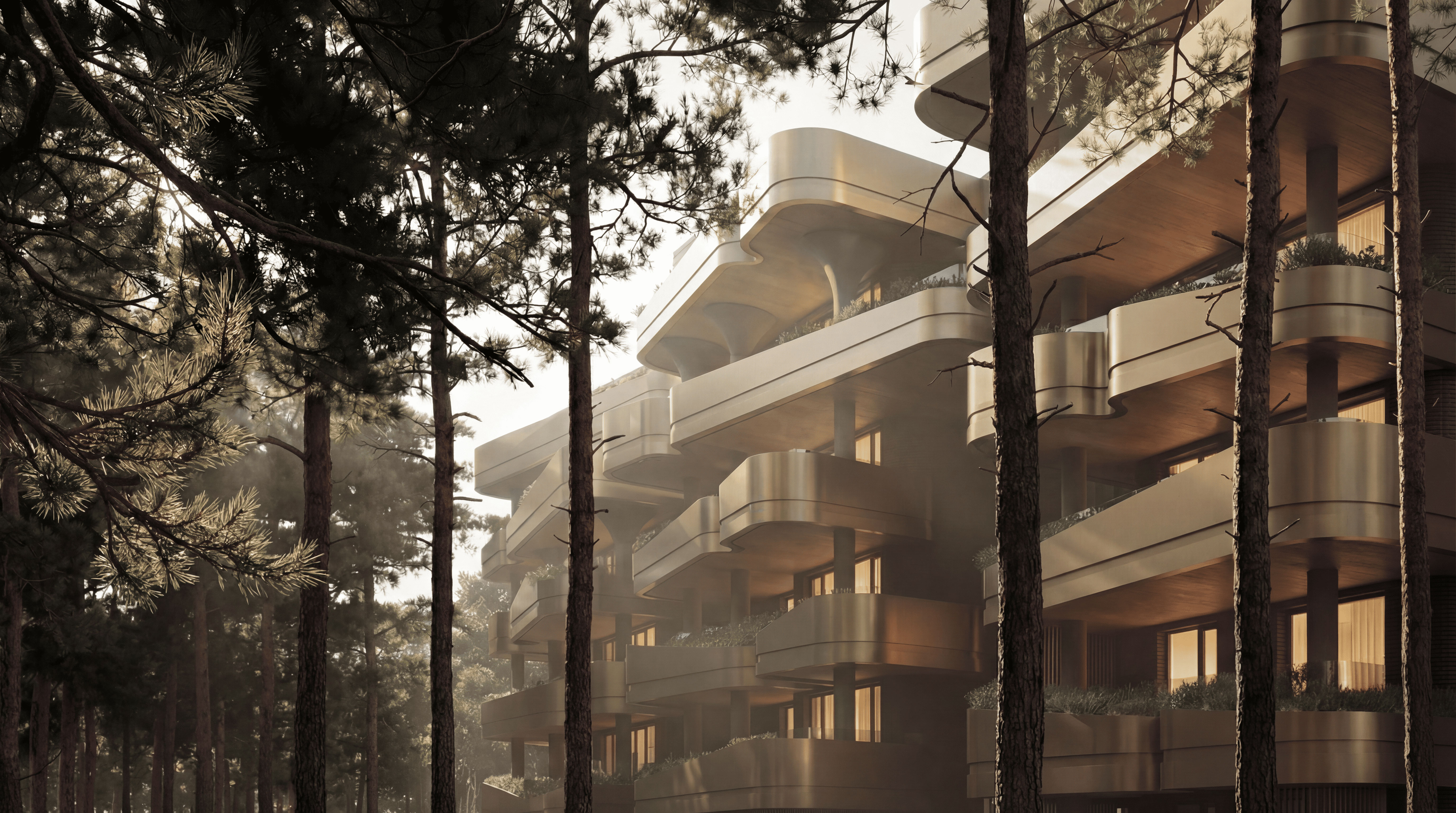
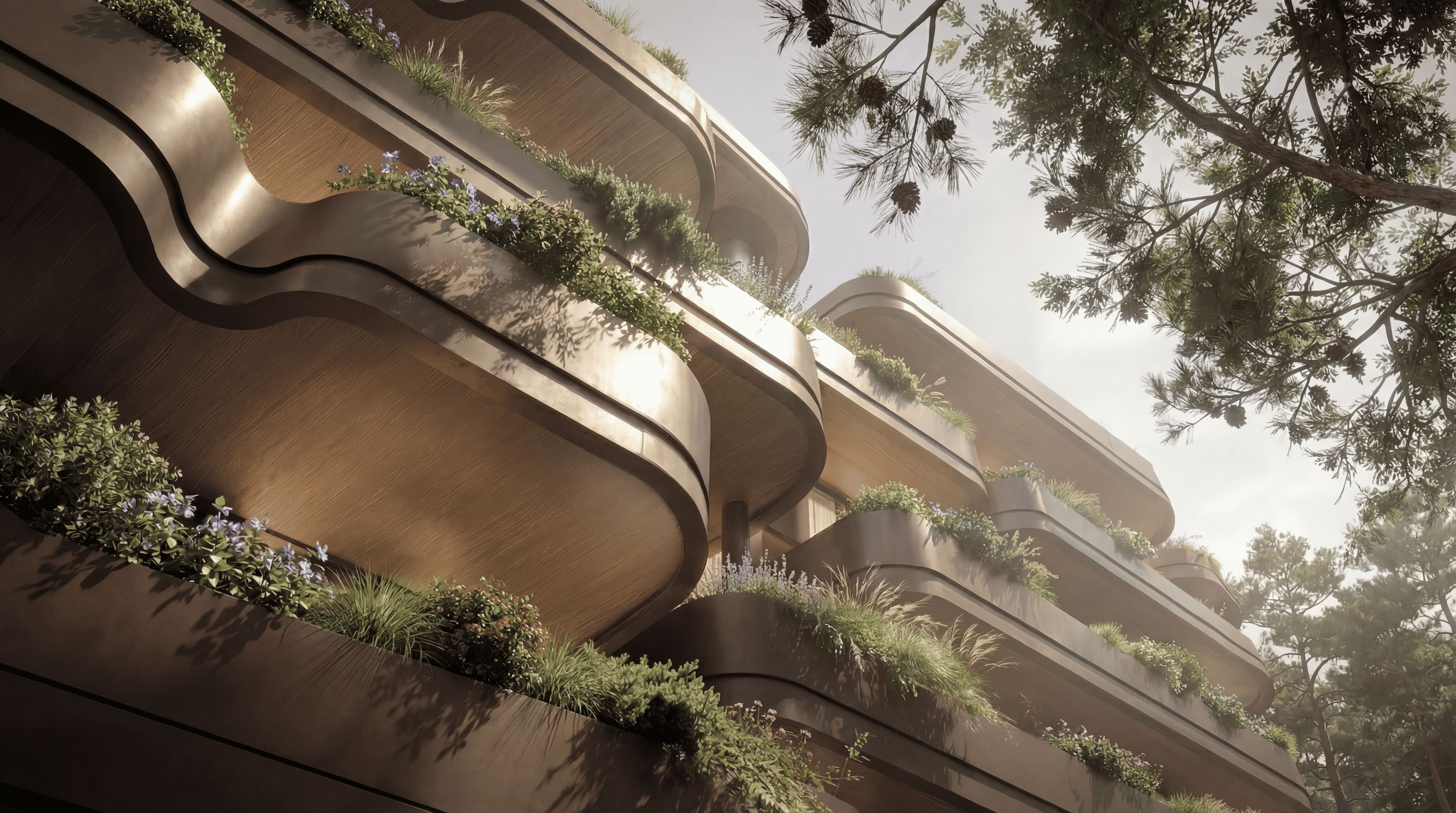
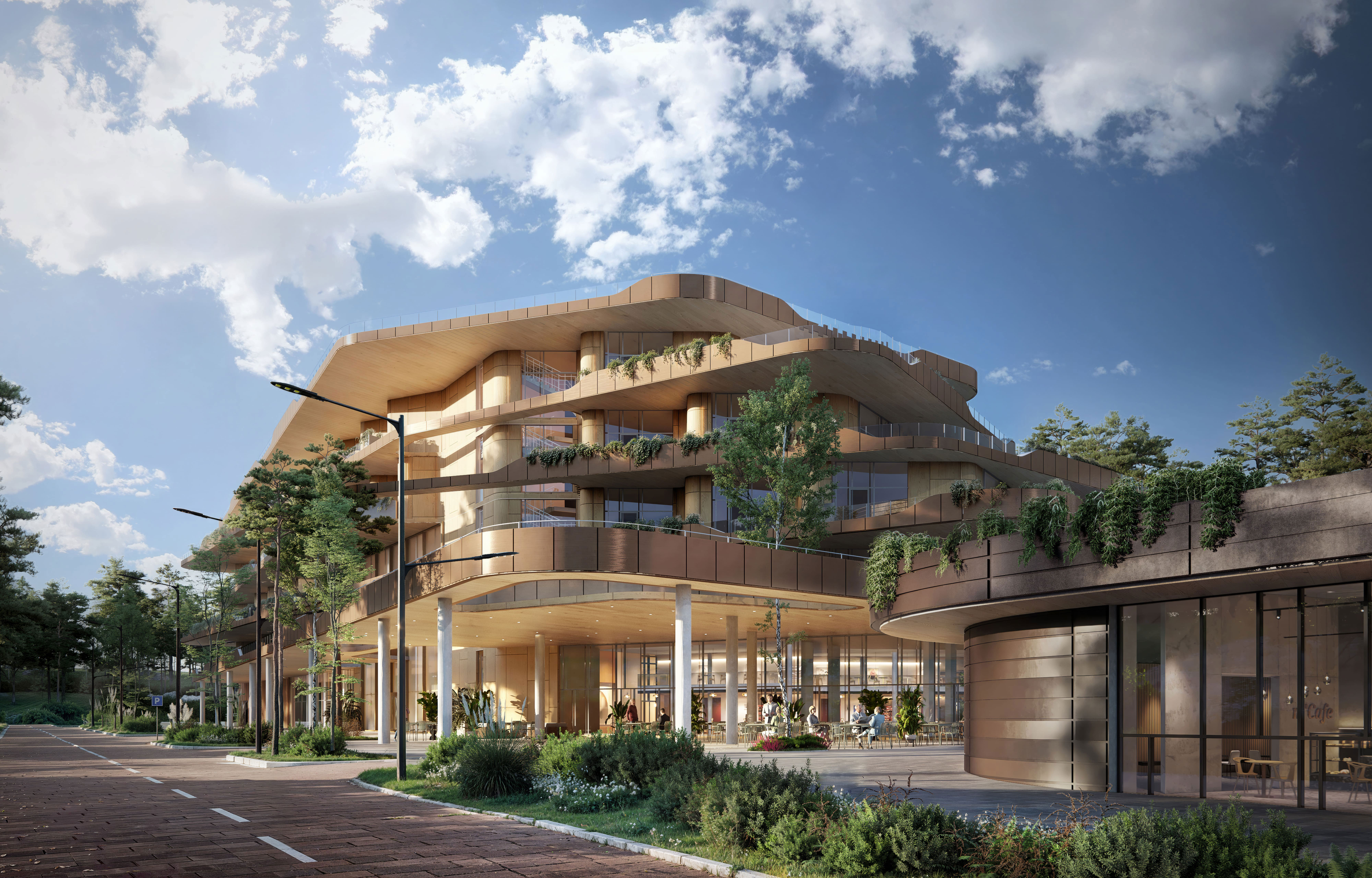
At the heart of the residential component is a terraced architectural approach: cascading volumes with deep terraces create a multi-layered, “living” facade. This is not only an aesthetic gesture but also a functional solution — each apartment gains its own open space, allowing for a deeper integration with the surrounding forest. Vertical portals carved into the residential volumes break the continuity of the building line, opening visual connections to the forest and allowing light and air to penetrate.
The facade materials include bronze-brown toned metal and dark brick — warm, restrained, and tactile. Light and shadows cast by the pine trees continuously transform the perception of the surfaces throughout the day and across seasons, keeping the facade dynamic and organic.
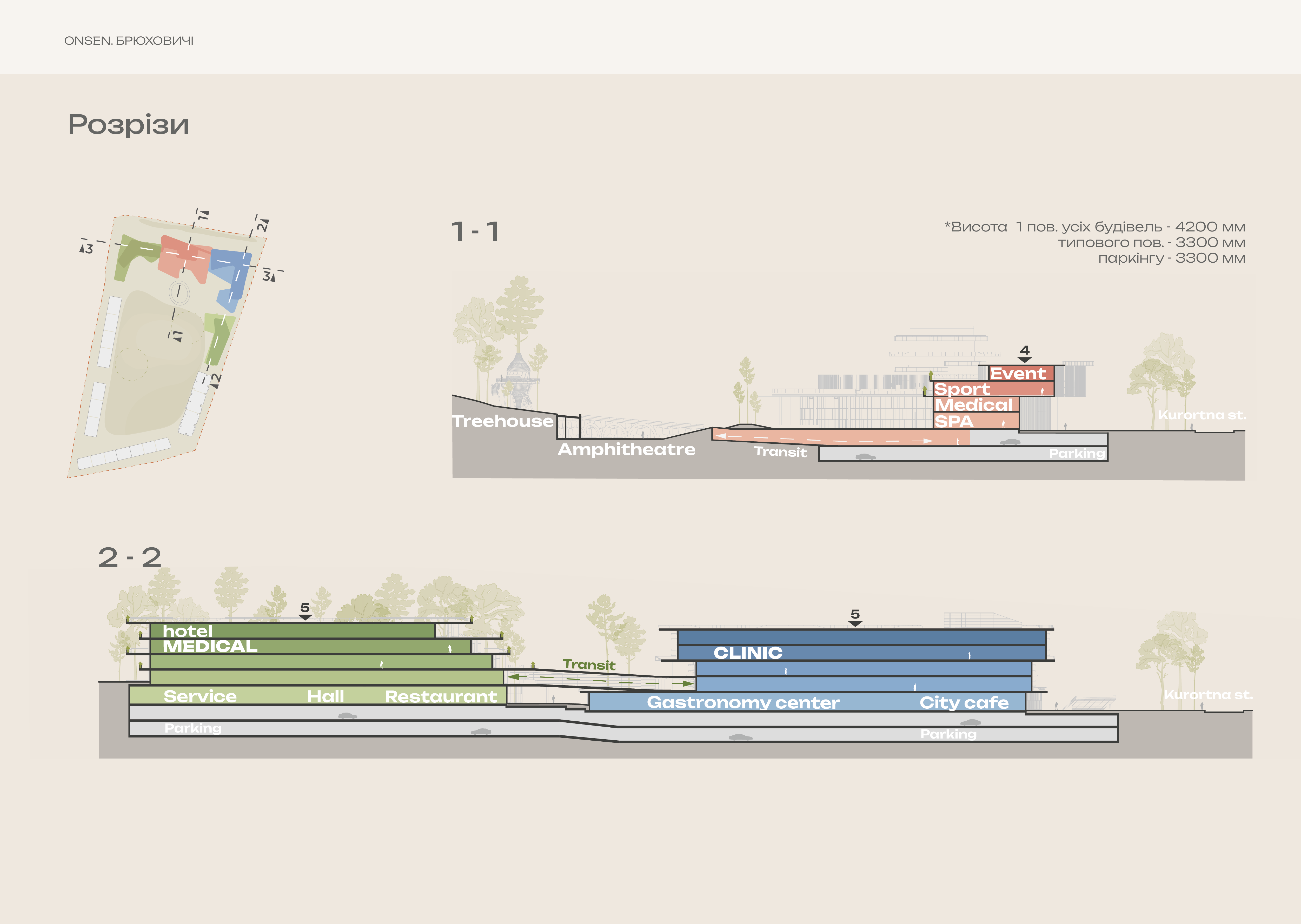
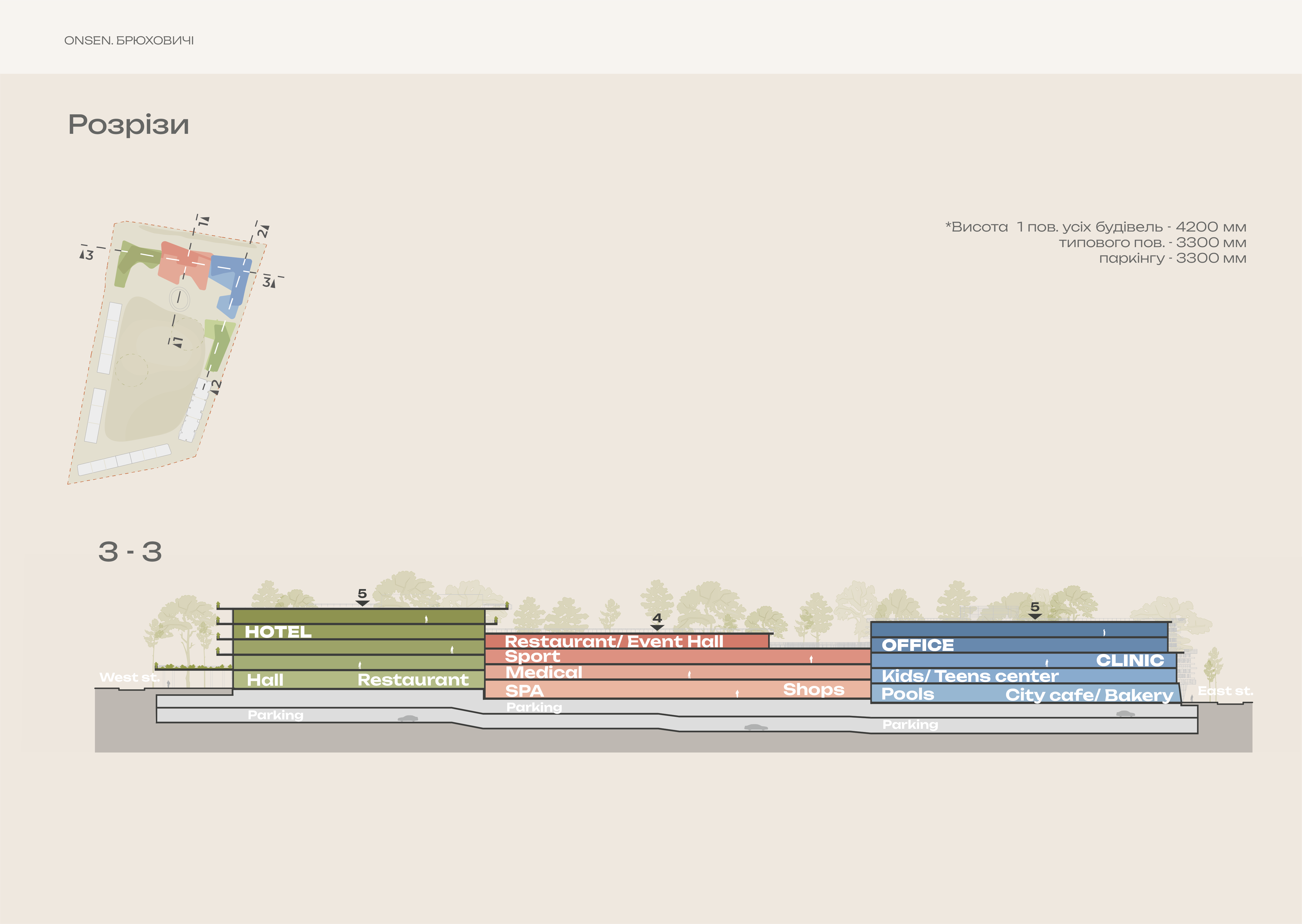
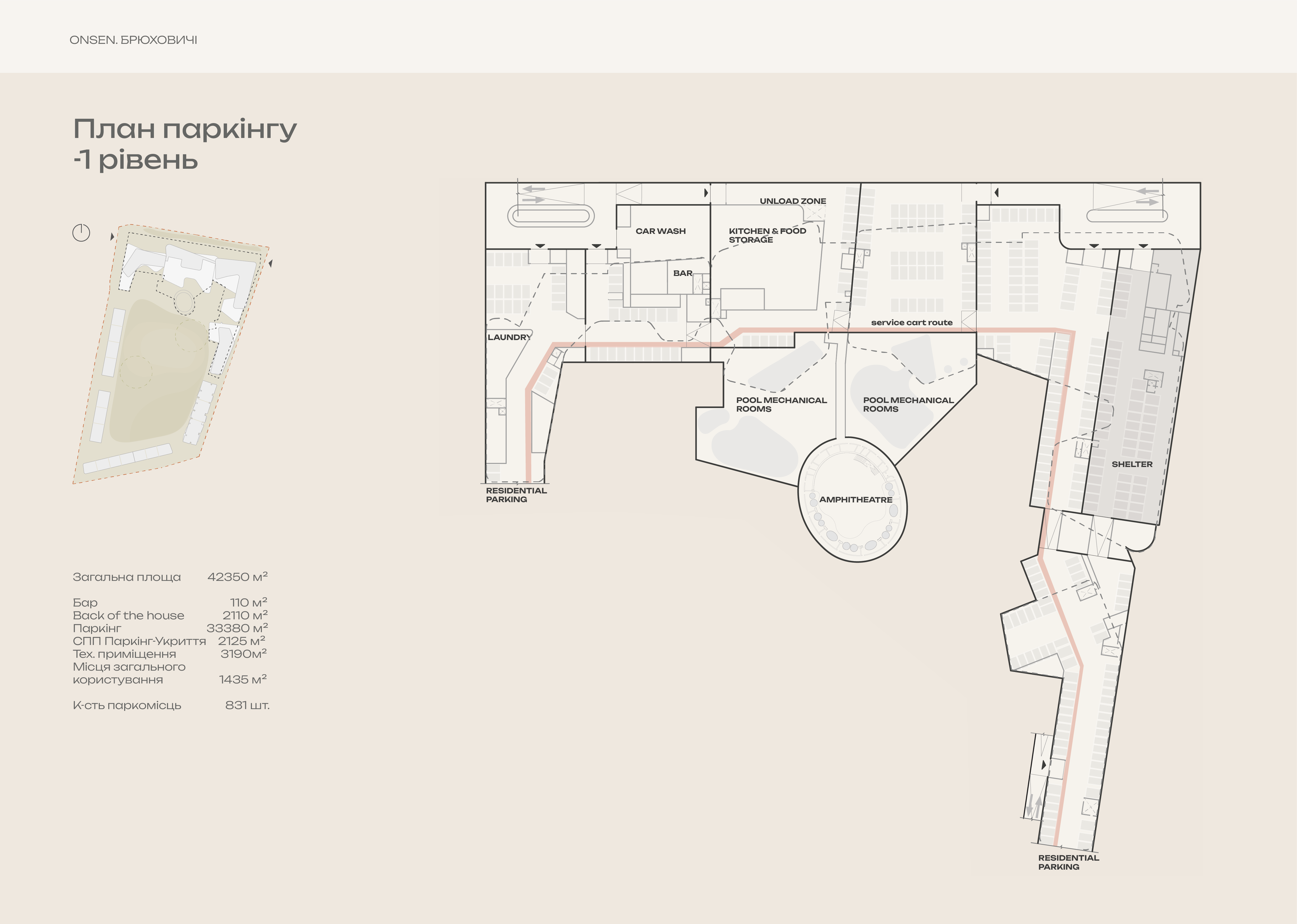
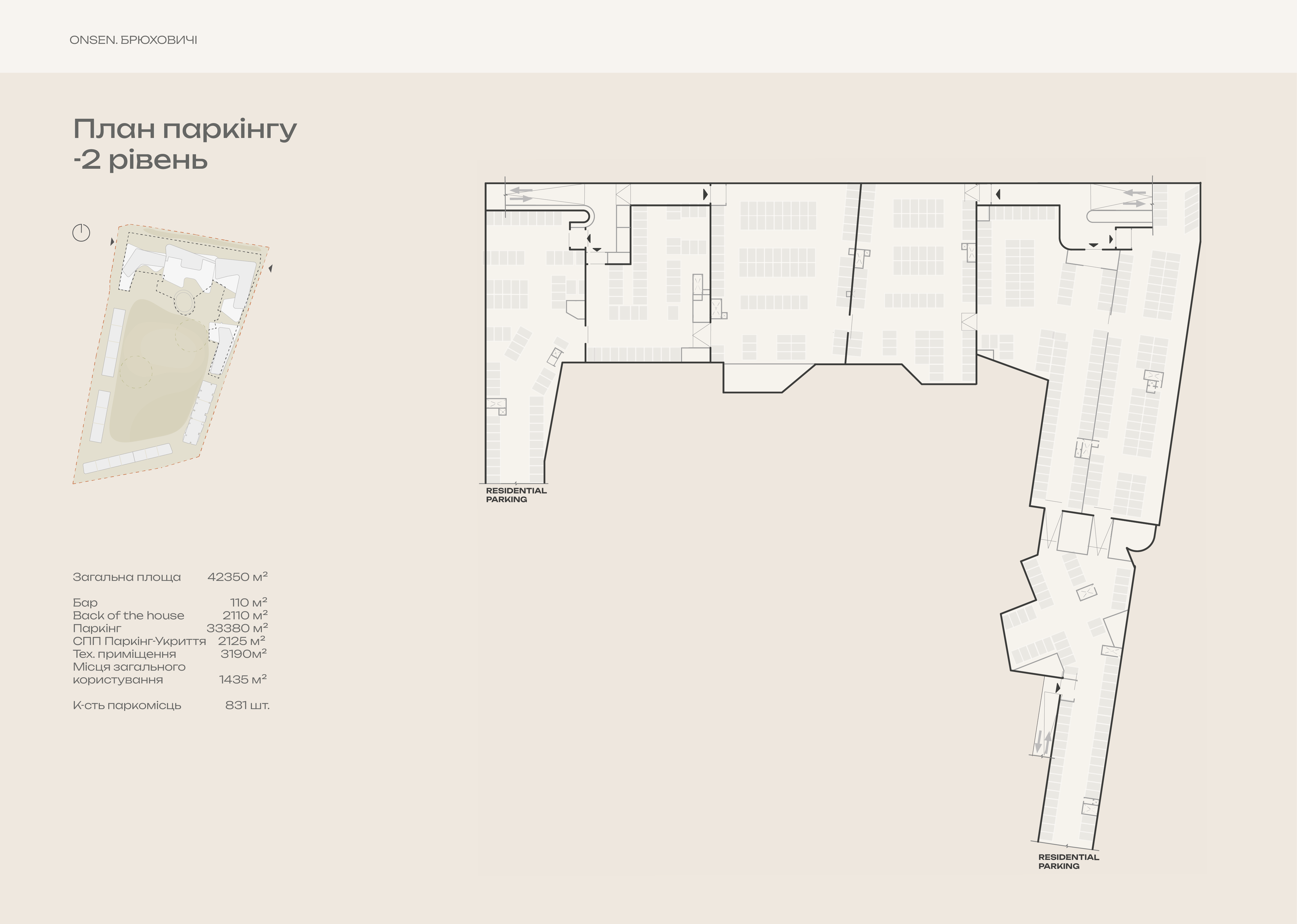
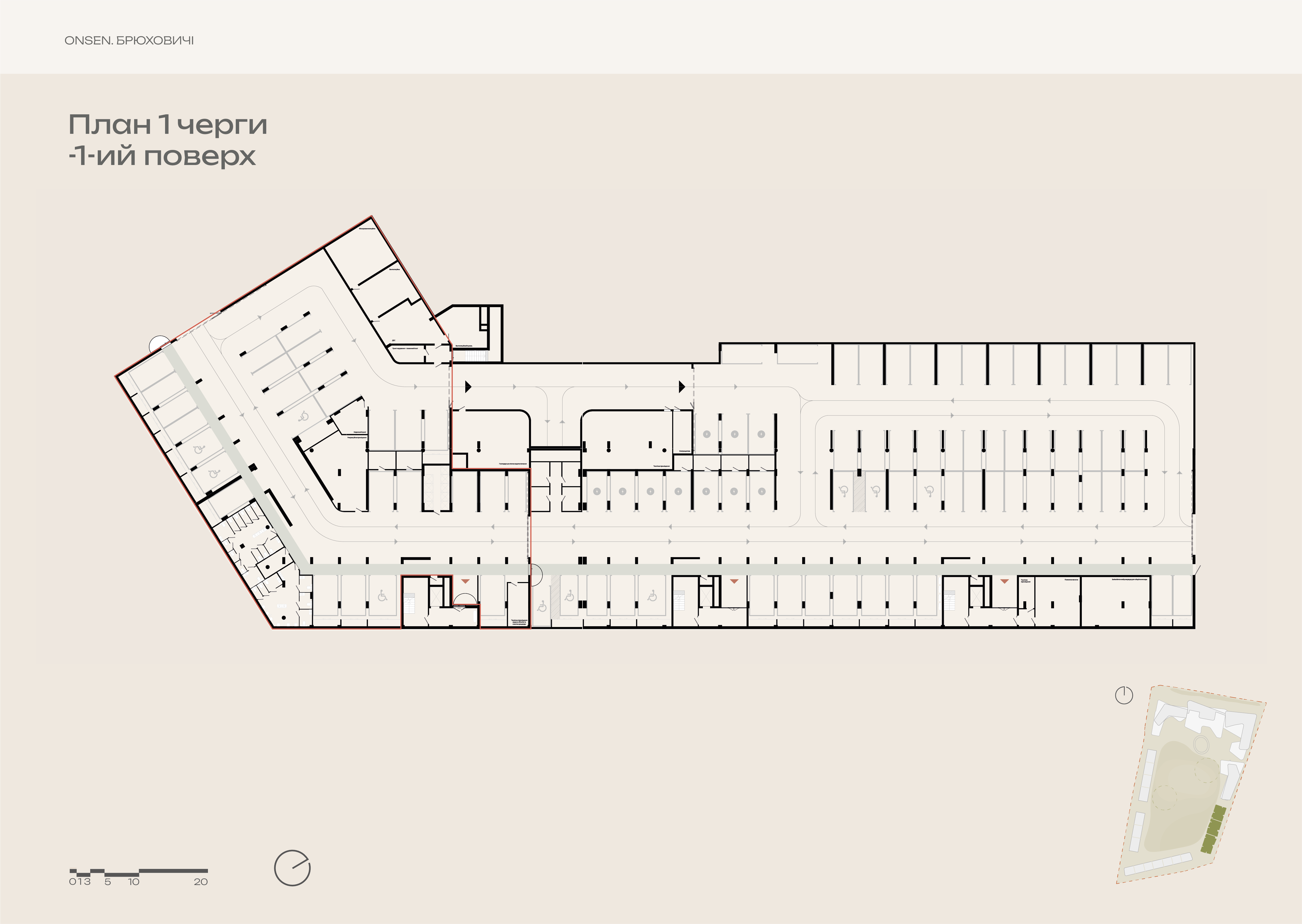
Among the distinctive features are accessible rooftops with water surfaces designed as contemplative spaces, the integration of greenery directly into the terrace structure, the possibility of private wellness functions (such as saunas and hot tubs) within the residences, and an underground parking level that operates as a service network, engineering infrastructure, and a shelter.
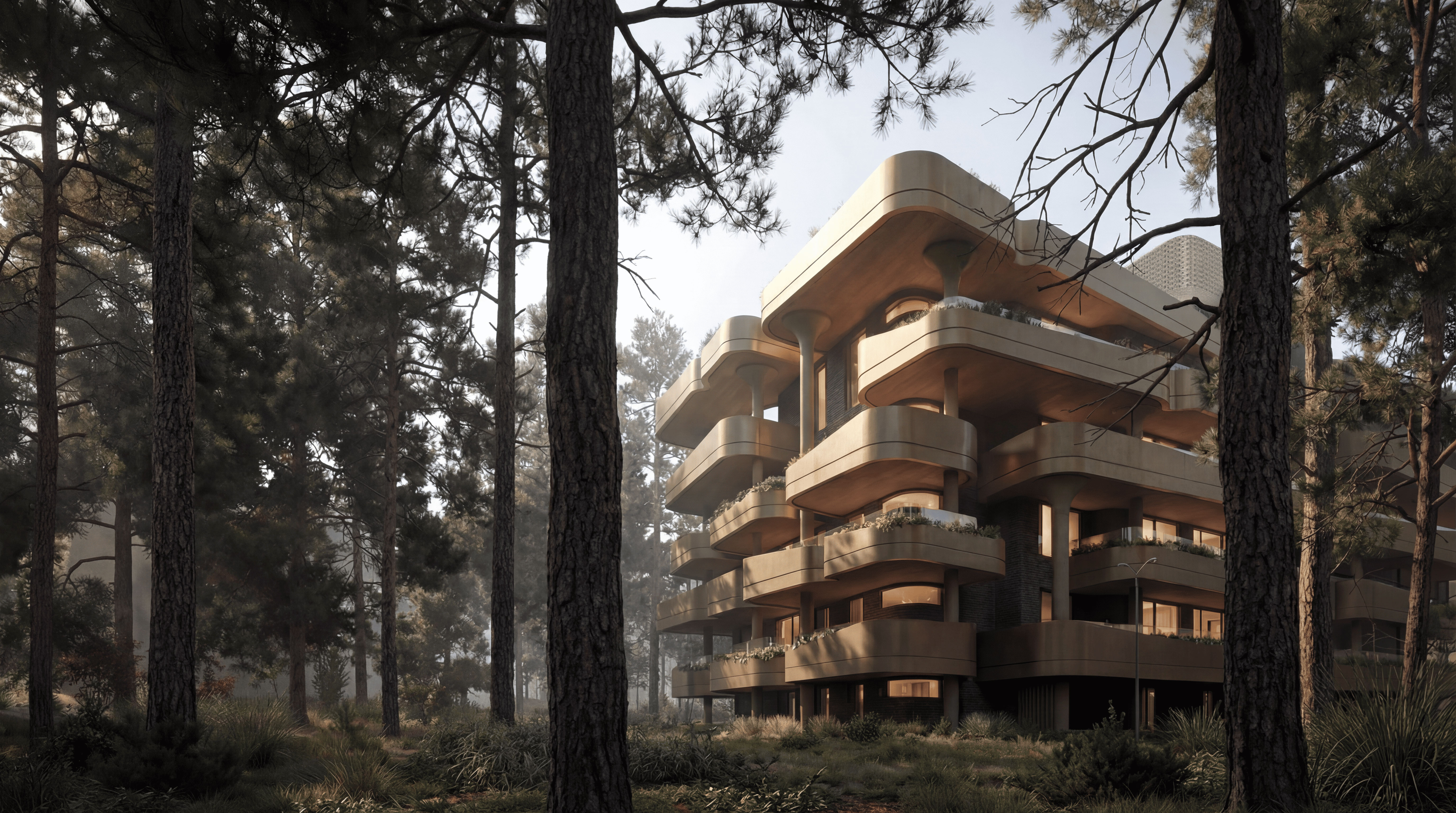
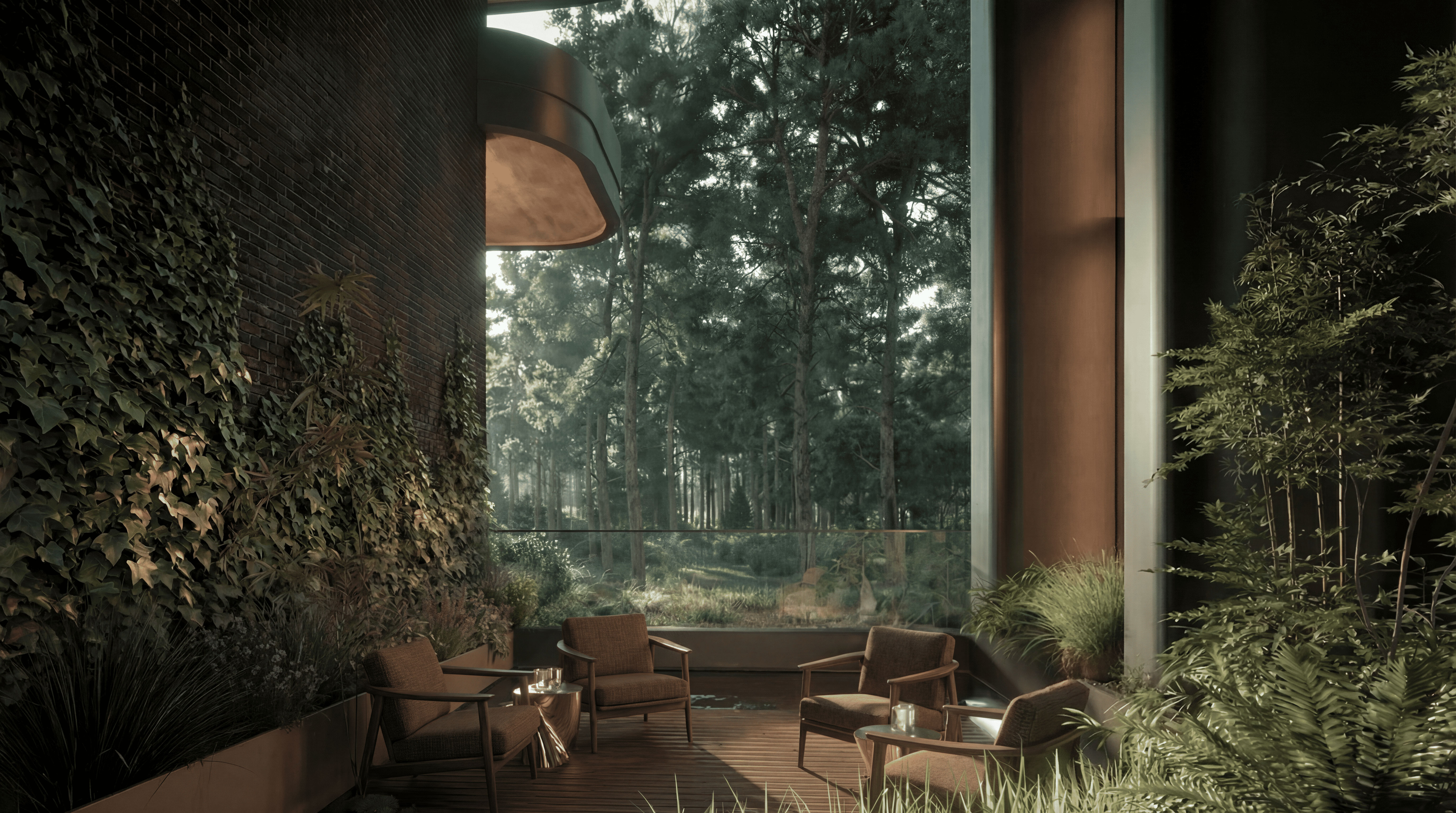
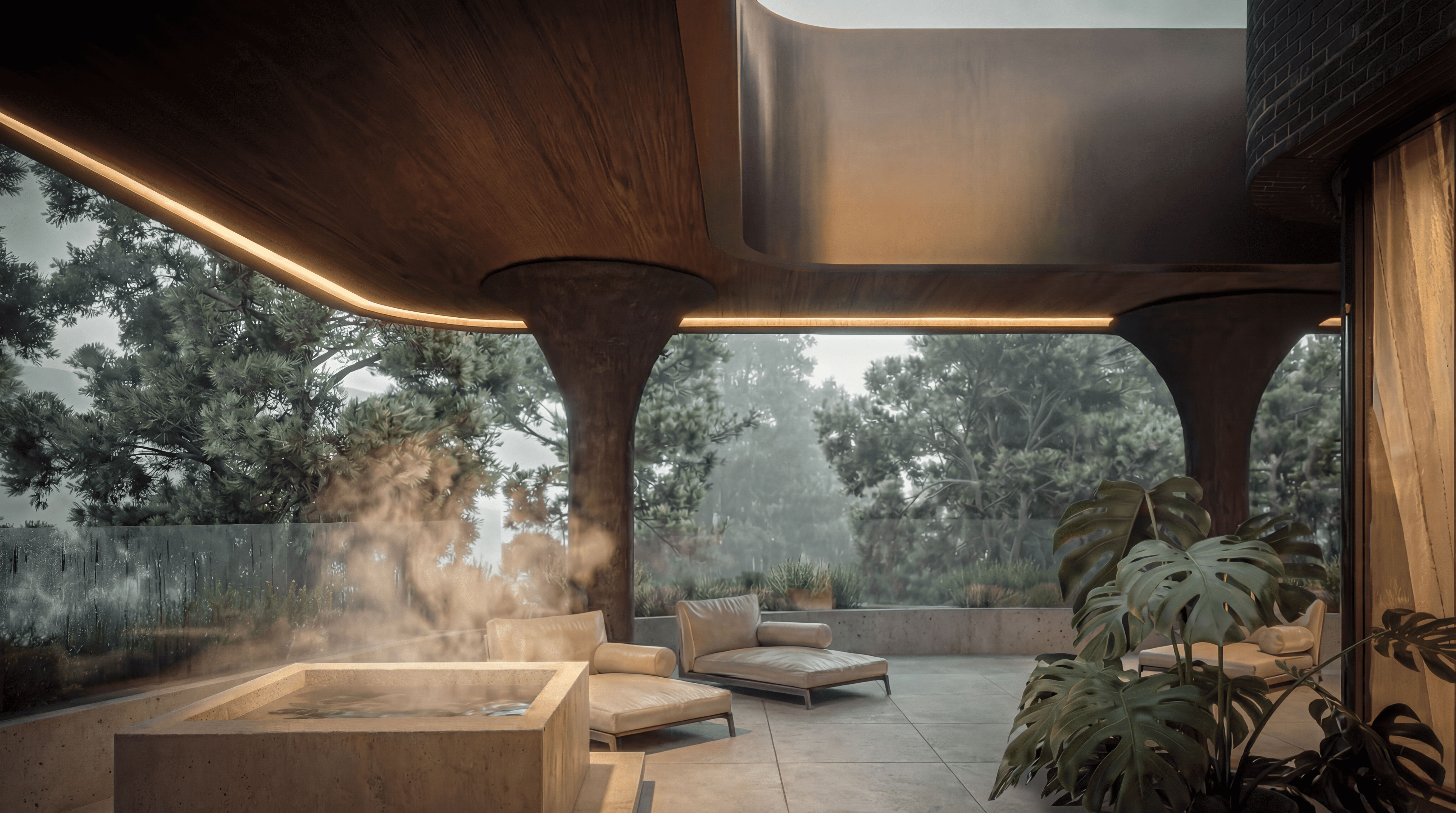
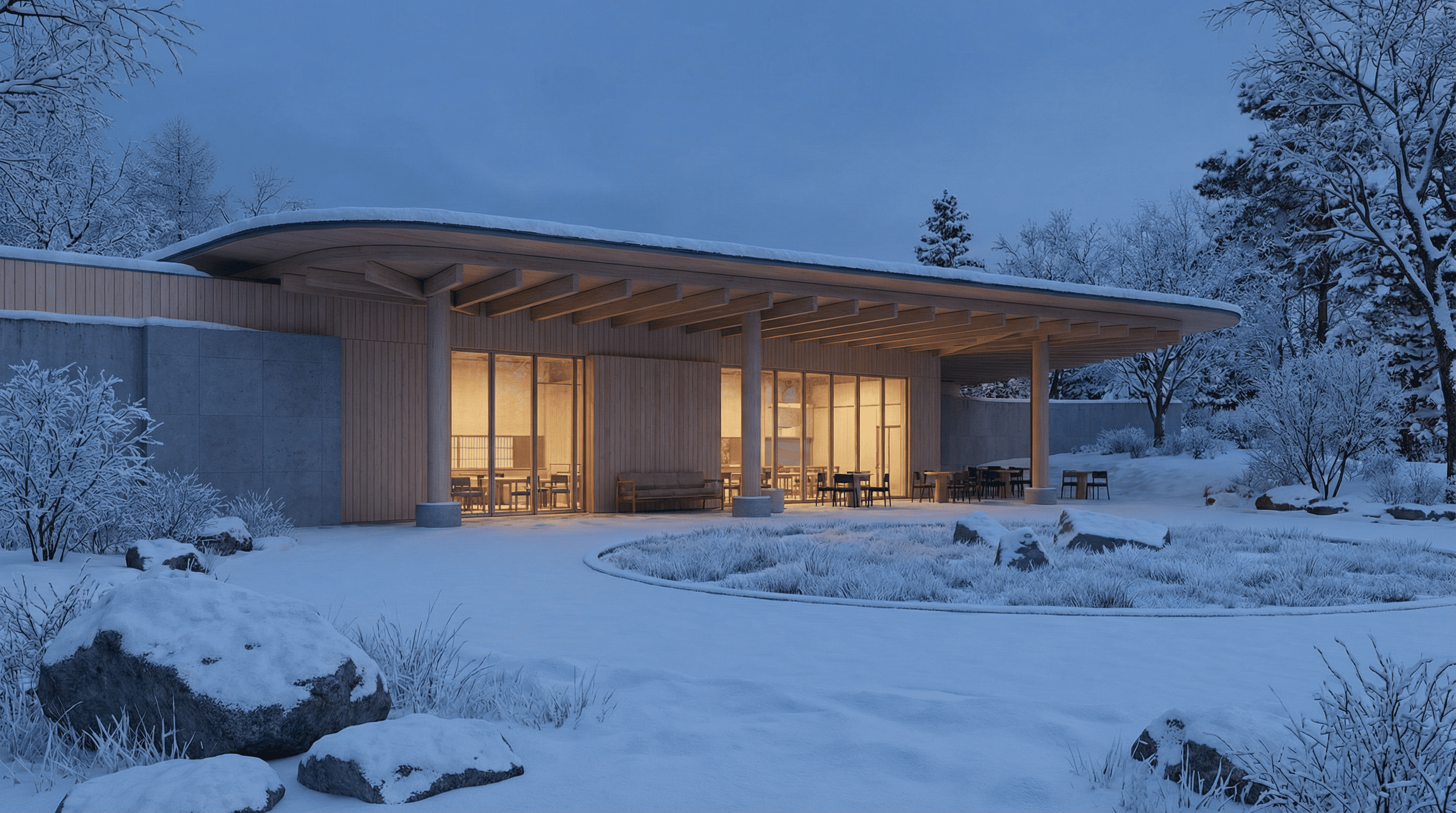
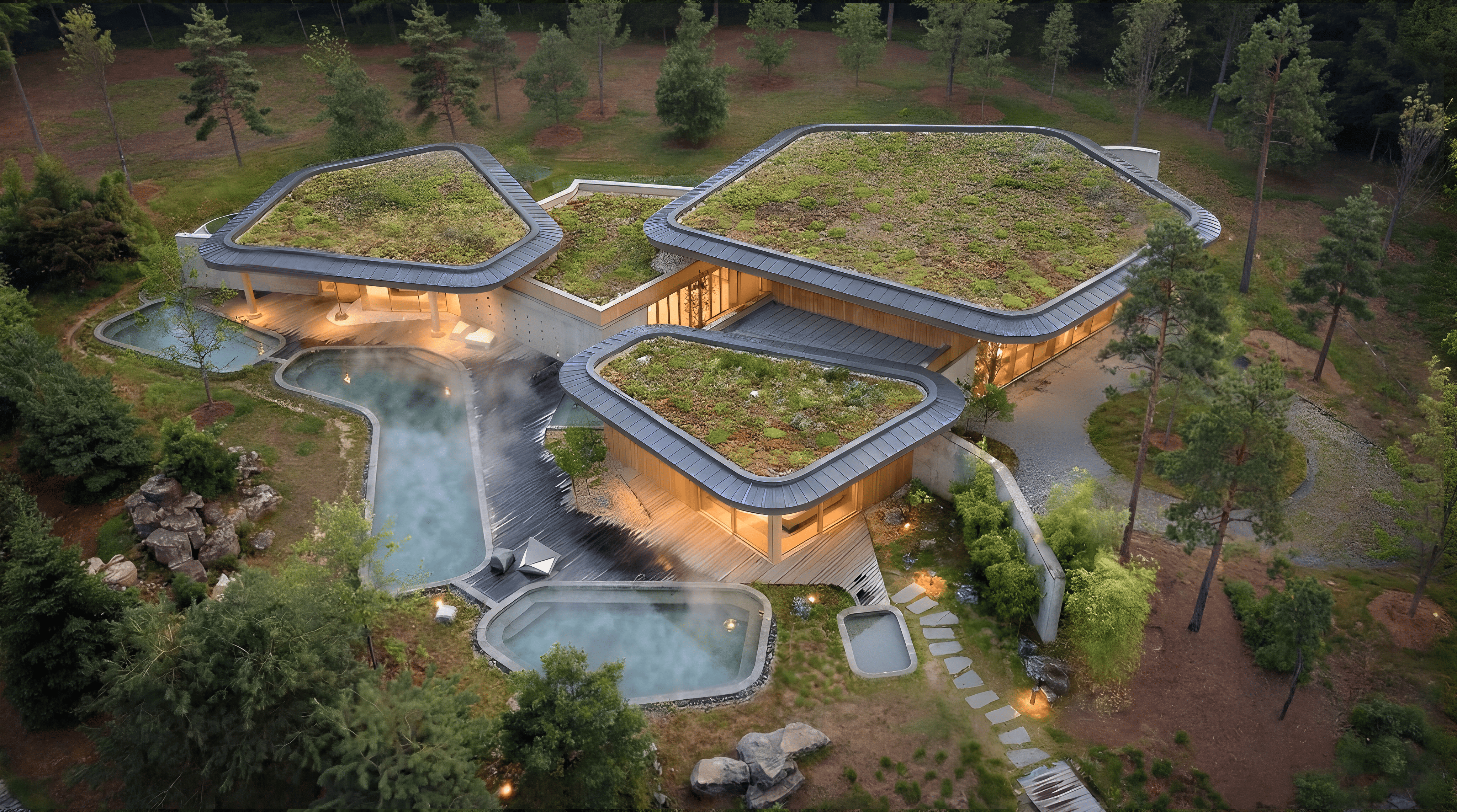
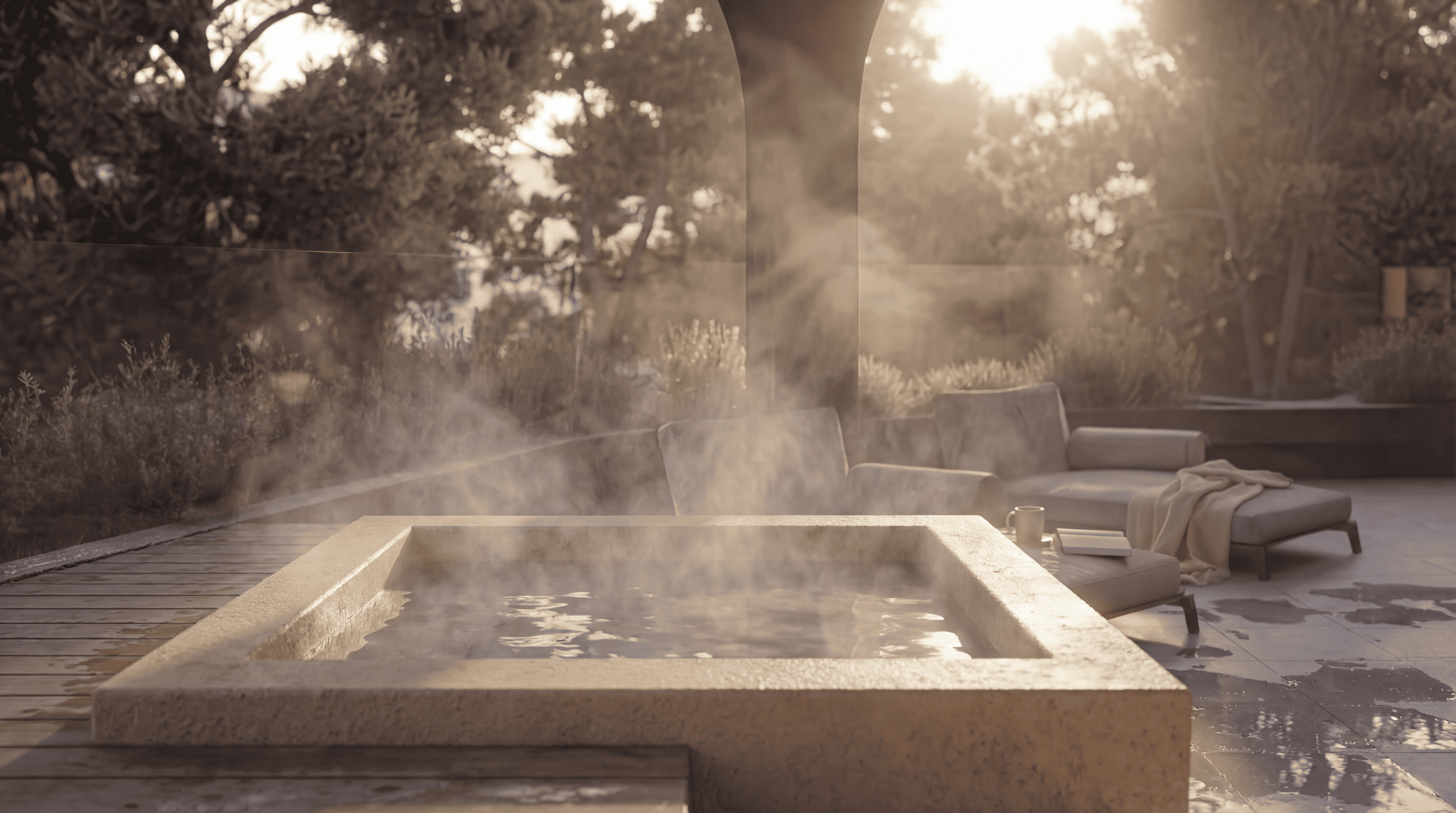
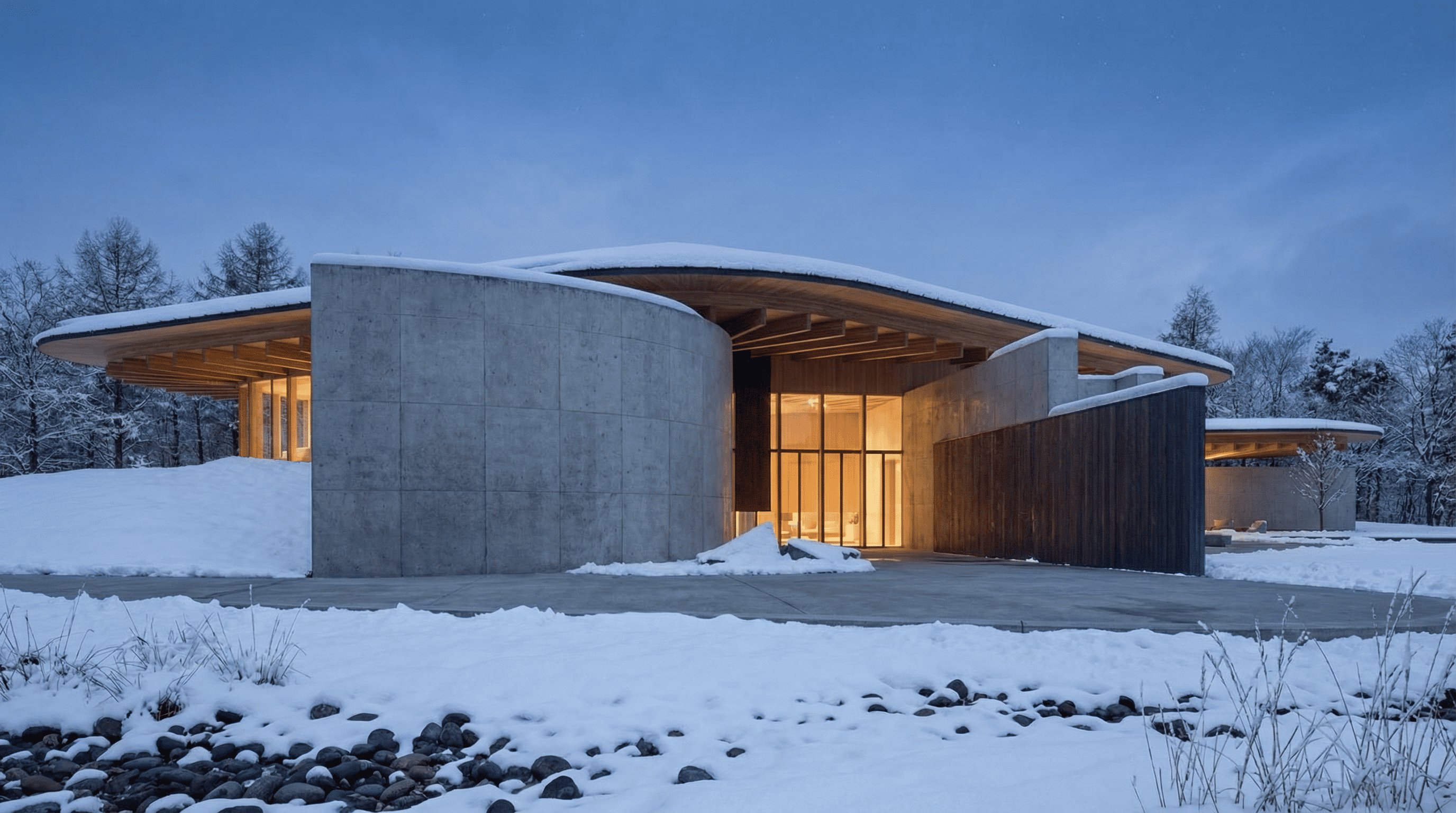
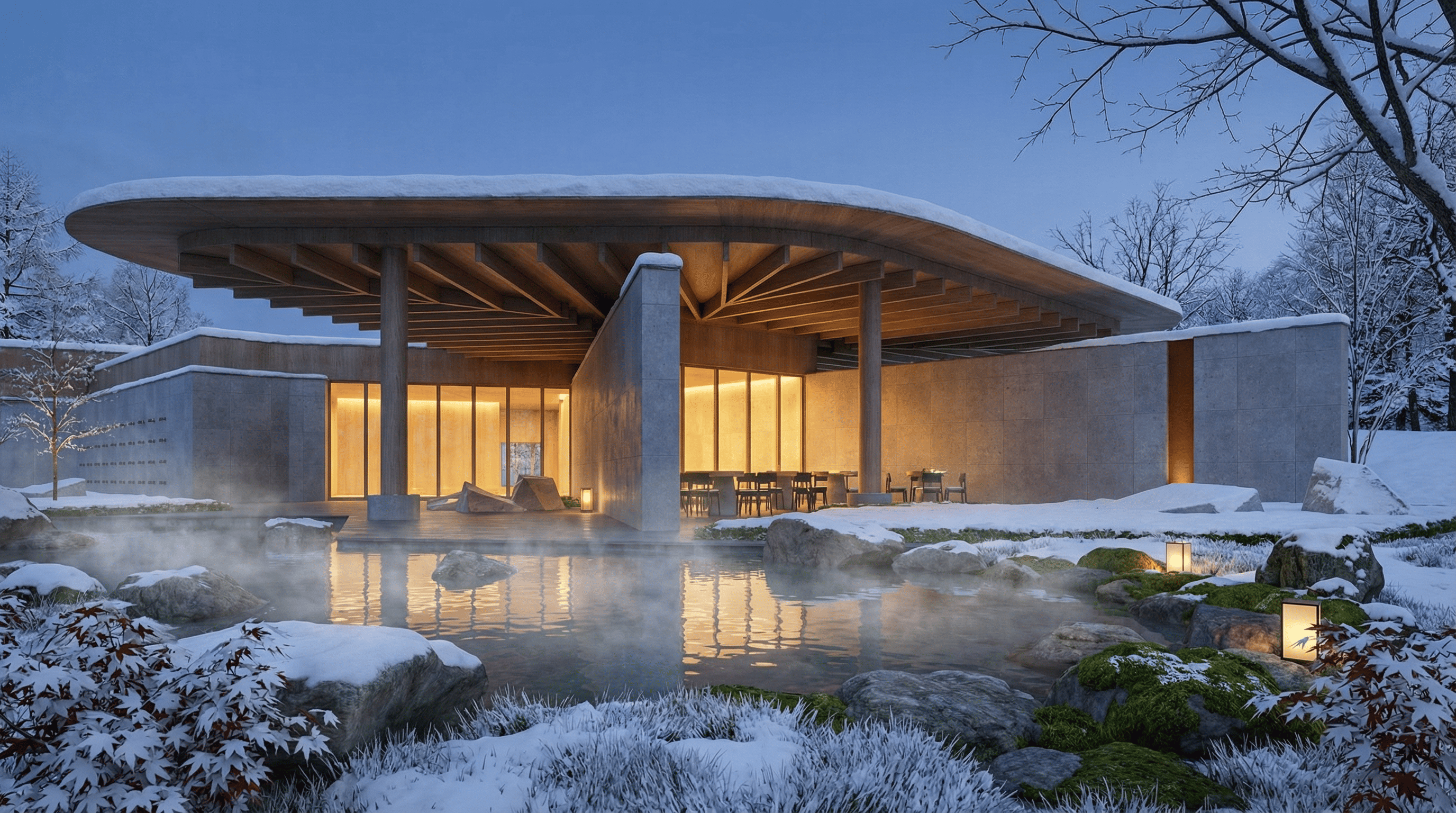
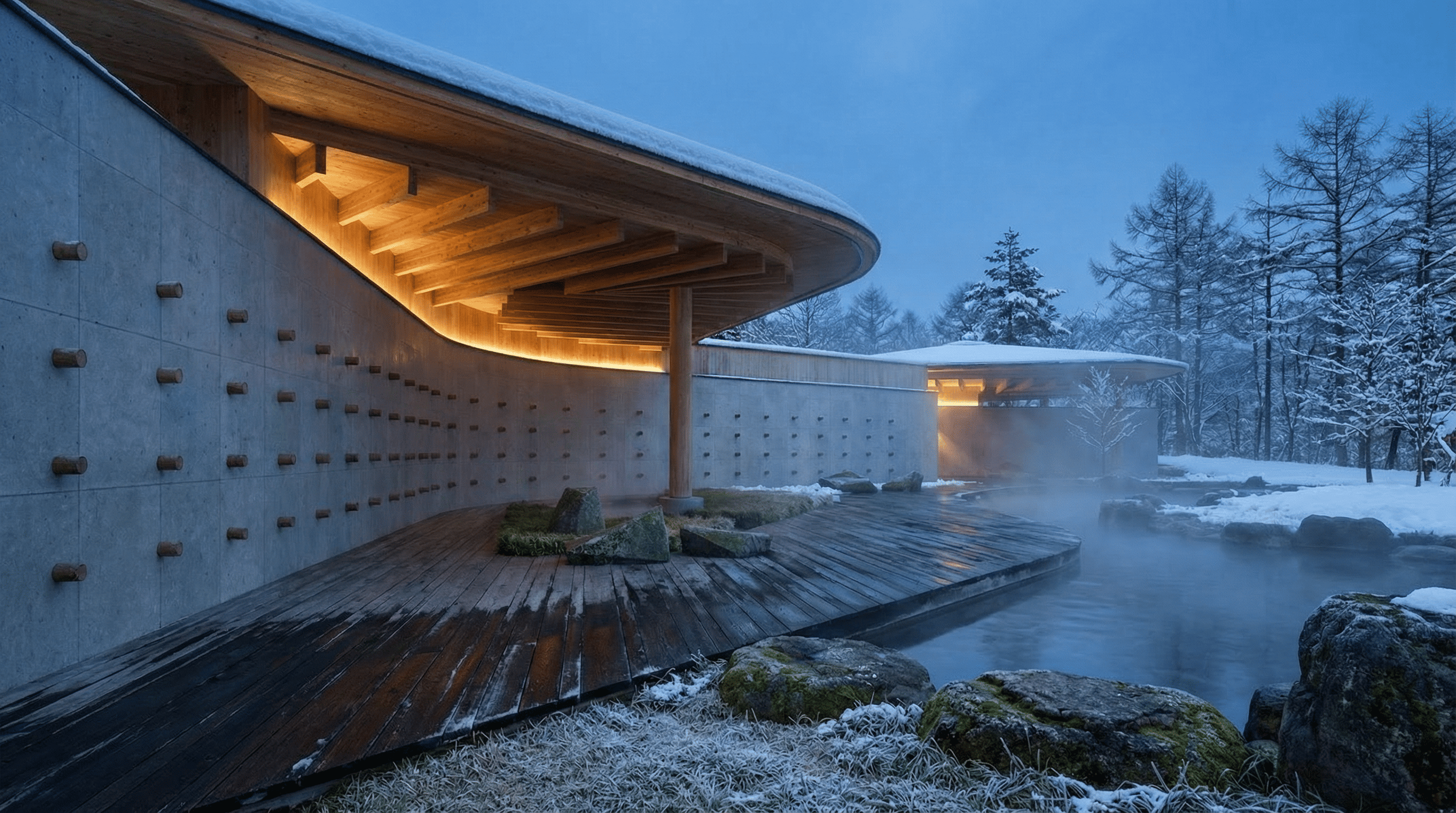
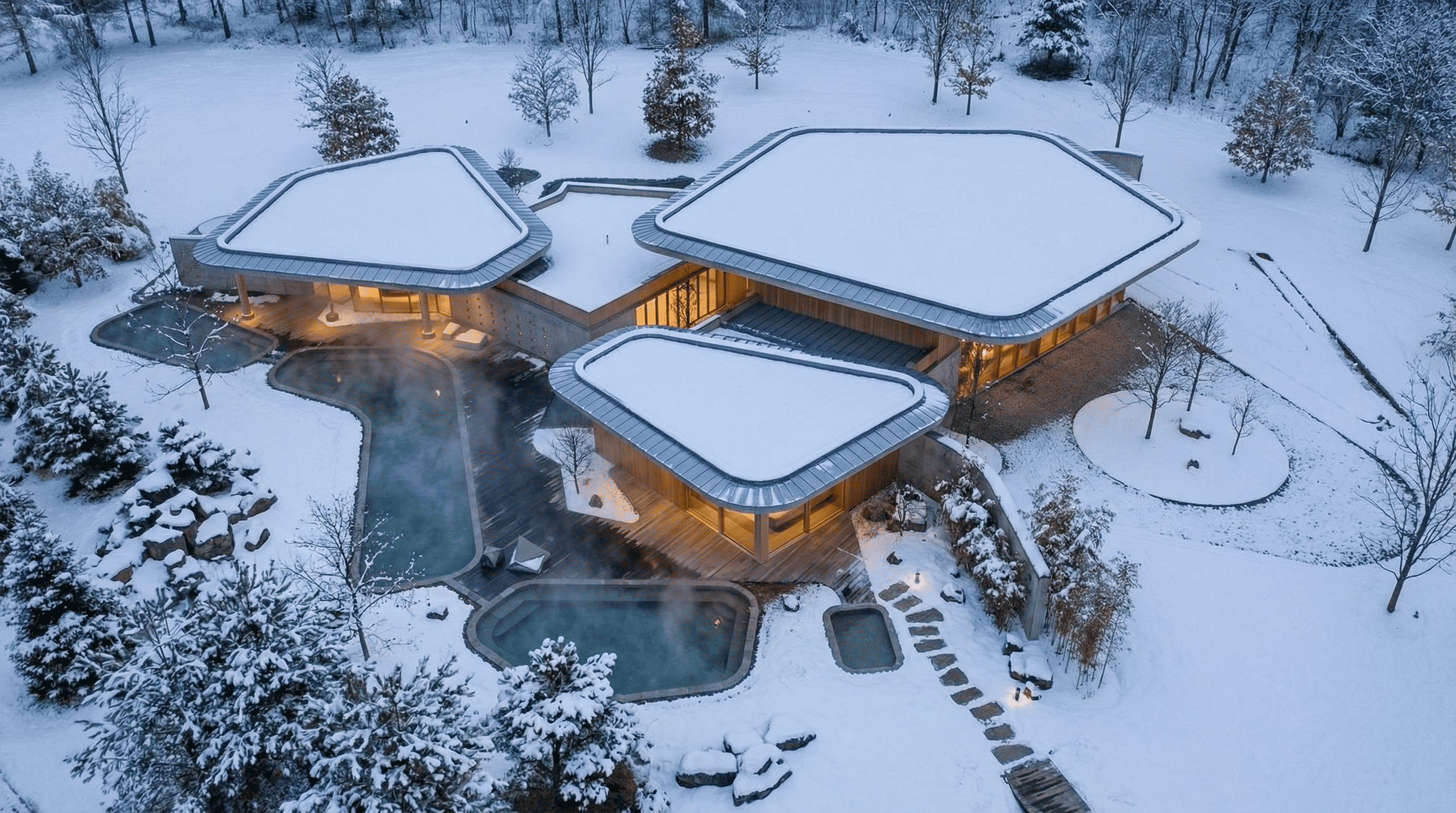
The architecture of the public program, particularly the onsen pavilion, is conceived as a delicate integration into the landscape. Here, the architecture максимально “dissolves” into its surroundings, subordinating itself to natural forms and usage scenarios — from open water surfaces to intimate, quiet spaces.
The volumes are shaped by organic geometries and fluid lines, resulting in curvilinear buildings that blend harmoniously with the environment. Light plays a crucial role: natural illumination, reflections in the water, and filtration through the tree canopy create a constantly shifting, sensory spatial experience.
Ultimately, the architecture operates as a multi-layered system — from the urban scale to the individual user experience — where the focus is not on form, but on the quality of space and the scenarios of inhabiting it.
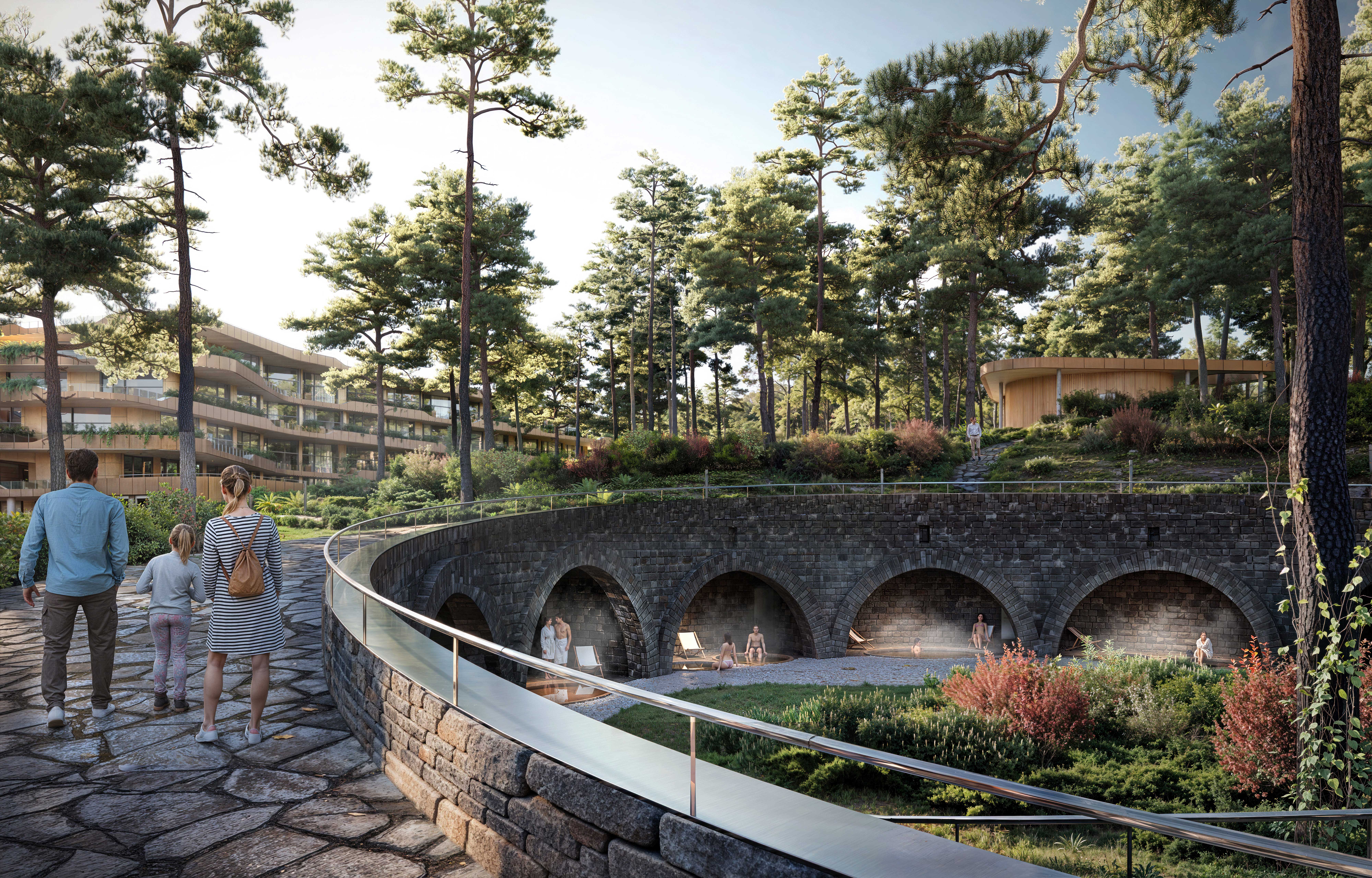
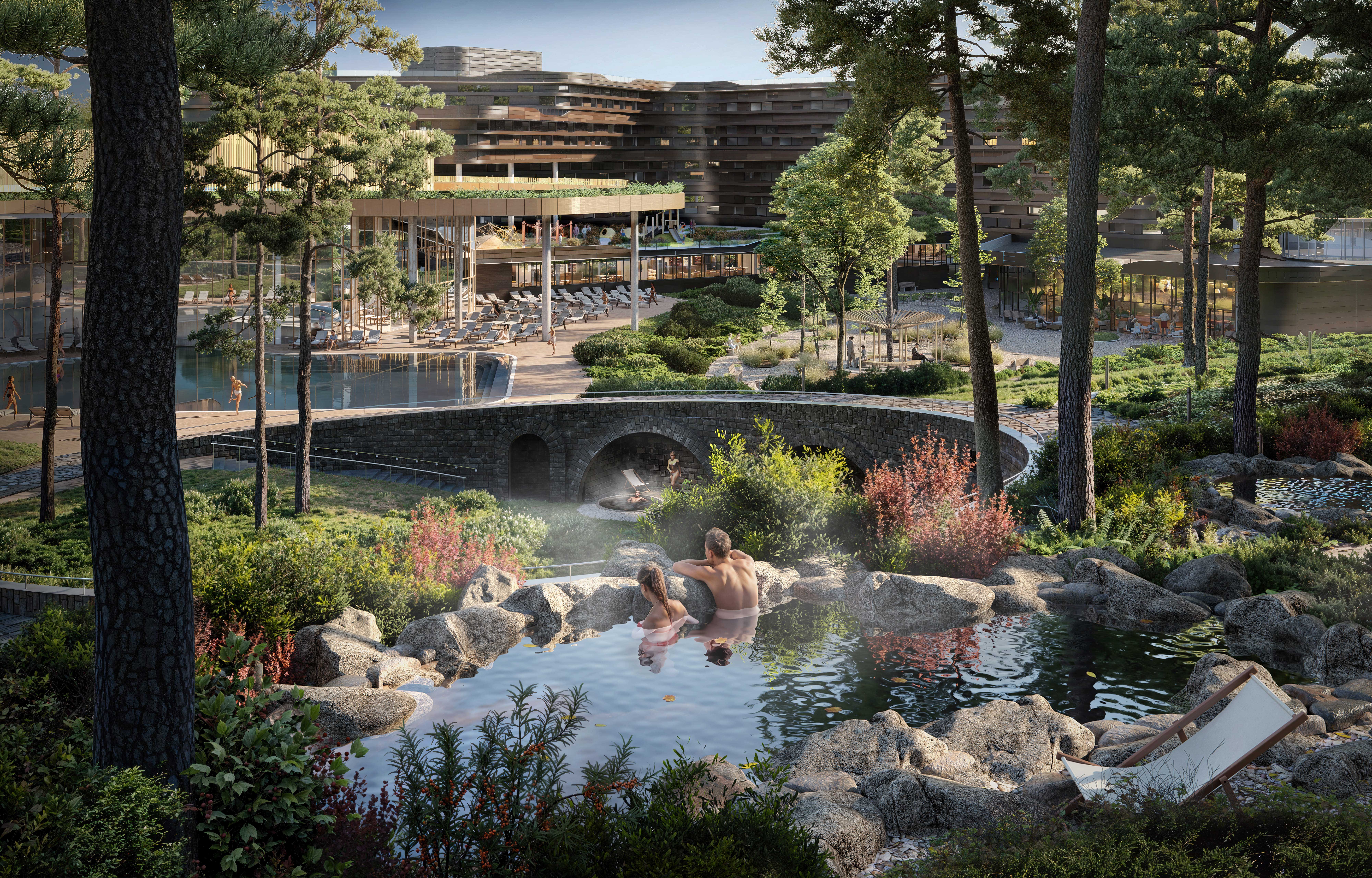
Onsen are traditional Japanese thermal bathhouses that use natural hot mineral springs. They are not merely places for bathing, but a holistic ritual of restoration — combining water, silence, nature, and a gradual immersion into a state of calm. In Japanese culture, onsen represent a balance between body and mind, where not only the properties of the water matter, but also the atmosphere, privacy, and the attentive relationship to the surrounding space.
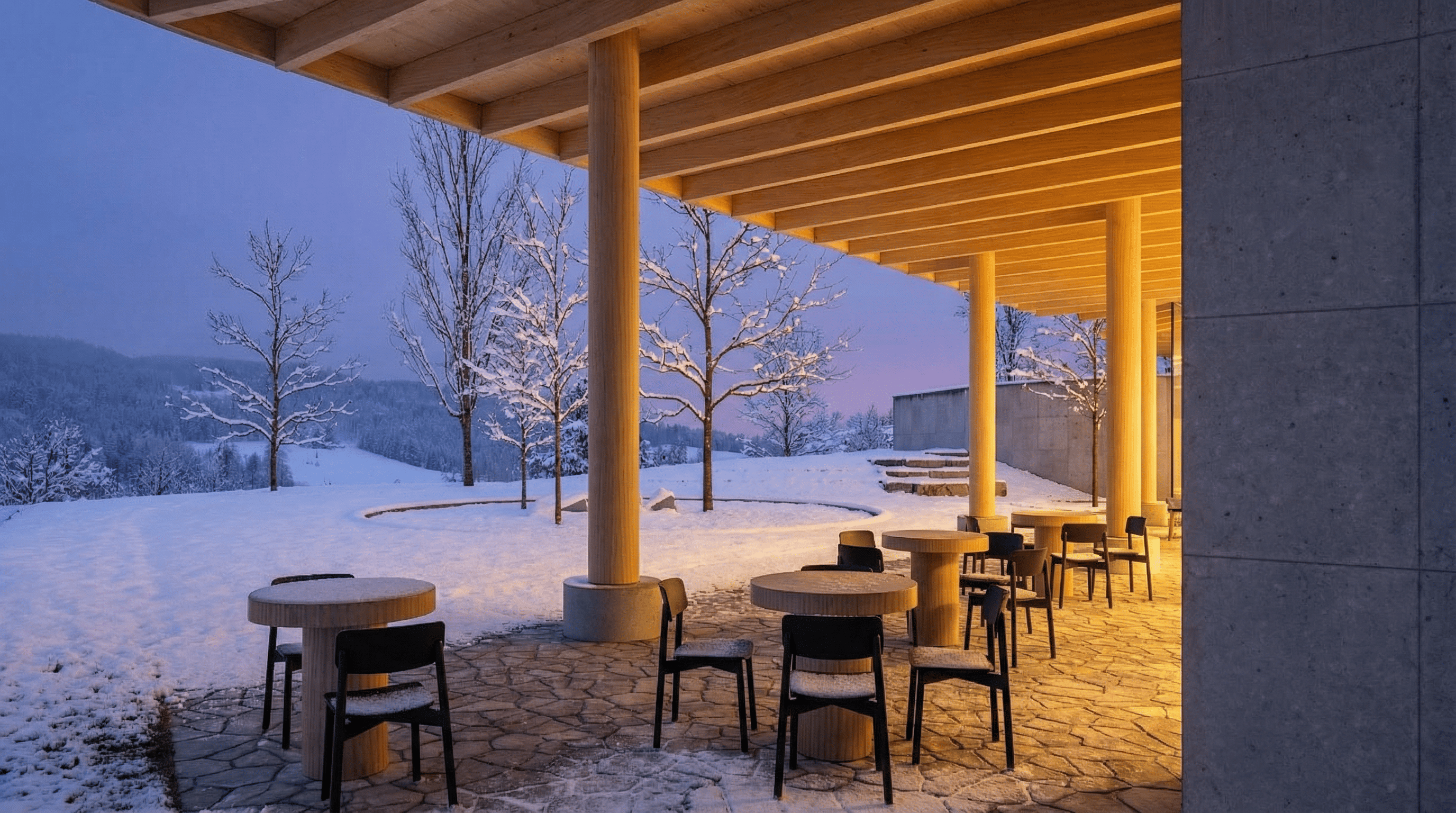
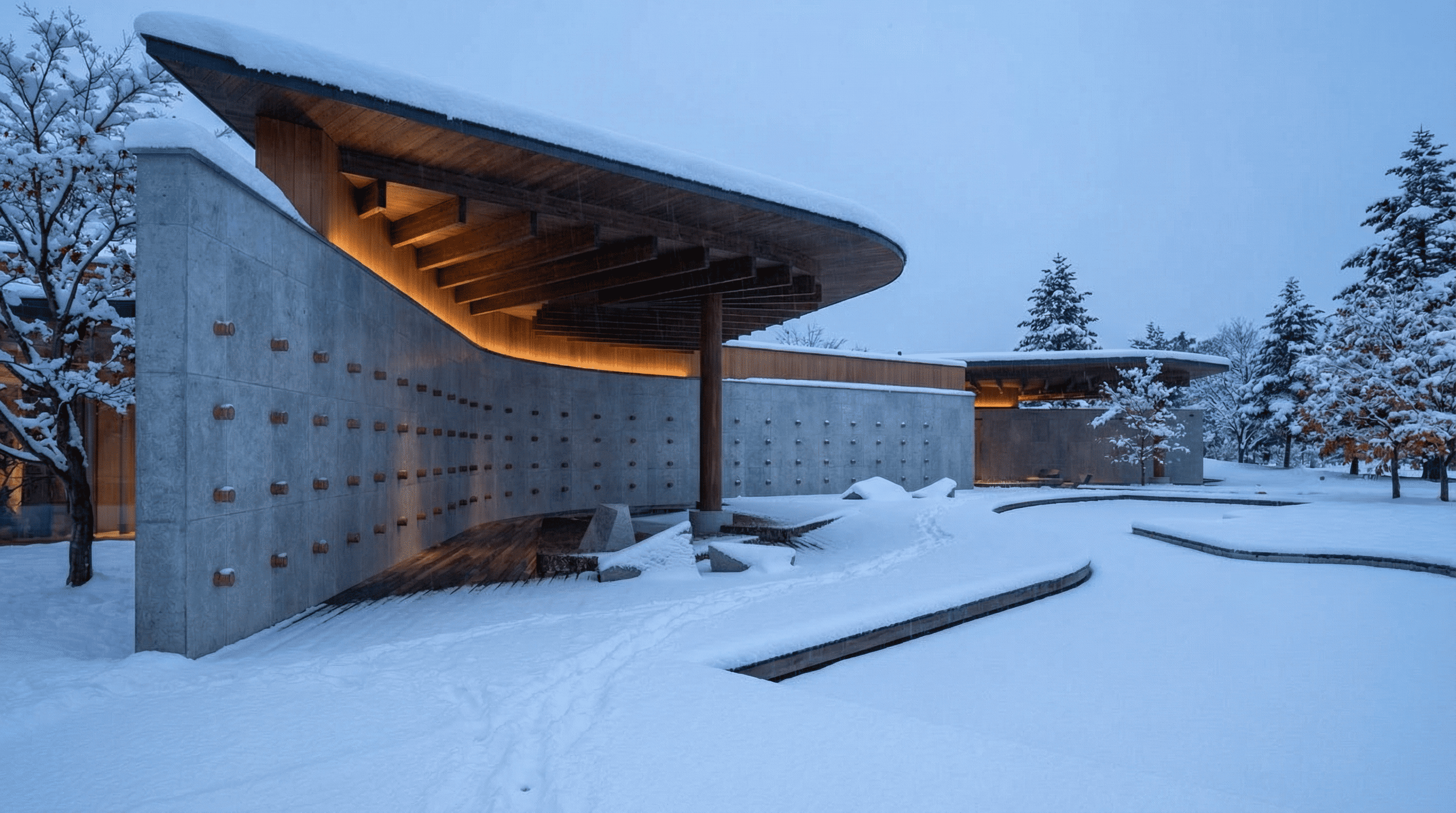
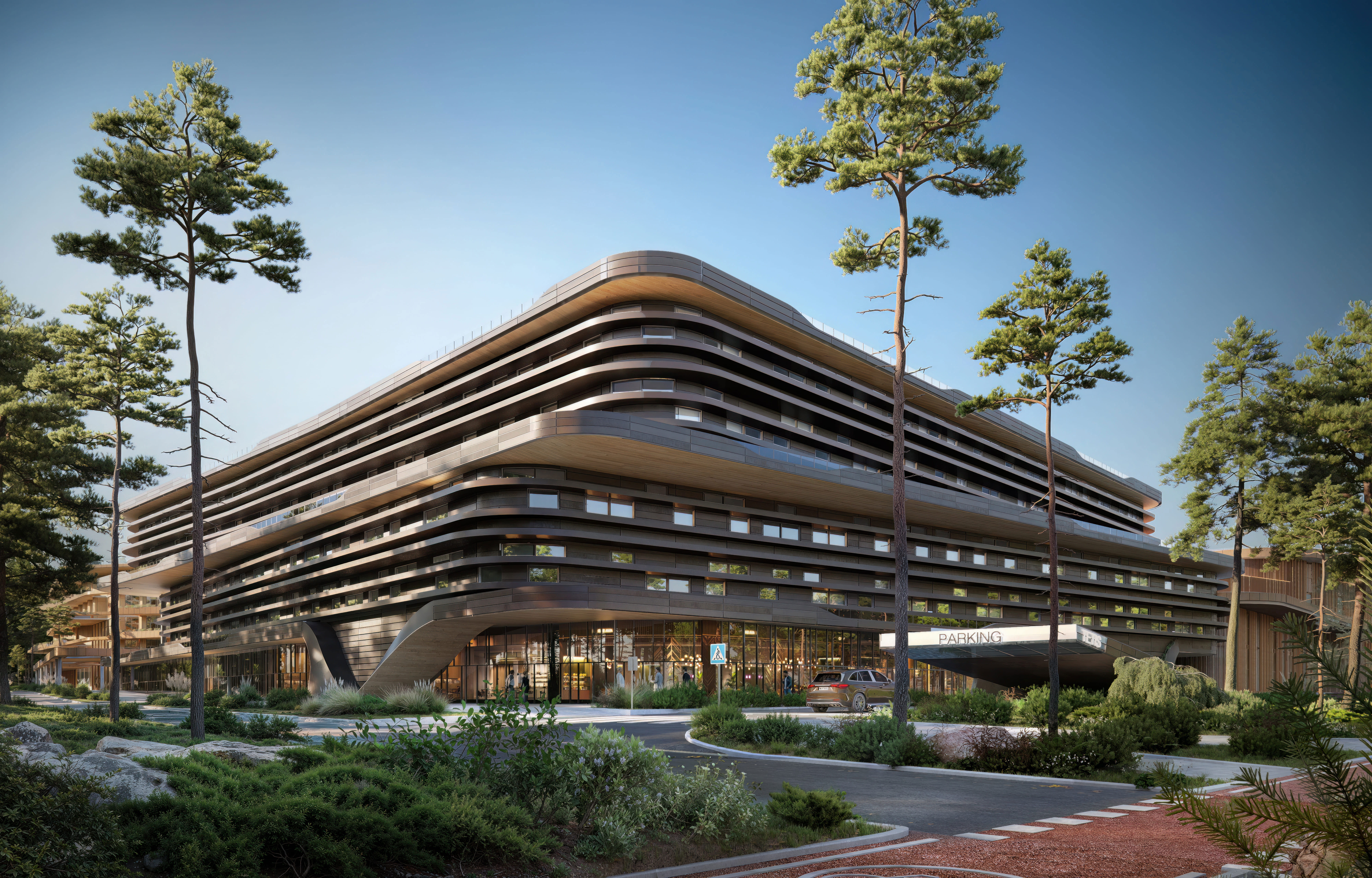
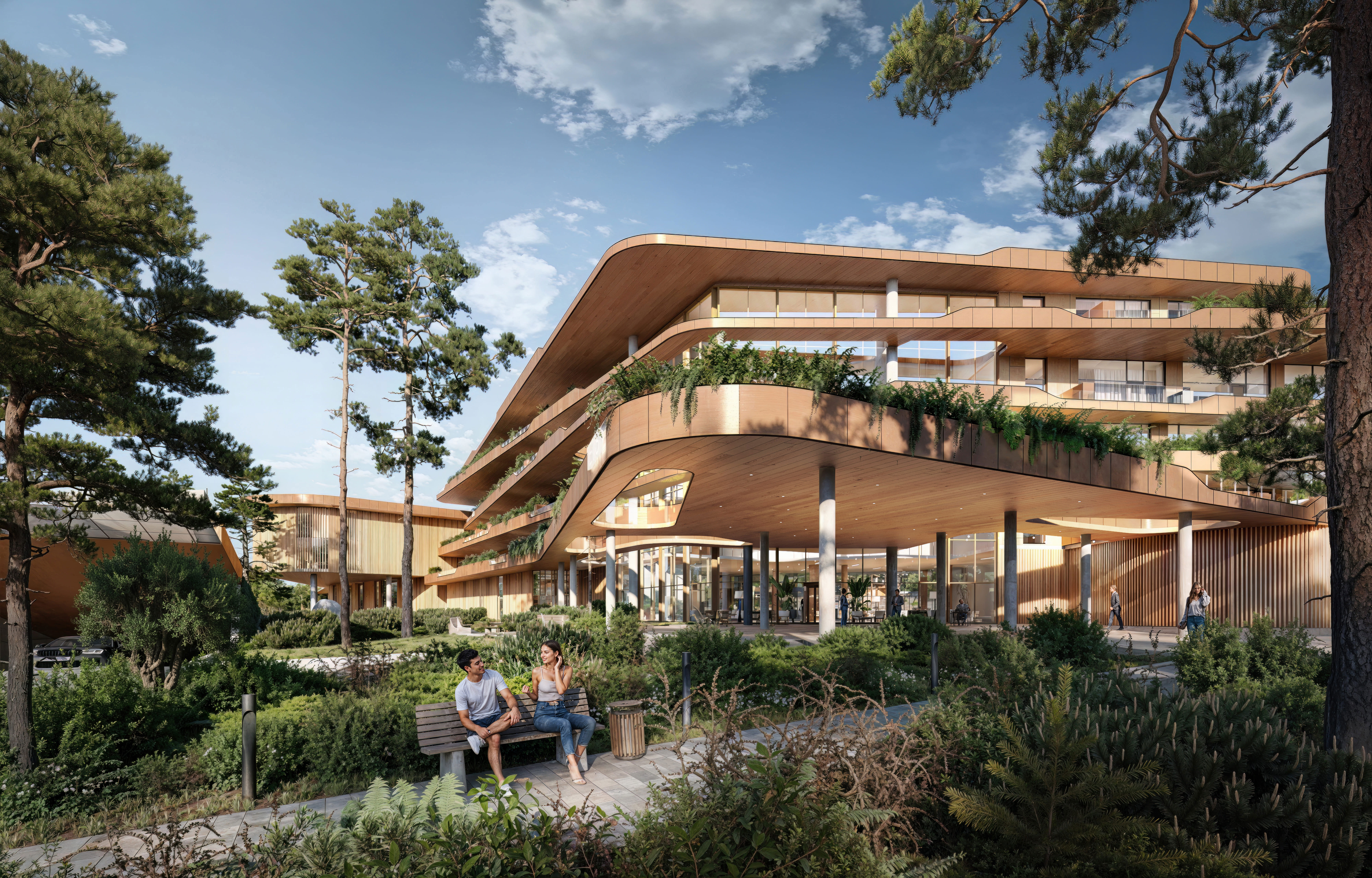
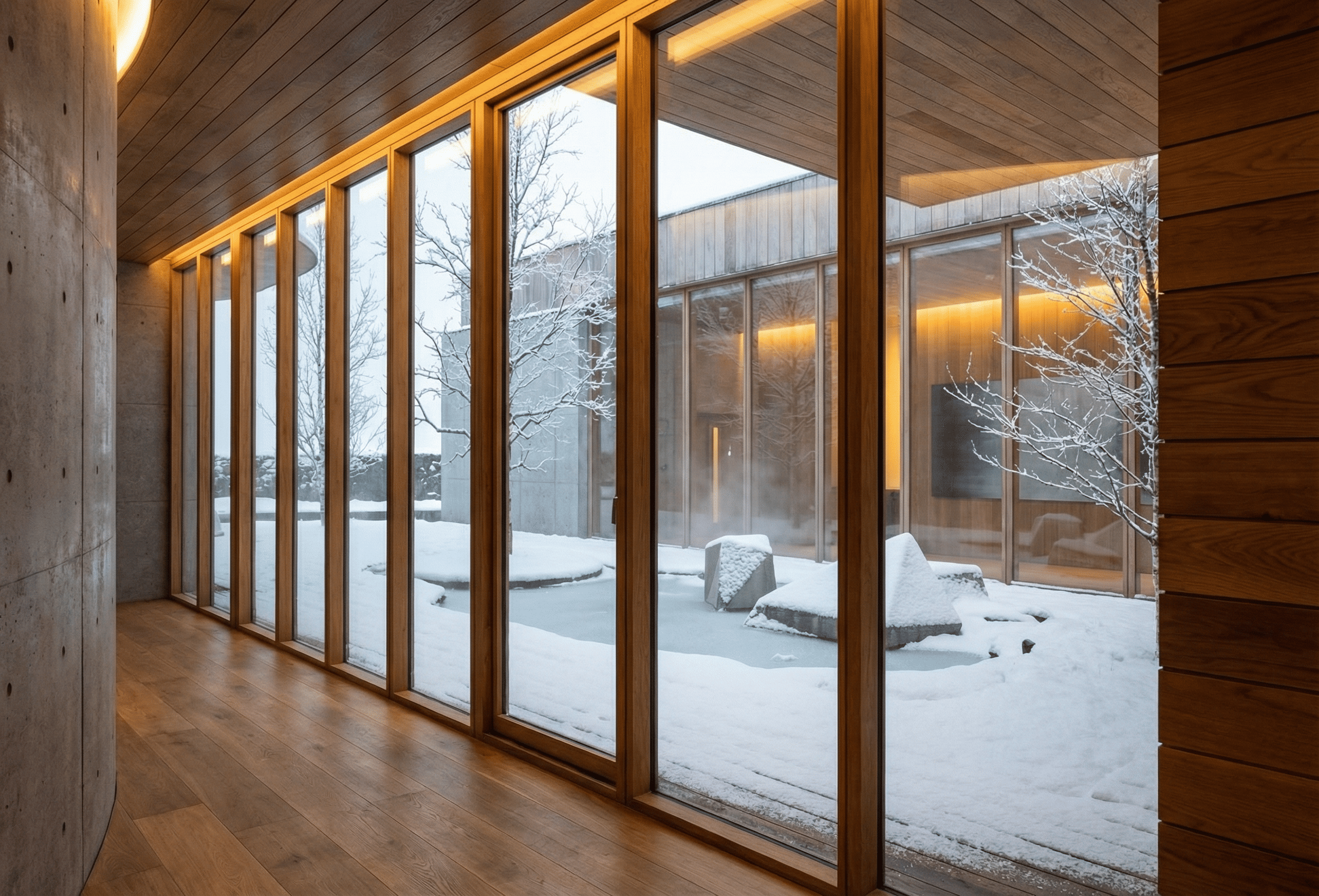
The architecture of the onsen is conceived as a continuation of the natural environment — not as a standalone object, but as a delicately integrated structure that engages with the landscape, water, and silence. The composition consists of low, horizontally spread volumes with soft, almost organic roof geometries. Extended roof overhangs form sheltered semi-open spaces, creating a smooth transition between interior and exterior environments.
The spatial sequence unfolds gradually — from more open and social areas to intimate, secluded spaces for restoration, reflecting the logic of immersion and withdrawal embedded in the onsen philosophy.
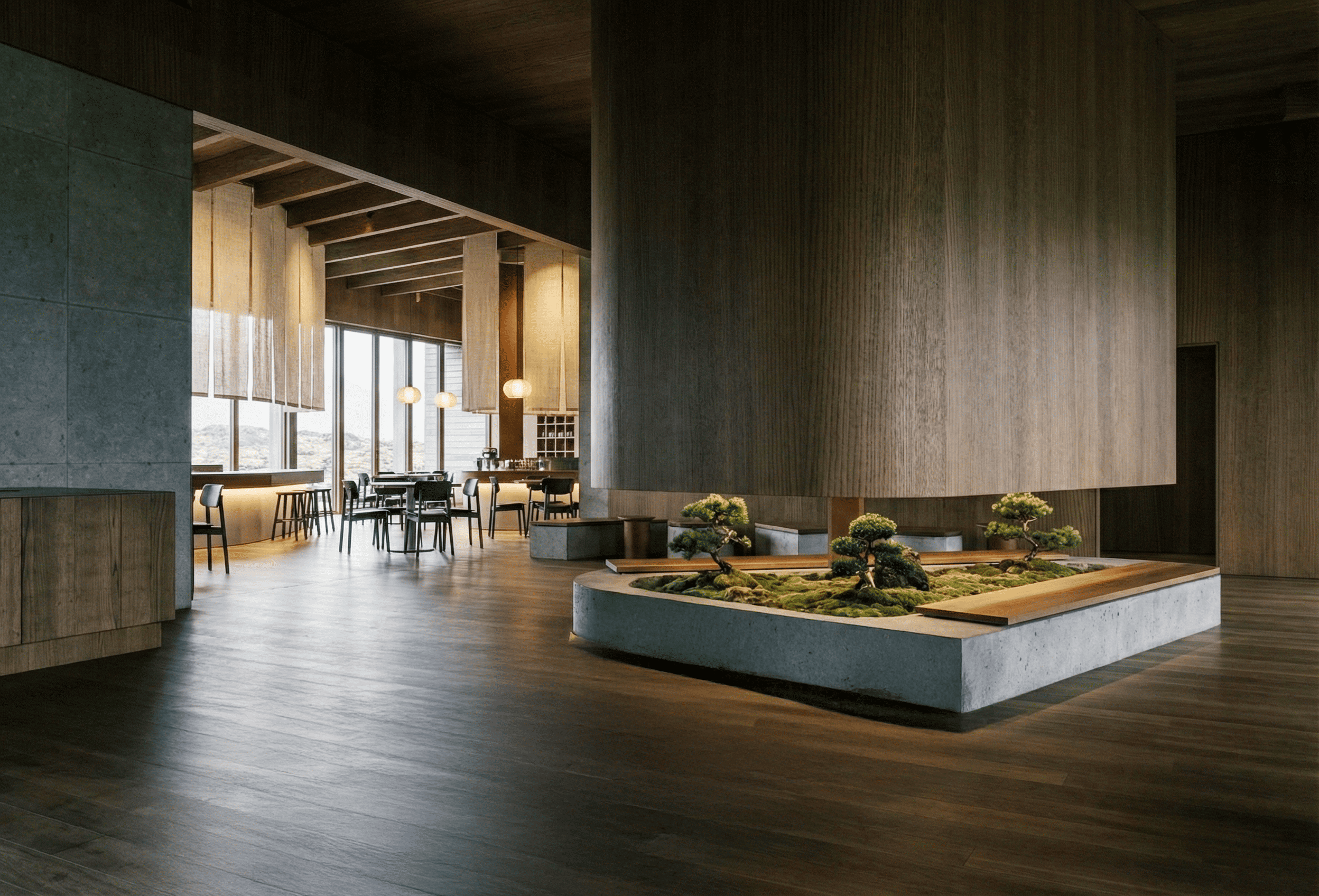
The material palette is restrained and tactile: concrete, wood, and natural textures are balanced between warmth and solidity. Wood, used in interiors and under roof structures, introduces a human scale and a sense of comfort, while monolithic exterior walls provide protection and reinforce a sense of quietness.
As a result, the architecture does not dominate but instead forms a backdrop for experience — an environment where the primary value is not form, but state: slowing down, recovery, and connection with nature.
The complex is designed as an energy-efficient and partially autonomous system that reduces dependence on external networks, optimizes operating costs, and ensures a stable and safe living environment.
The engineering concept is based on reliable solutions: heating is provided by Viessmann systems, while each apartment has independent gas heating with buffer tanks for domestic hot water. Flue gas extraction is ensured through a collective Schiedel Quadro system, adapted for condensing boilers, guaranteeing both airtightness and safety.
The location within a pine forest is an integral part of the concept: natural ventilation — particularly in bedrooms — creates a healthy microclimate with clean air. Individual ventilation channels are provided in walk-in closets with the option of connecting personal systems. The water supply system emphasizes quality: a two-stage purification process, stainless steel and reinforced polypropylene piping. Rainwater is collected, treated, and reused for technical needs.
The complex is equipped with increased electrical capacity and the possibility of backup power integration, including batteries and inverters within individual apartments. Dedicated zones are предусмотрені for modern engineering systems, underfloor heating solutions, and additional water purification systems. For comfort, heated floors are installed in entrance areas, lobbies, and external zones.
The underground parking includes a shelter equipped with autonomous systems: ventilation, fire suppression, backup power, and water reserves.
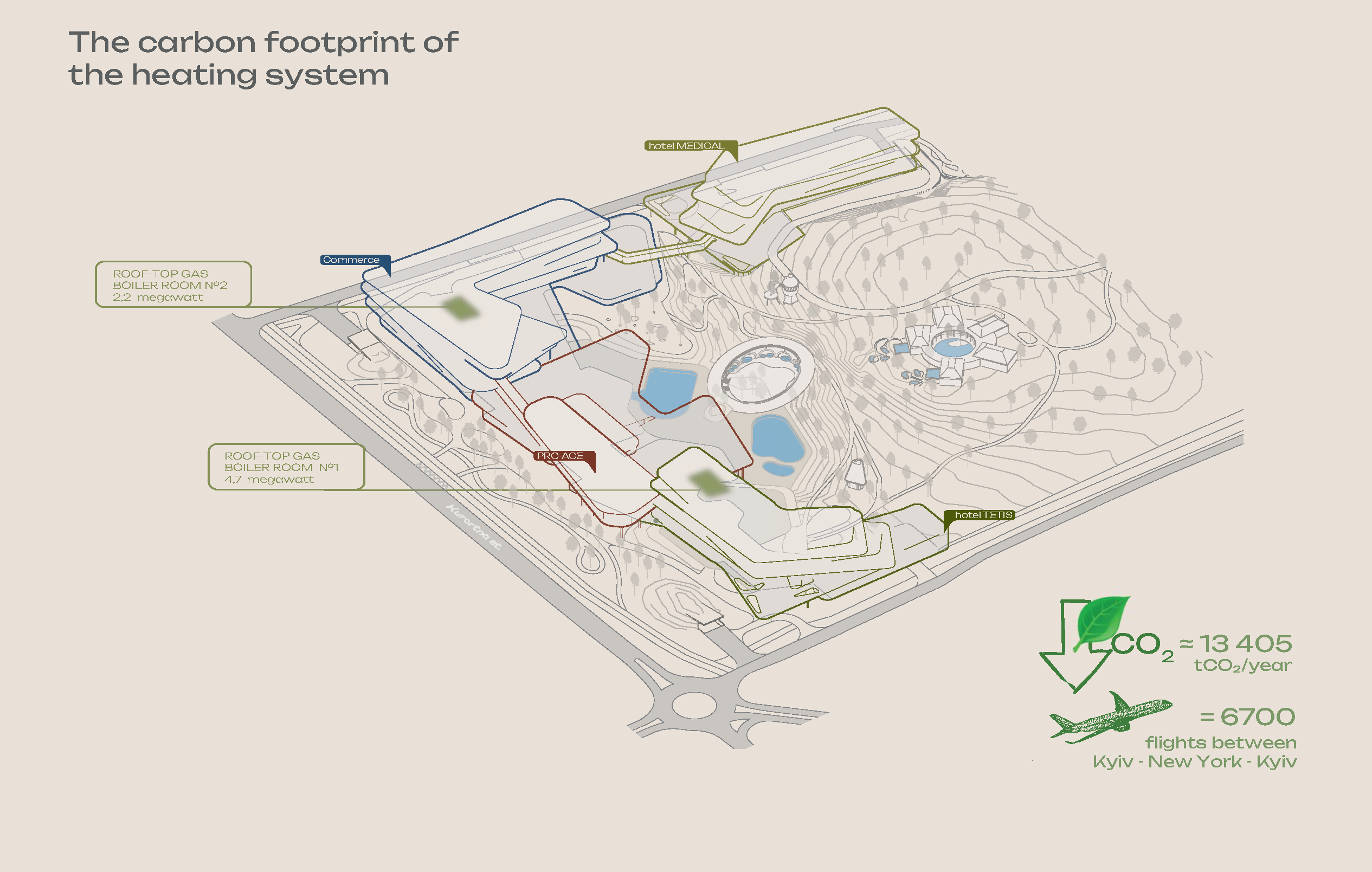
The engineering infrastructure of public spaces meets the standards of modern commercial facilities. A total capacity of up to 5 MW ensures stable operation across all areas. Heating is provided by two Viessmann gas boiler plants with individual heating substations for flexible energy management. Cooling is based on chiller systems with heat pump functionality, enabling year-round climate comfort.
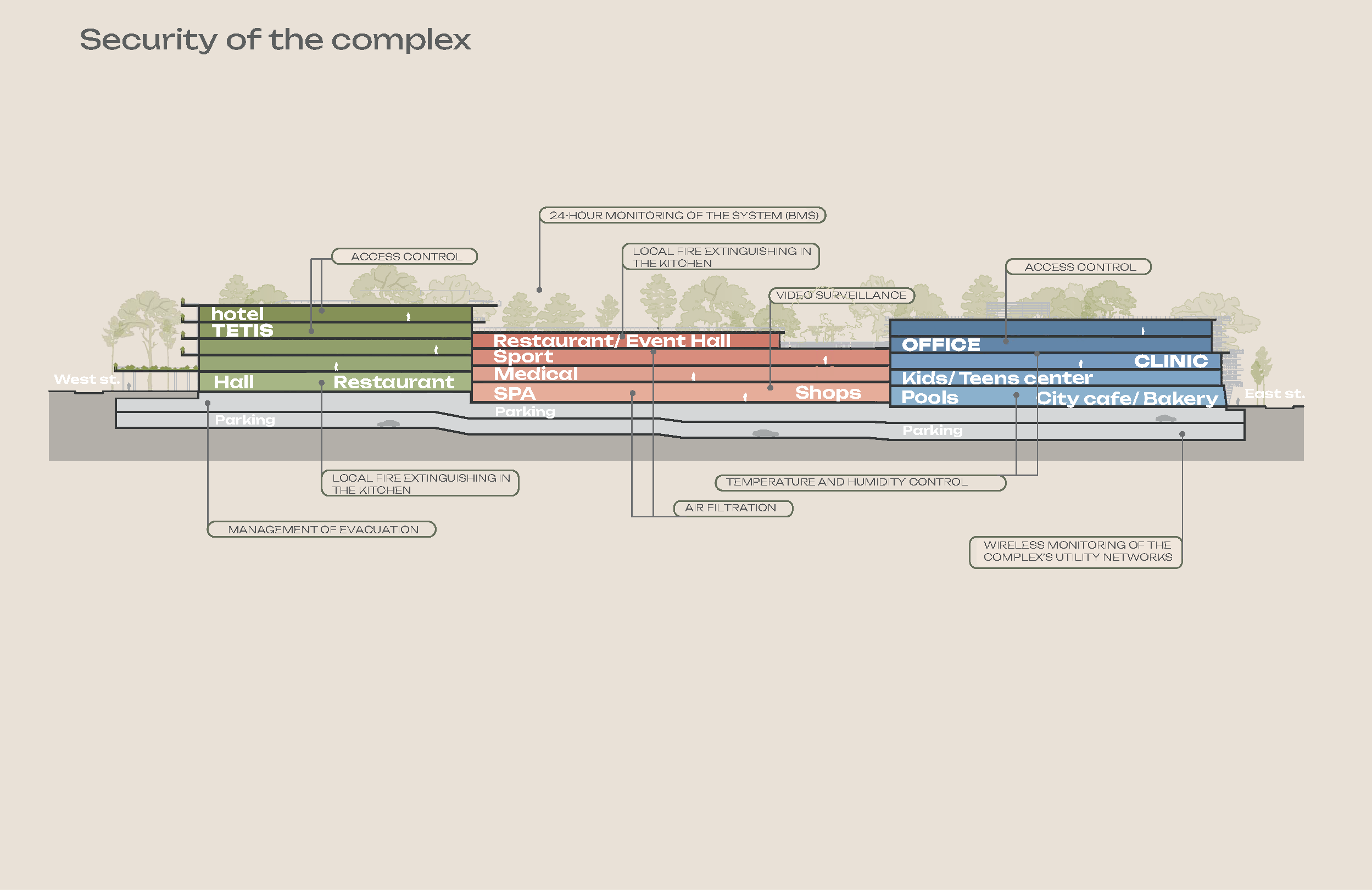
The water supply system includes multi-stage filtration and UV disinfection for food service facilities. All systems are integrated into a BMS (Building Management System) for real-time monitoring and optimization. Safety is ensured through access control, video surveillance, and fire protection systems.
The complex forms a technological, functional environment with development potential. The residential part has a separate engineering system focused on comfort, safety, and autonomy.
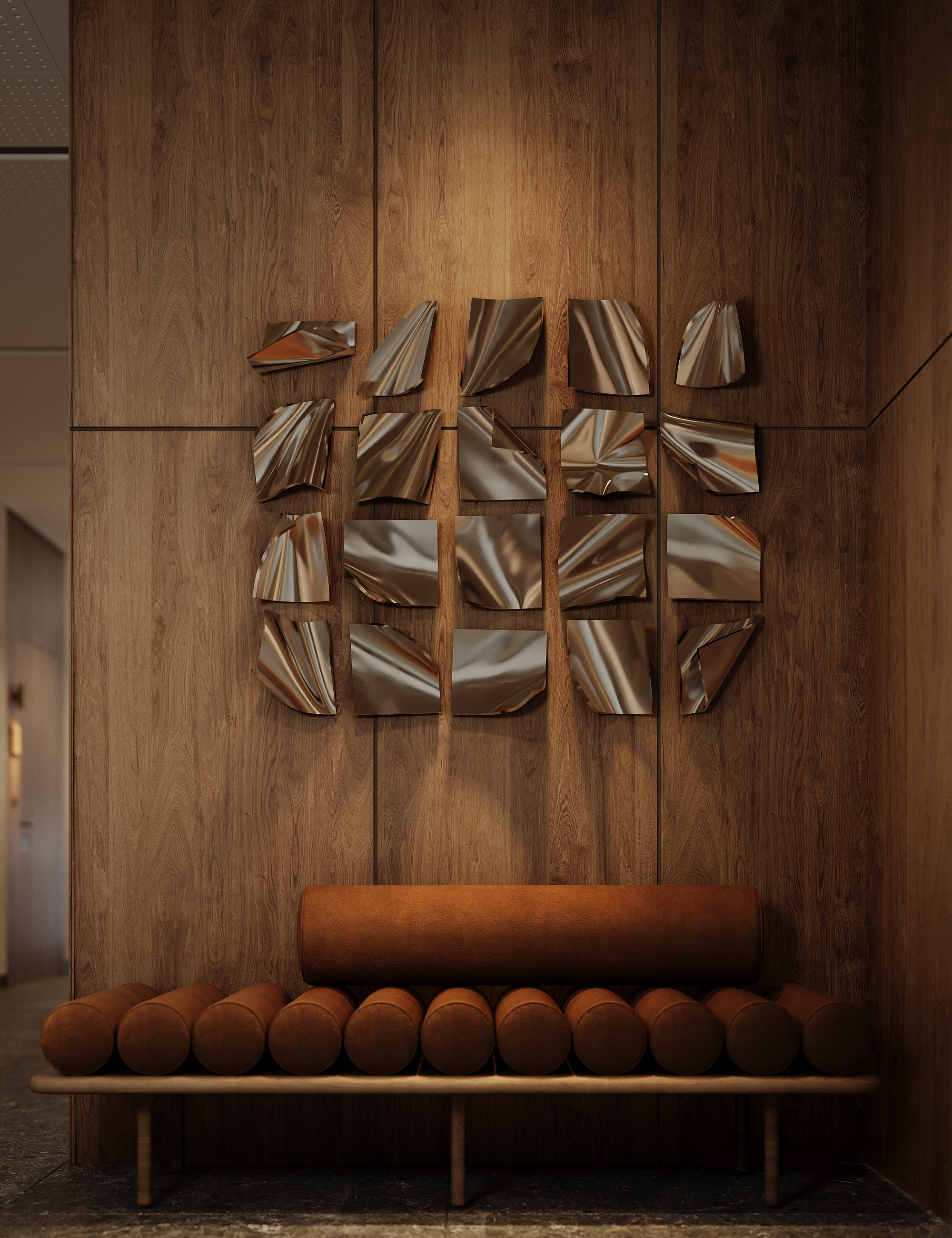
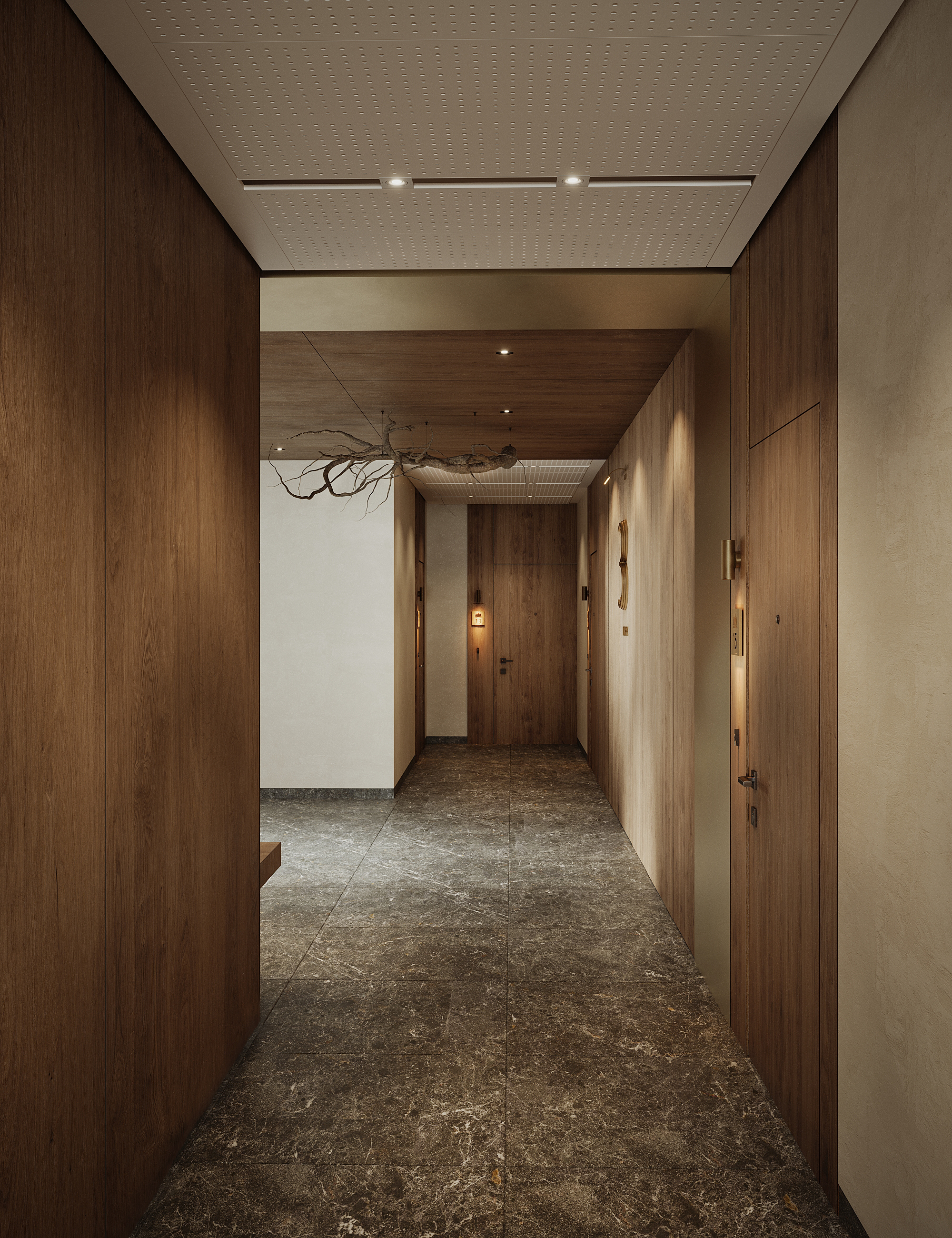
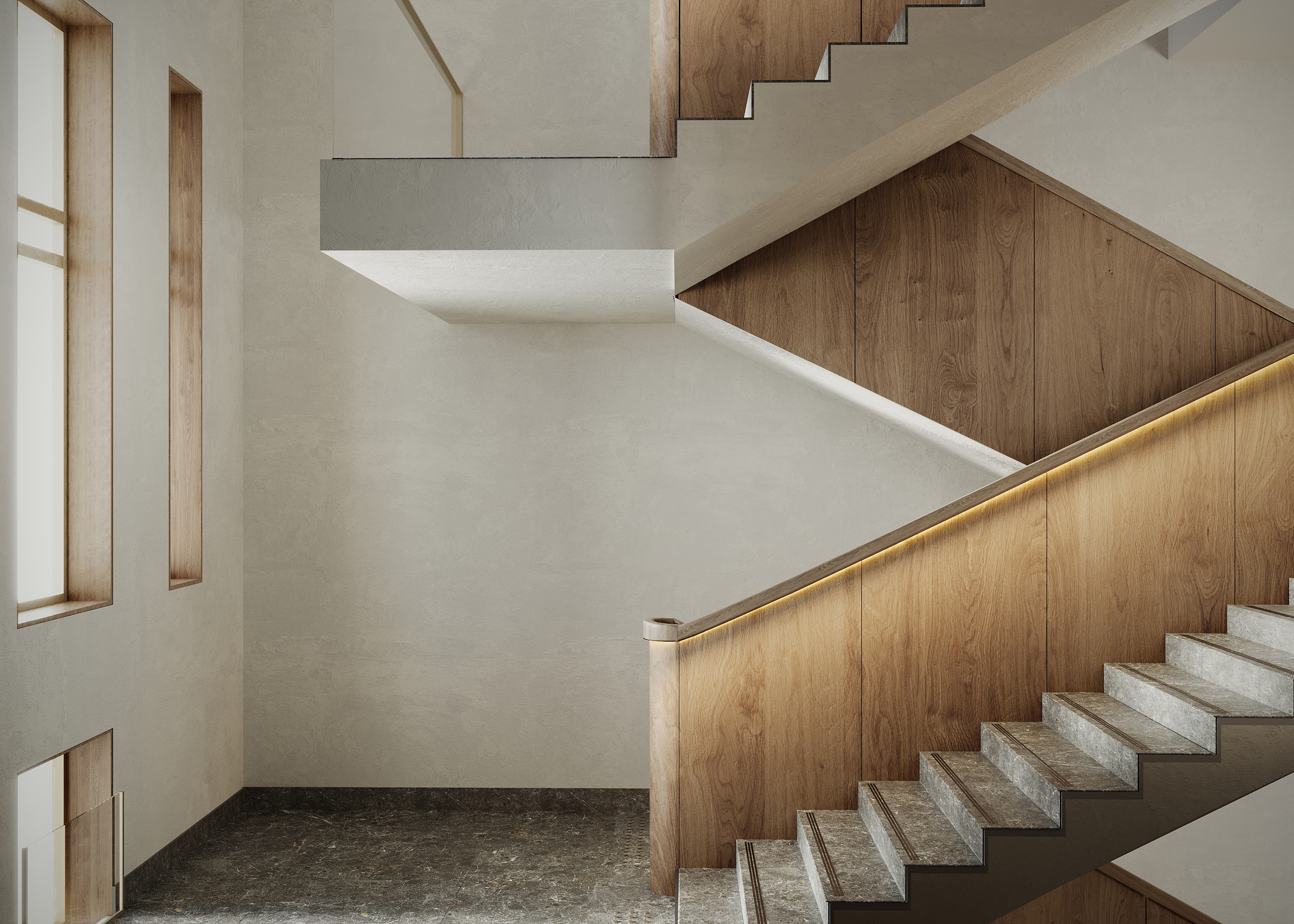
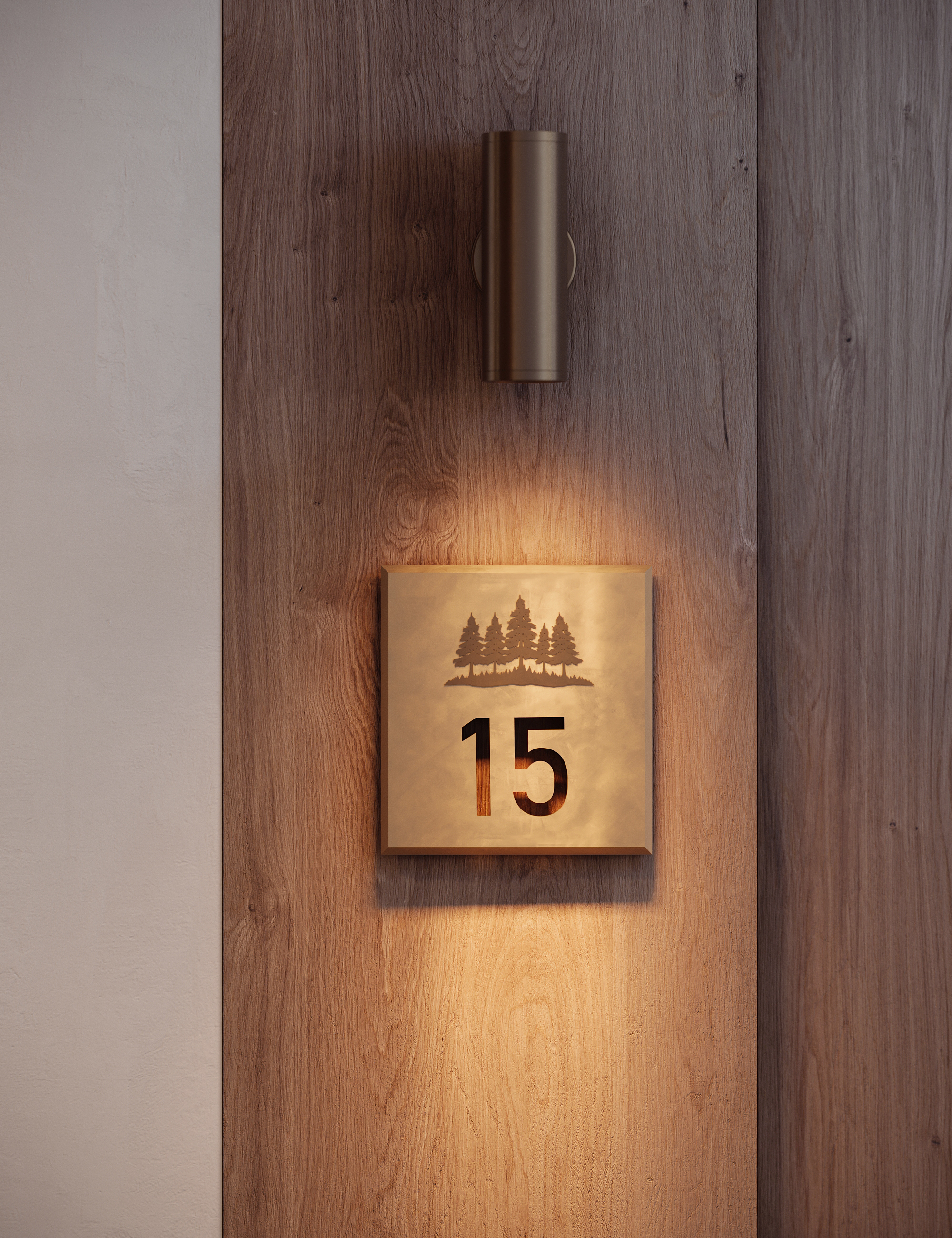
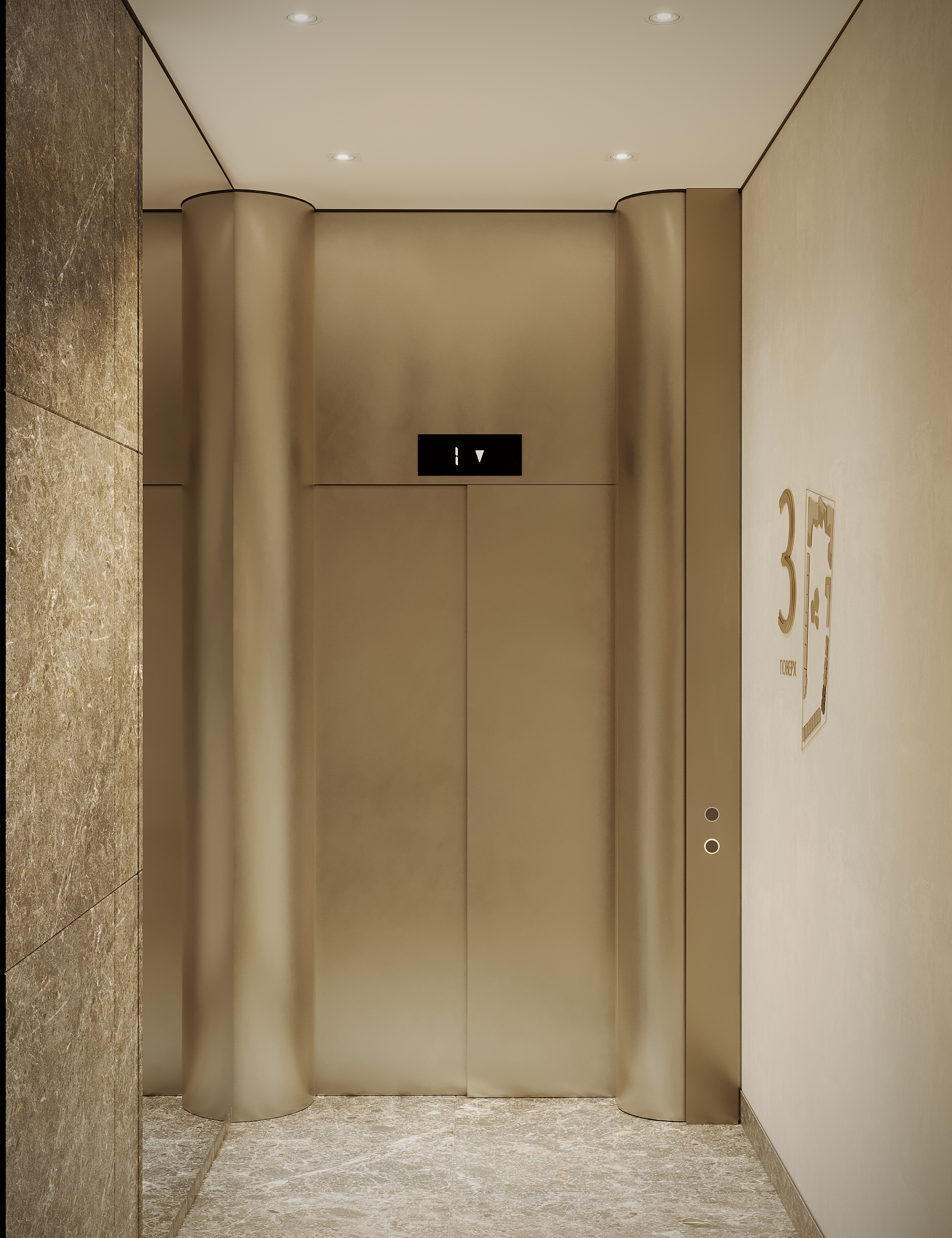
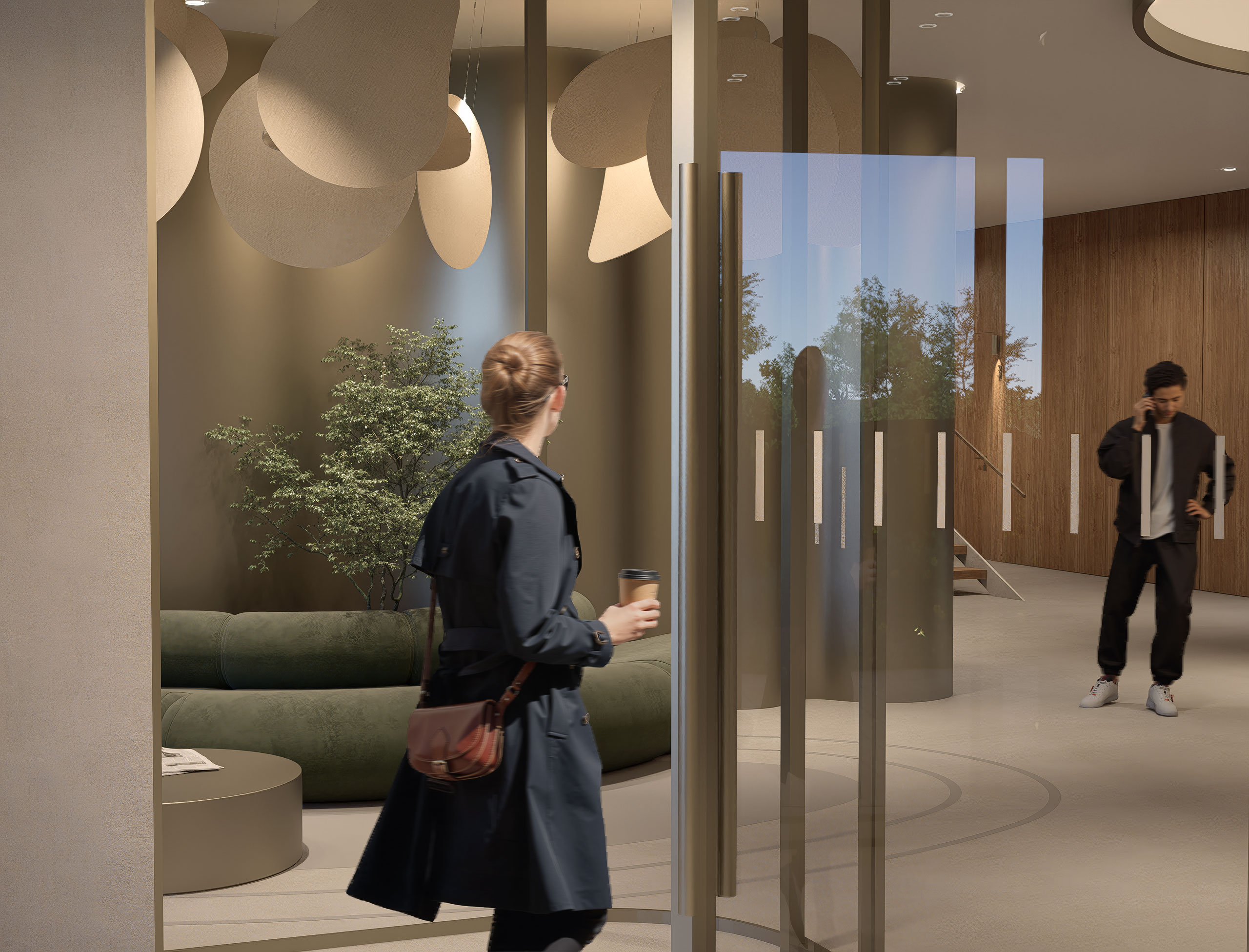
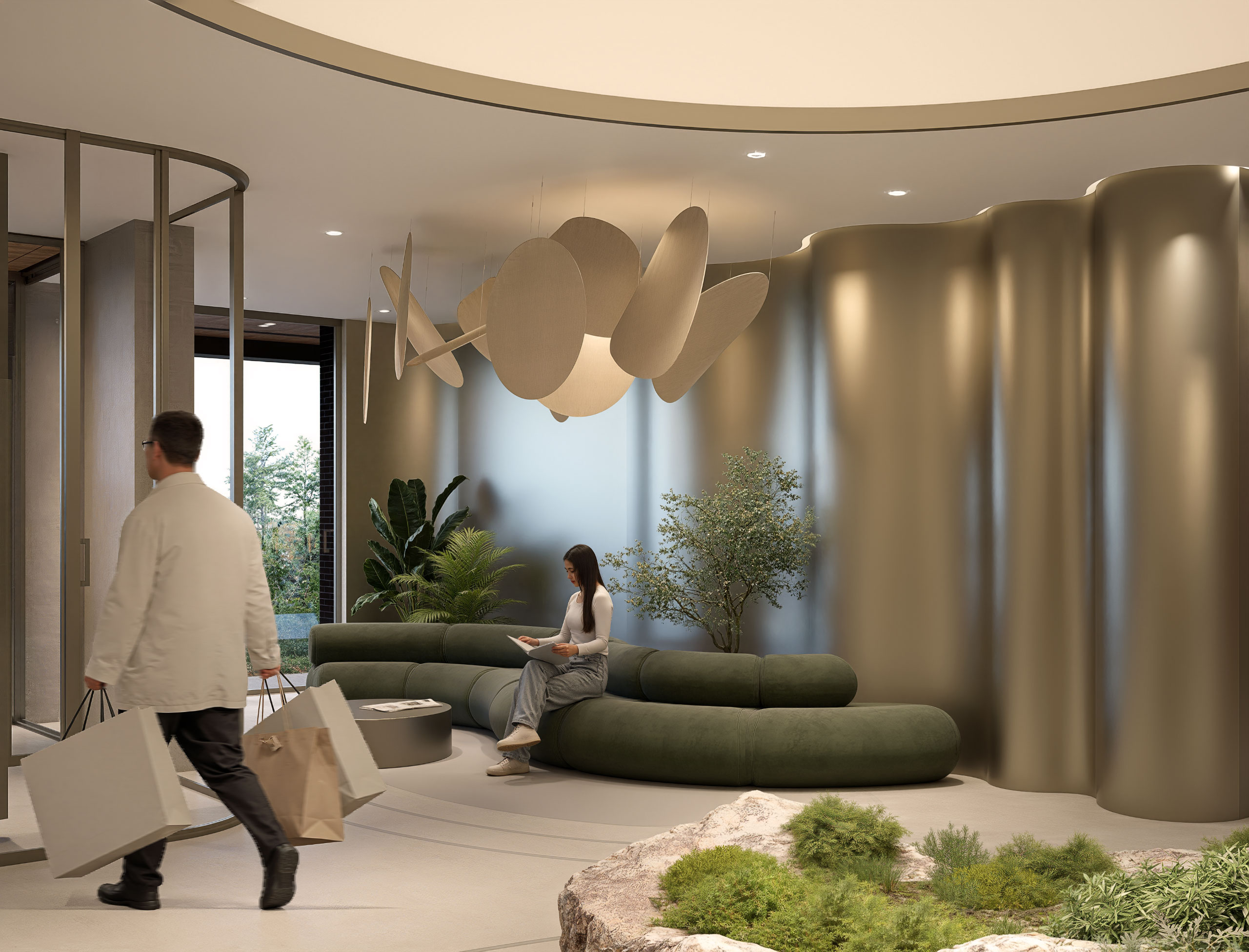
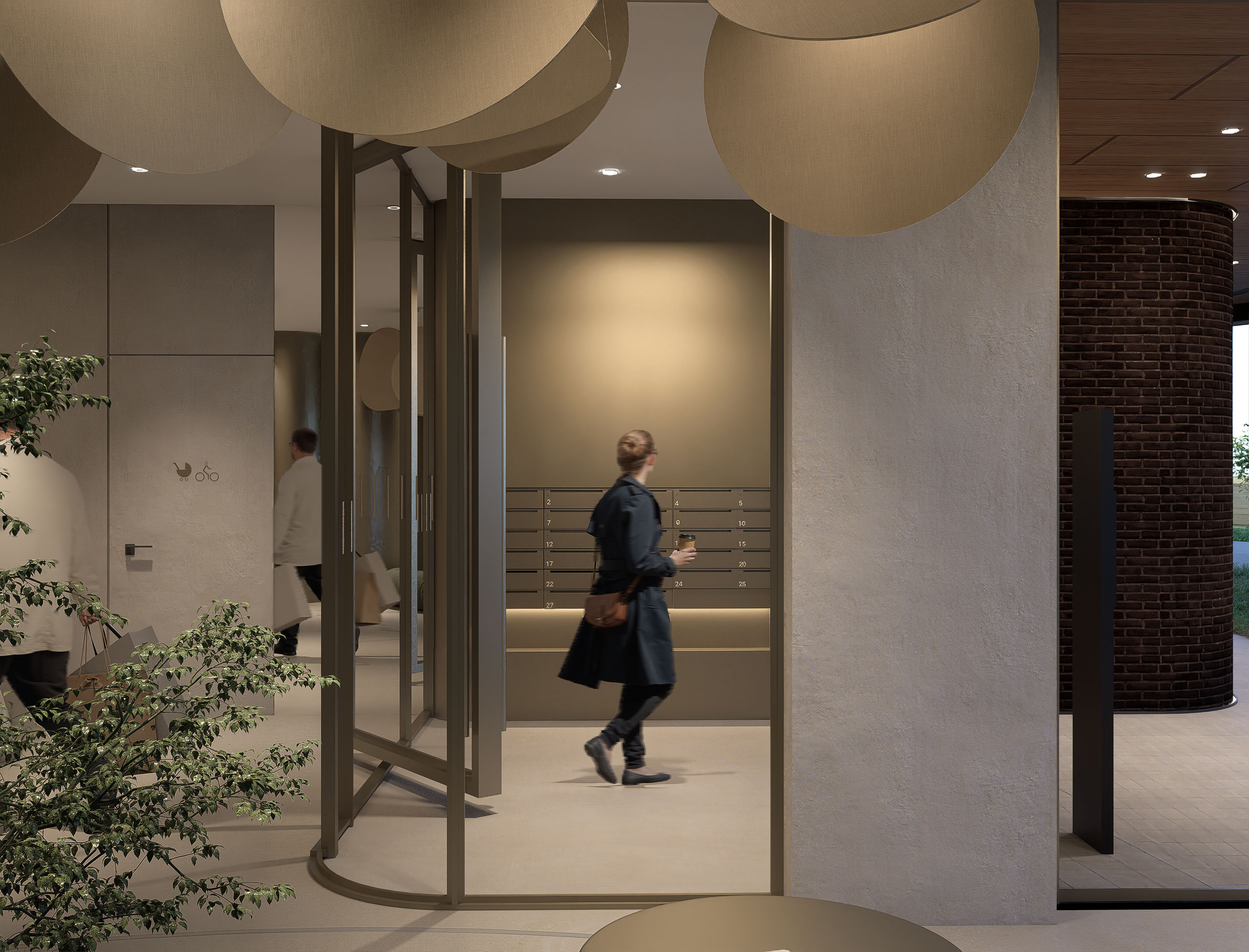
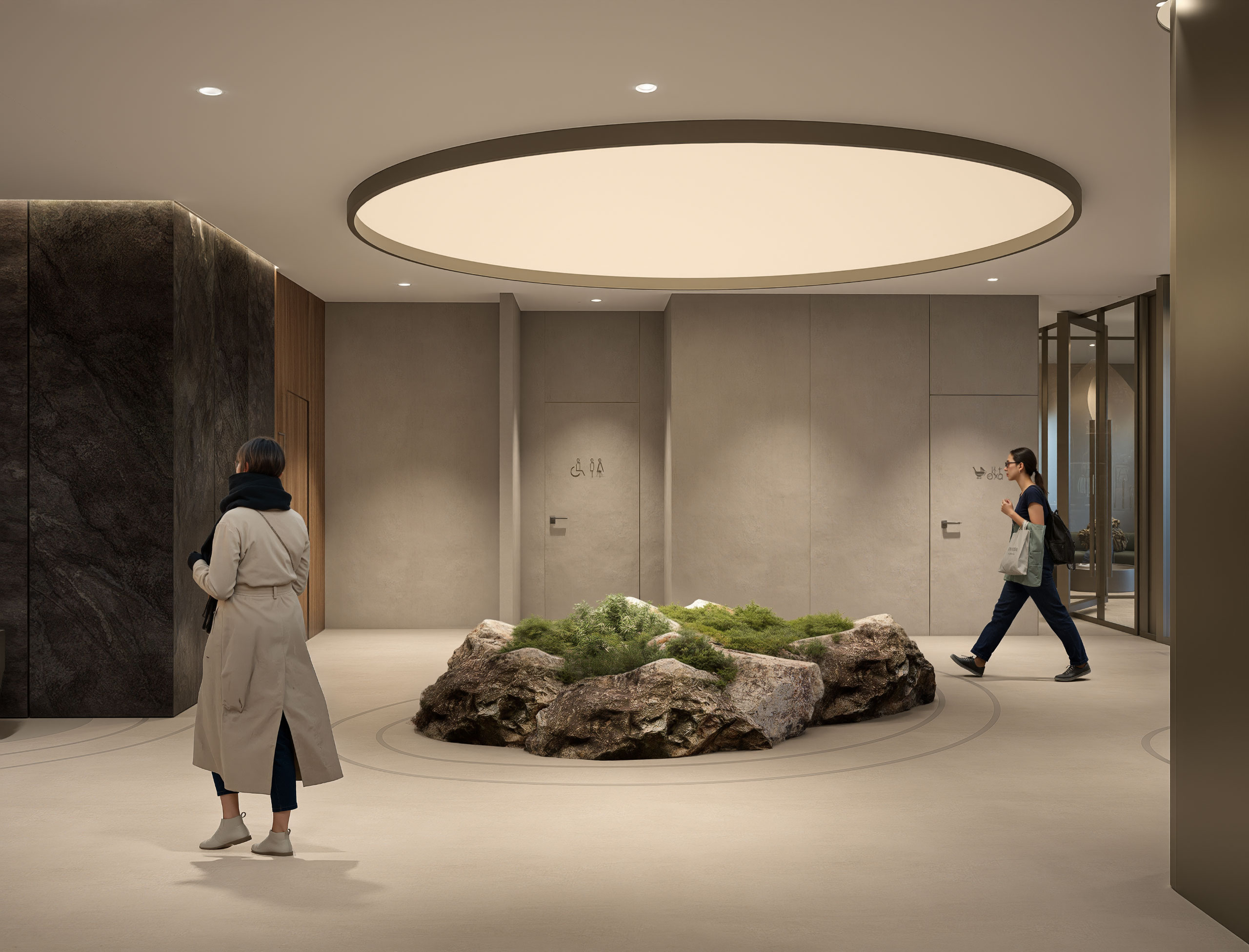
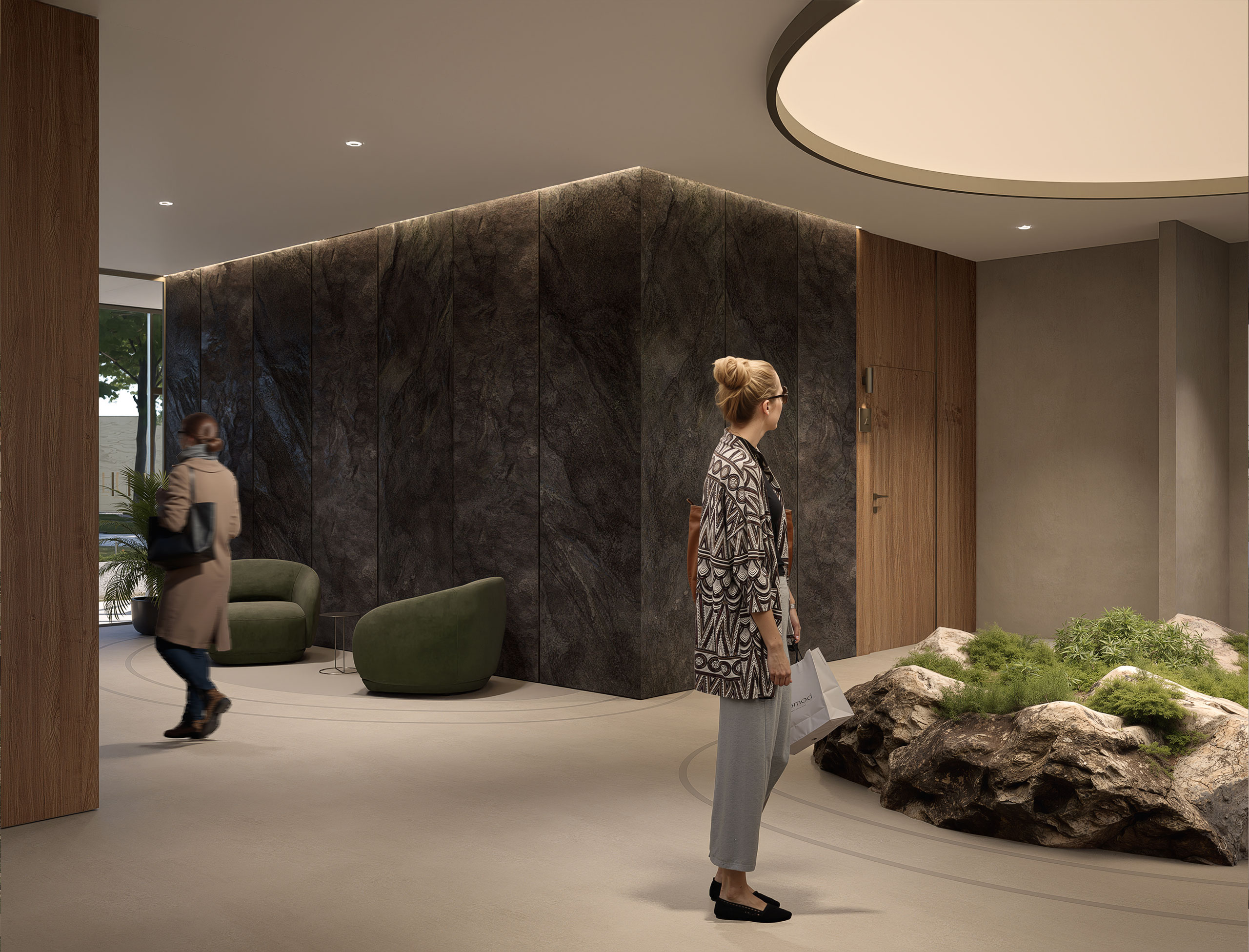
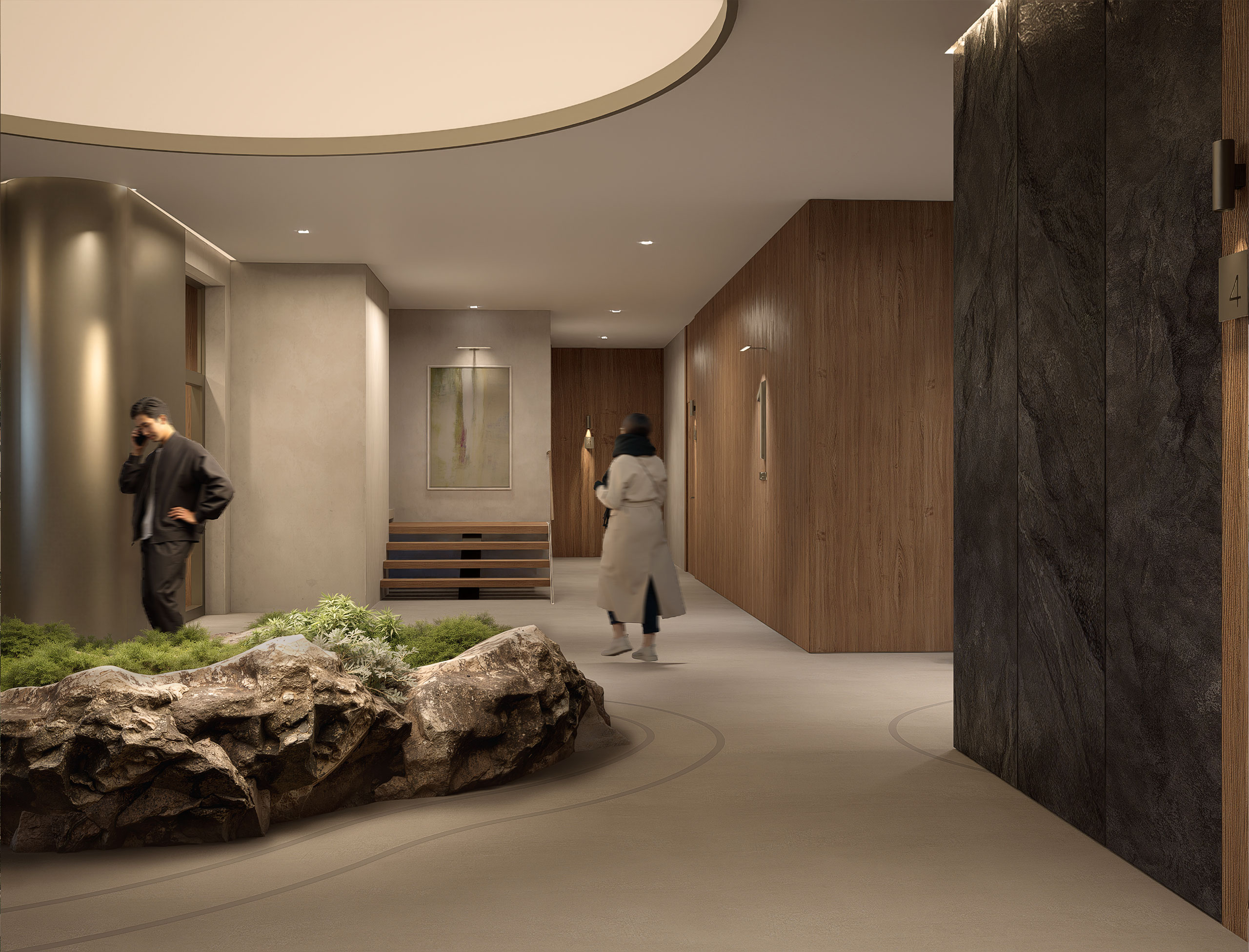
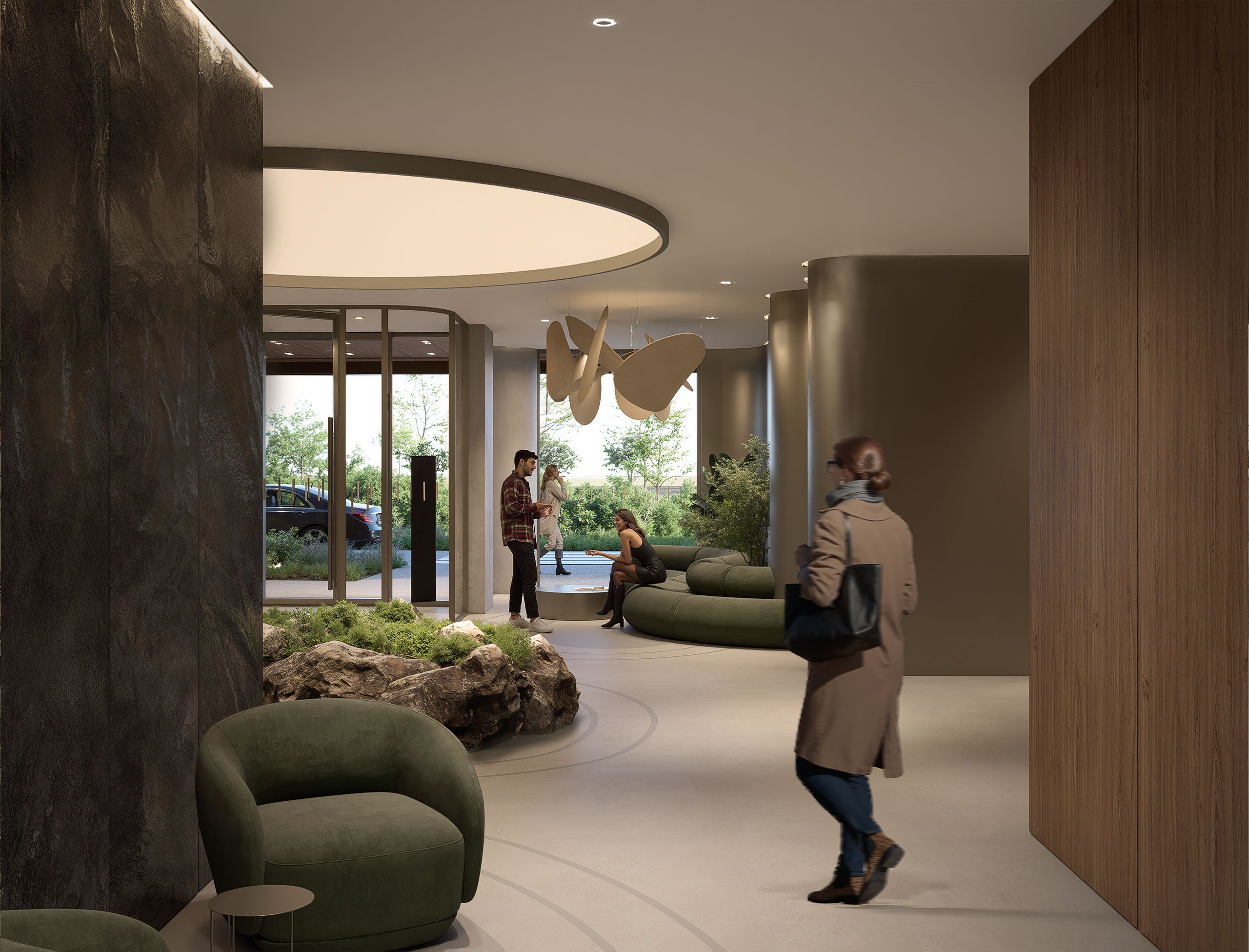
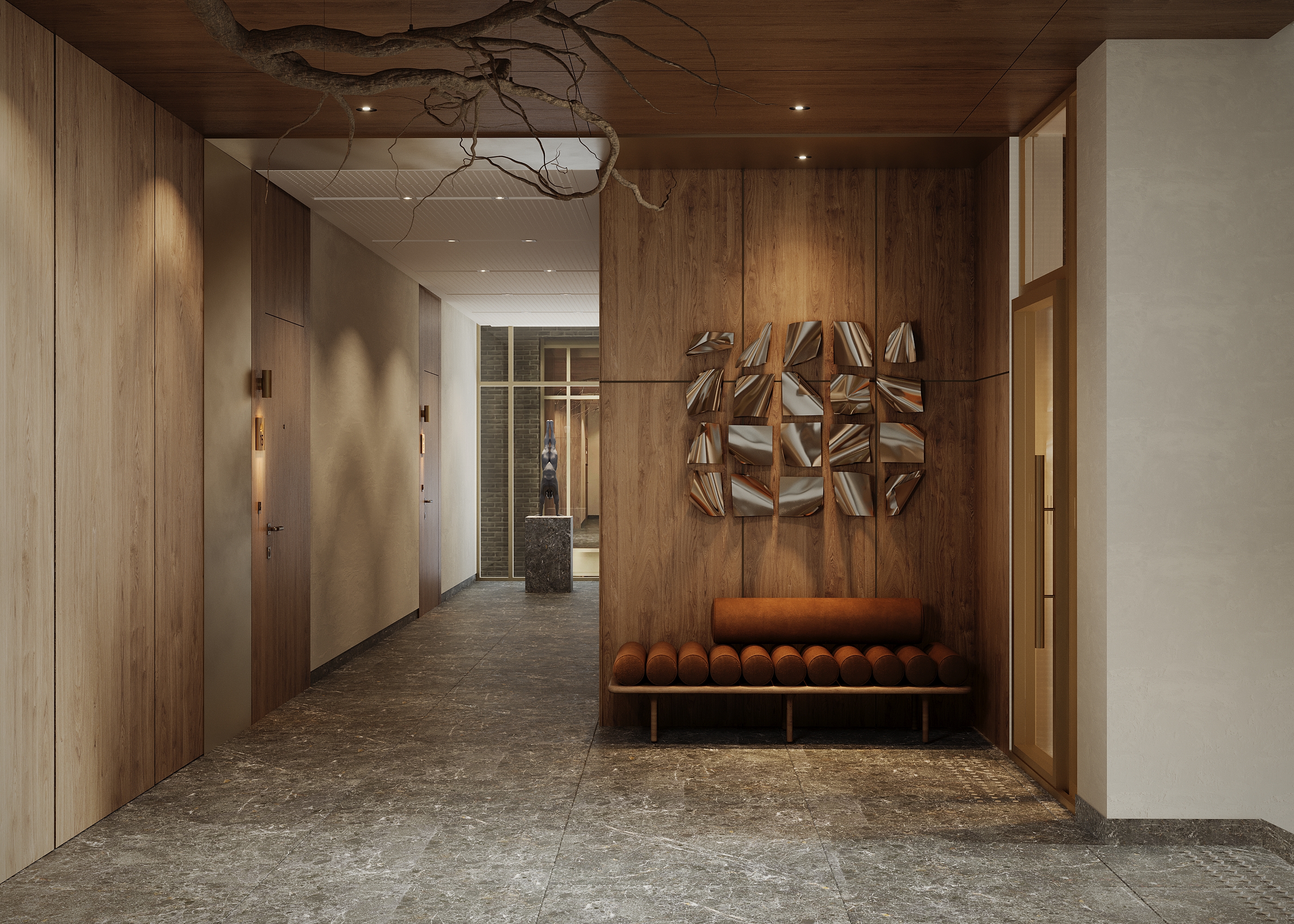
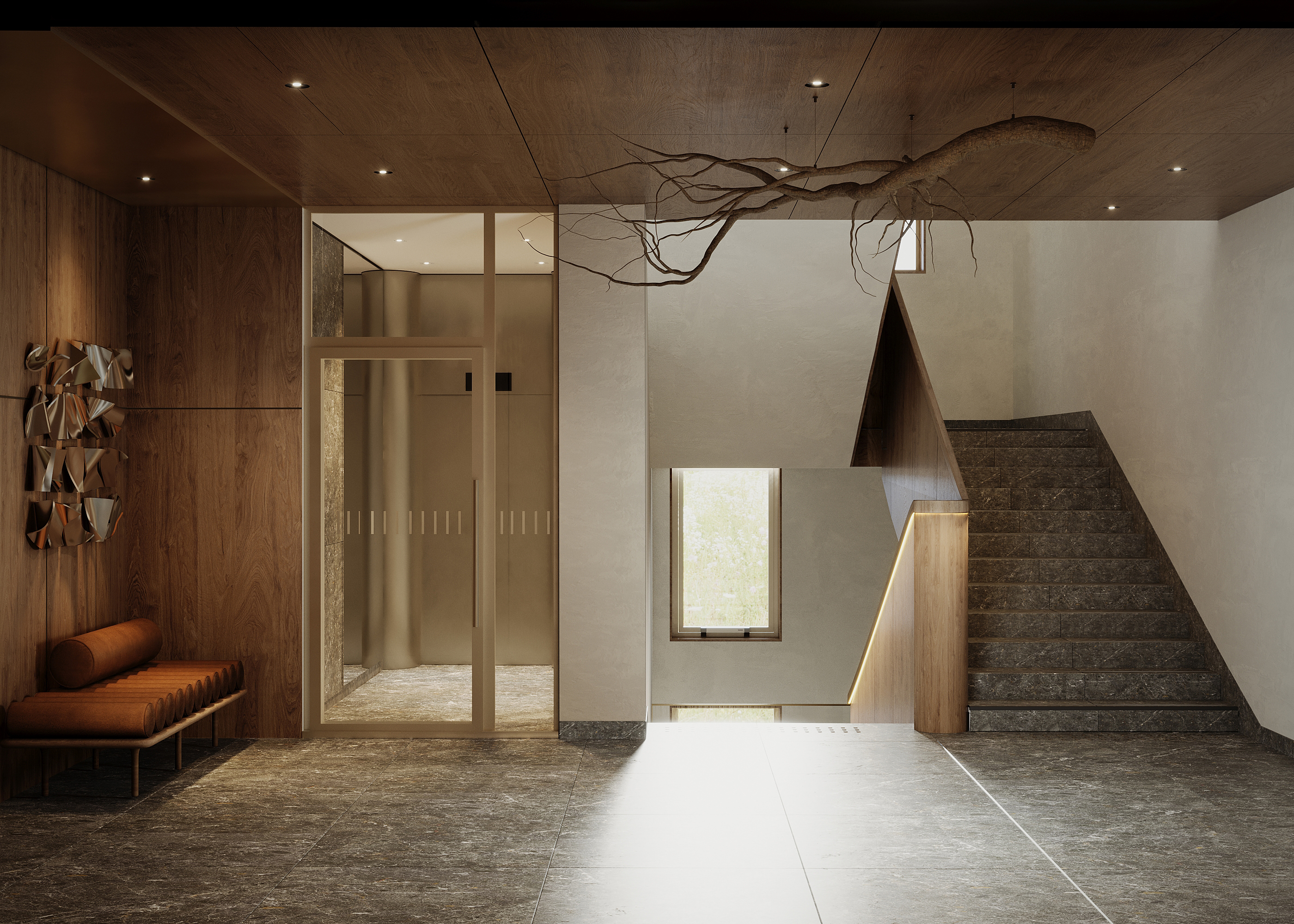
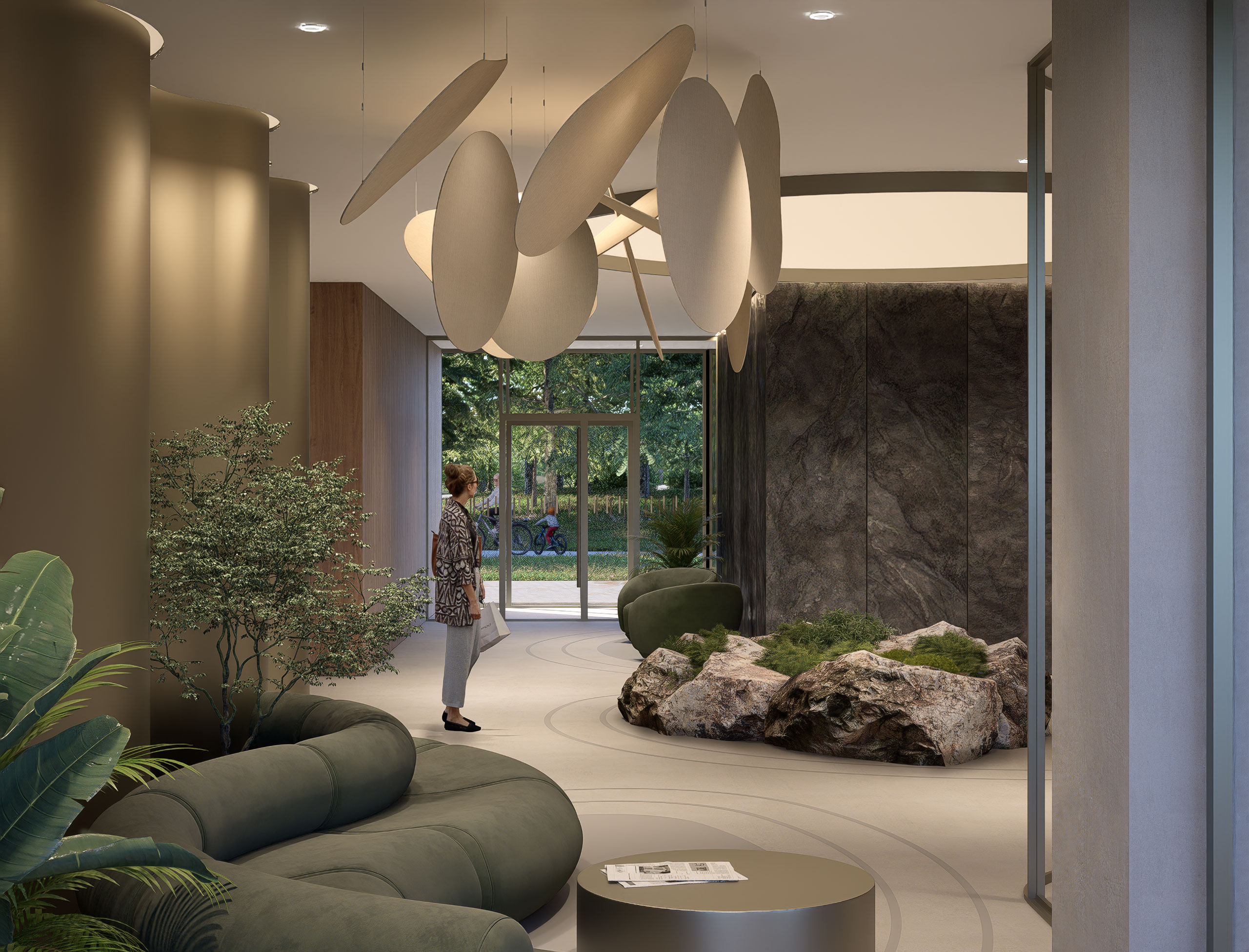
The interior of the residential lobbies, inspired by the Bryukhovychi forest, becomes a natural extension of the surrounding environment. It brings together two elements: the depth and texture of the forest — expressed through stone and wood — and the lightness of water — reflected in light, reflections, and transparency.
Contrasts are used to create balance: monumentality does not exert pressure but instead brings calmness, while subtle dynamism adds vitality to the space. This is an interior that shifts perception — from urban tension to a sense of home, silence, and inner equilibrium.
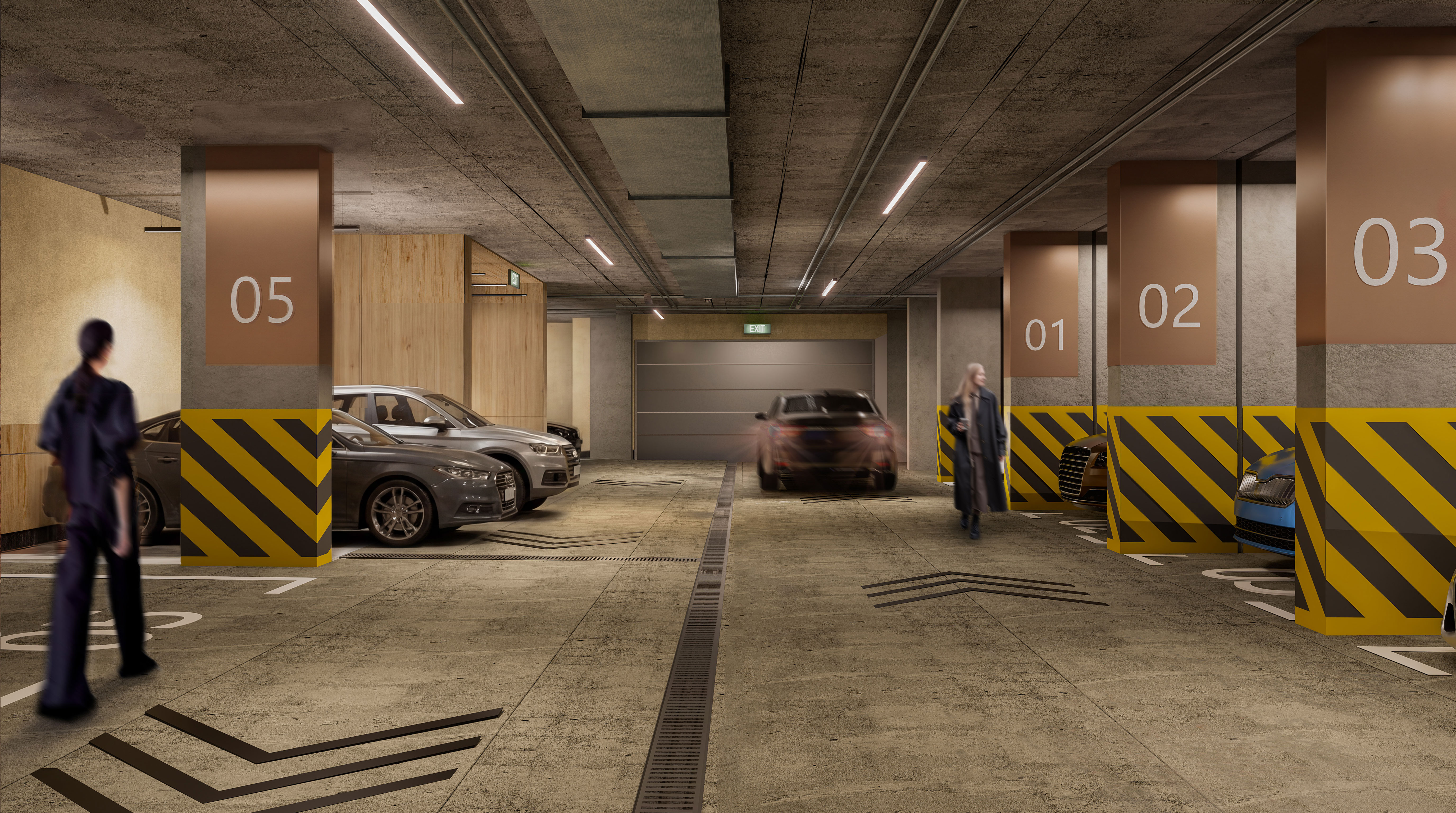
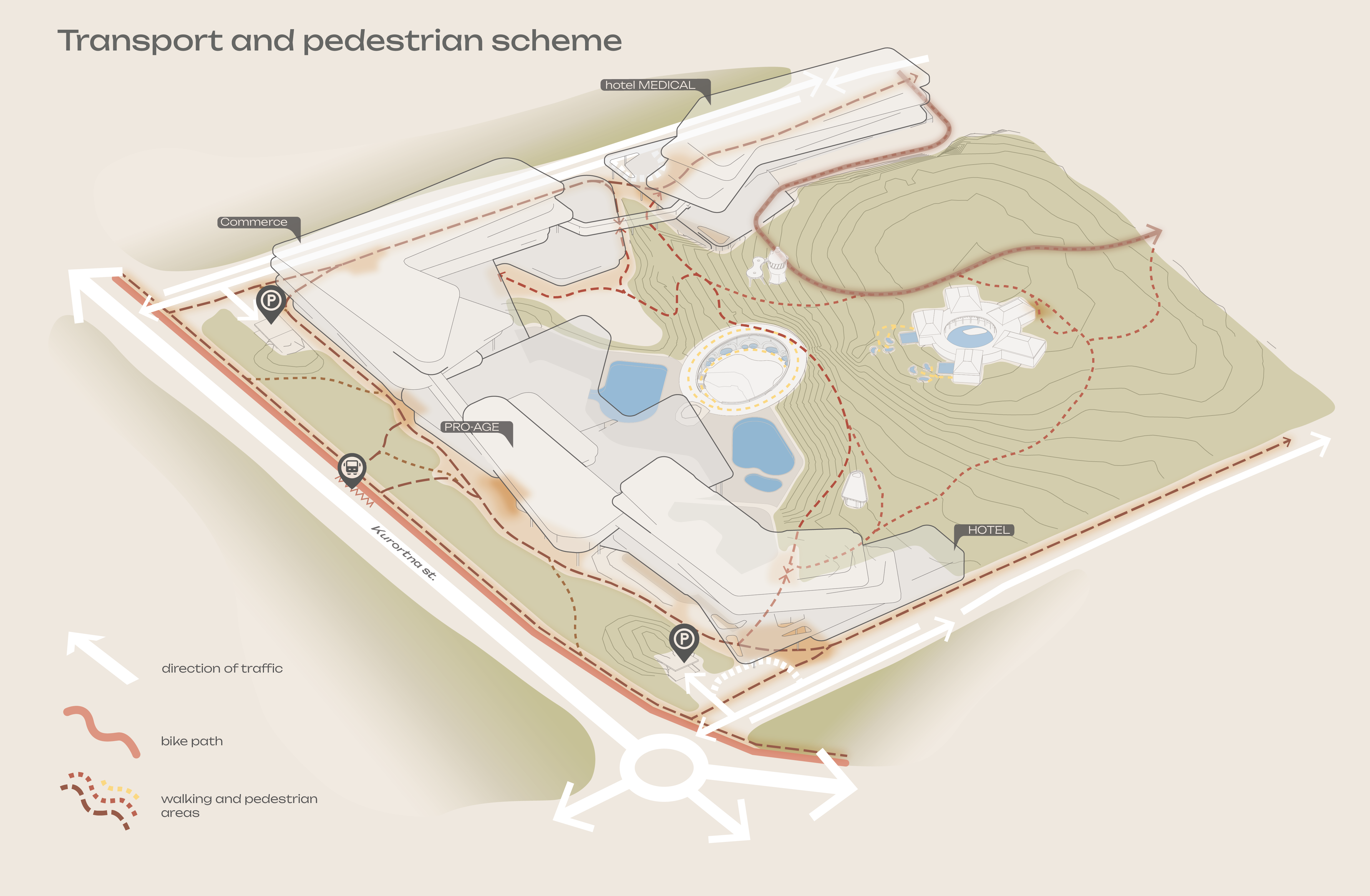
We deliberately separate active urban life from residents’ privacy: transport logistics and public functions are located along Kurortna Street, while the residential part operates as a private environment — set away from noise and integrated into the forest landscape. Roadways within the residential zone are designed as one-way systems, reducing noise impact, prioritizing pedestrians, and expanding space for greenery and comfortable infrastructure.
The functional zoning between public and residential areas is achieved without rigid barriers — their role is performed by a park shaped by terrain and evergreen vegetation. The inner park offers diverse scenarios of interaction with nature, from active zones to intimate spaces for relaxation, with pedestrian routes that reveal new visual connections to the forest.
Residents’ privacy and safety are ensured through integrated video surveillance systems, despite the openness of transitions into the forest. At the core of the approach is respect for local biodiversity: the architecture is gently integrated into the existing ecosystem, preserving its authenticity and integrity.
Lead Architect:
Iryna Hural
Chief Project Architects:
Yulian Chaplinskyi
Olha Sokha-Kvych
Architects:
Andrii Baziv
Andriana Boichuk
Uliana Medvid
Kostiantyn Malovanyi
Pavlo Hrymala
Nataliia Yankiv
Daria Tereshchenko
Liliia Vlasova
Taras Sulyk
Urban Planners:
Anton Voitashek
Anastasiia Yanvarova
Mariia Len
Project Manager:
Mariia Shcherbakova
Chief Project Engineer:
Nataliya Sulyma
Engineers:
Anatolii Bubriak
Bohdan Chepak
Bohdan Vasylyshyn
Nataliia Zubrovska
Olha Zheliak
Oleh Bliakhivskyi
Stepan Huk
Structural Engineers:
Yurii Hasiuk
Yurii Fedoryk